Department of Pharmacological Sciences and Systems Biology Center New York, Icahn School of Medicine at Mount Sinai, New York, NY, USA.
Division of Systems Biomedicine and Pharmacology, Leiden Academic Centre for Drug Research, Leiden University, Leiden, Netherlands.
Nat Commun. 2020 Sep 23;11(1):4809. doi: 10.1038/s41467-020-18396-7.
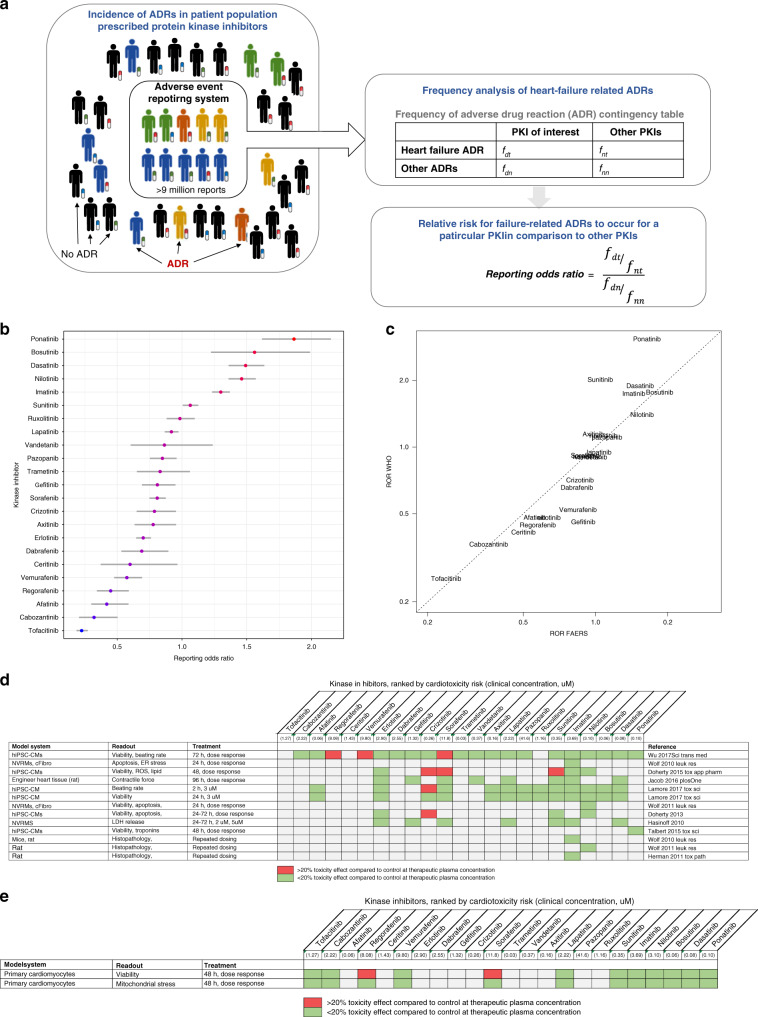
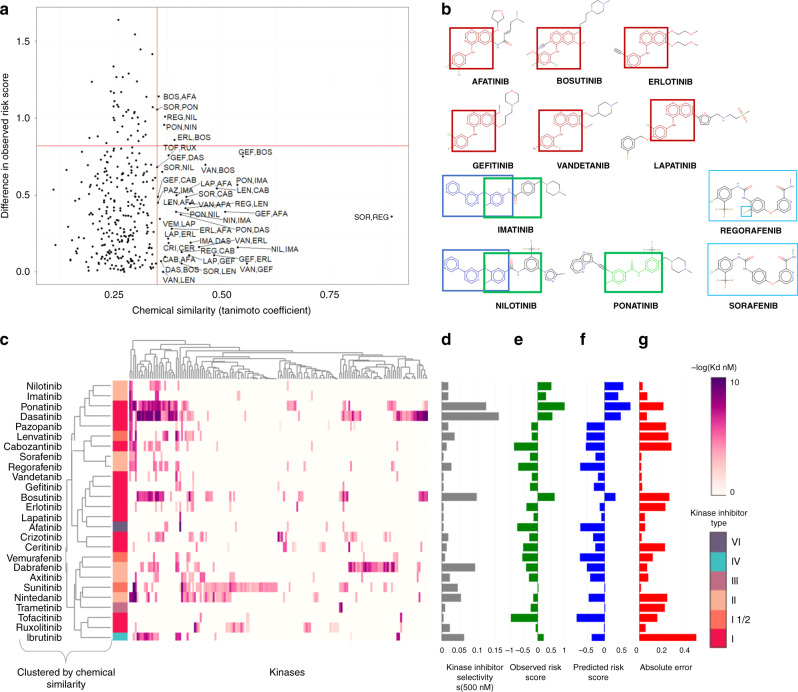
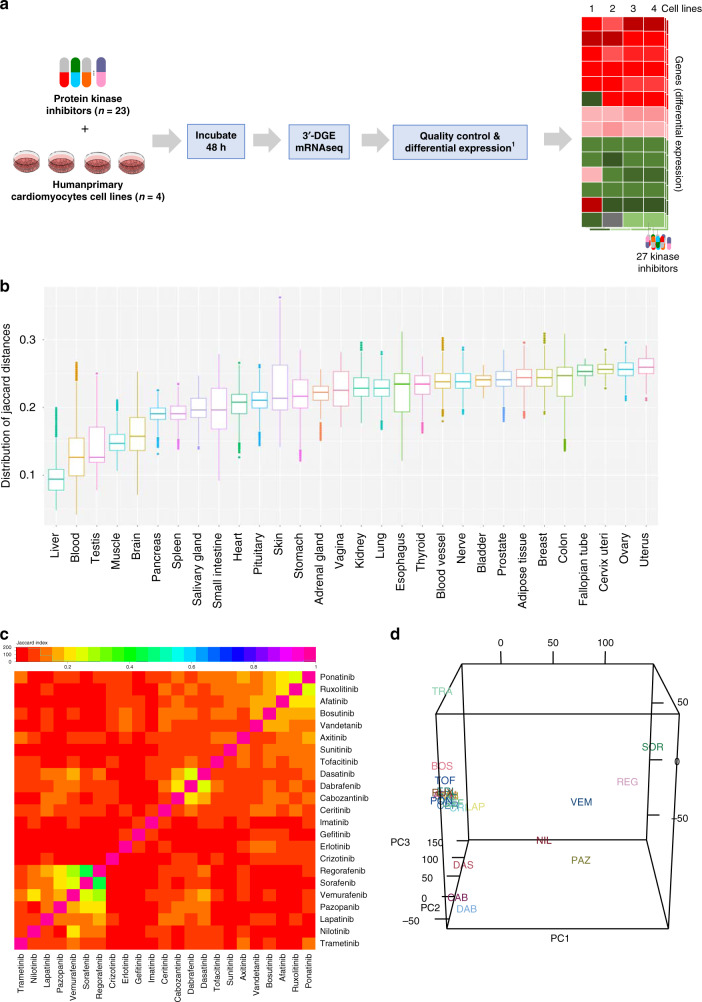
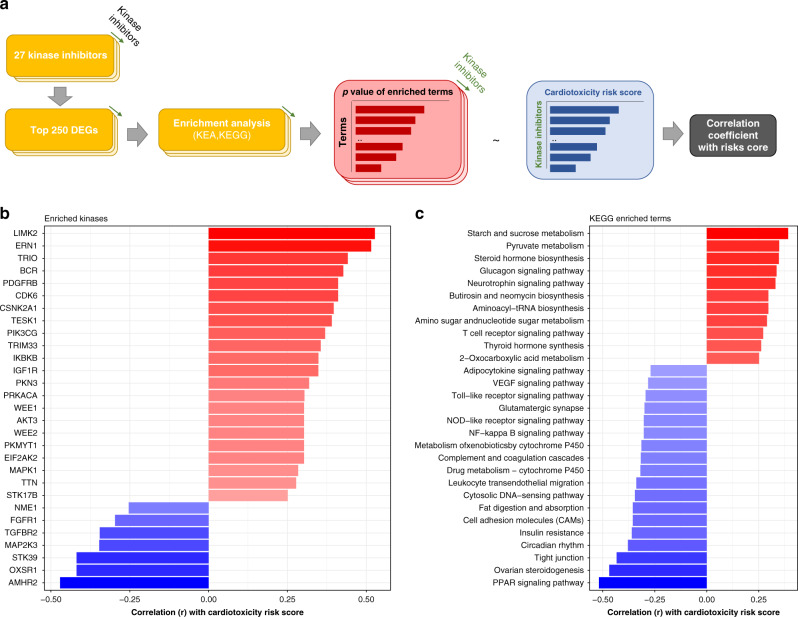
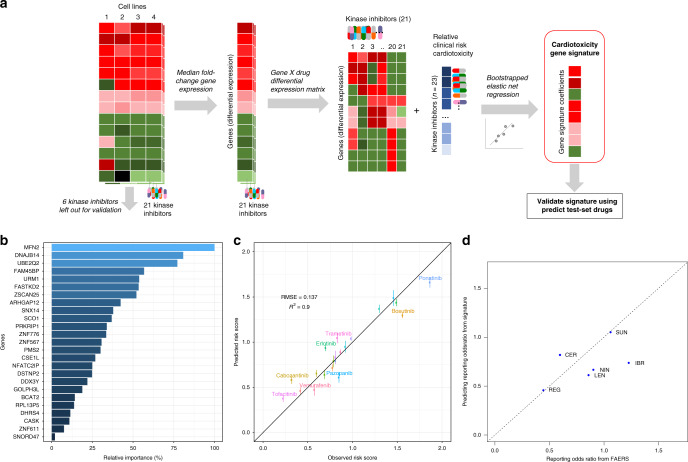
Kinase inhibitors (KIs) represent an important class of anti-cancer drugs. Although cardiotoxicity is a serious adverse event associated with several KIs, the reasons remain poorly understood, and its prediction remains challenging. We obtain transcriptional profiles of human heart-derived primary cardiomyocyte like cell lines treated with a panel of 26 FDA-approved KIs and classify their effects on subcellular pathways and processes. Individual cardiotoxicity patient reports for these KIs, obtained from the FDA Adverse Event Reporting System, are used to compute relative risk scores. These are then combined with the cell line-derived transcriptomic datasets through elastic net regression analysis to identify a gene signature that can predict risk of cardiotoxicity. We also identify relationships between cardiotoxicity risk and structural/binding profiles of individual KIs. We conclude that acute transcriptomic changes in cell-based assays combined with drug substructures are predictive of KI-induced cardiotoxicity risk, and that they can be informative for future drug discovery.
激酶抑制剂 (KIs) 是一类重要的抗癌药物。尽管心脏毒性是与几种 KIs 相关的严重不良反应,但原因仍不清楚,其预测仍然具有挑战性。我们获得了一组 26 种已获 FDA 批准的 KIs 处理的人源性原代心肌细胞样细胞系的转录谱,并对其对亚细胞途径和过程的影响进行分类。从 FDA 不良事件报告系统获得的这些 KIs 的个别心脏毒性患者报告用于计算相对风险评分。然后,通过弹性网络回归分析将这些评分与基于细胞系的转录组数据集相结合,以确定可以预测心脏毒性风险的基因特征。我们还确定了心脏毒性风险与个别 KIs 的结构/结合特征之间的关系。我们得出的结论是,基于细胞的测定中急性转录组变化与药物亚结构相结合可预测 KI 诱导的心脏毒性风险,并且它们对未来的药物发现具有信息性。