Group of Molecular Microbial Ecology, Institute of Aquatic Ecology (IEA), University of Girona, Edifici Aulari Comú-LEAR, C/Maria Aurèlia Capmany, 40, 17003, Girona, Catalonia, Spain.
Institute for Nanomaterials, Advanced Technologies and Innovation, Technical University of Liberec, Studentská 2, 461 17, Liberec, Czech Republic.
Sci Rep. 2020 Sep 24;10(1):15694. doi: 10.1038/s41598-020-72653-9.
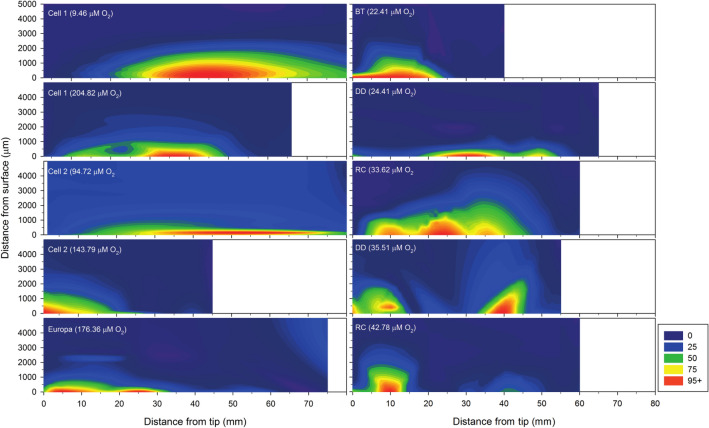
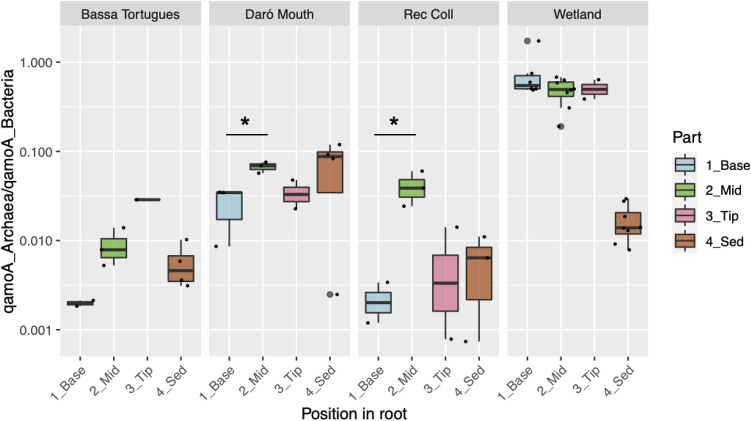
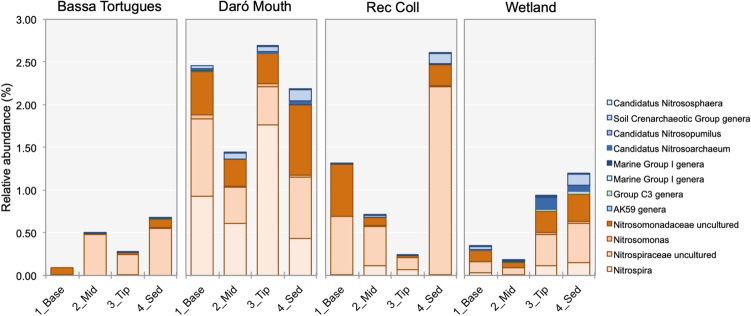
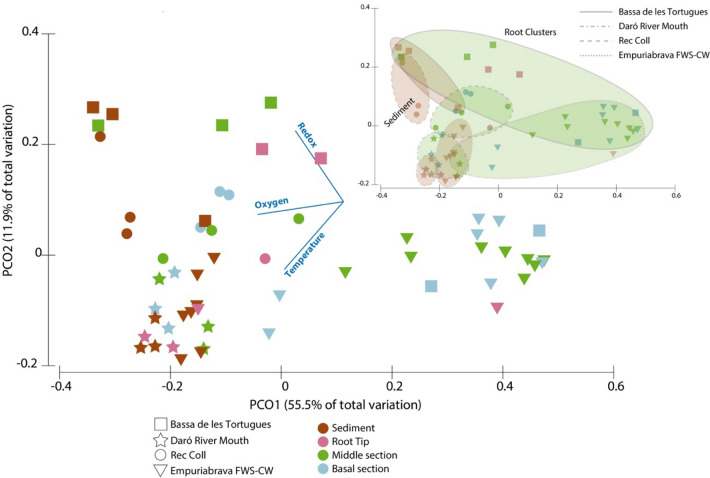
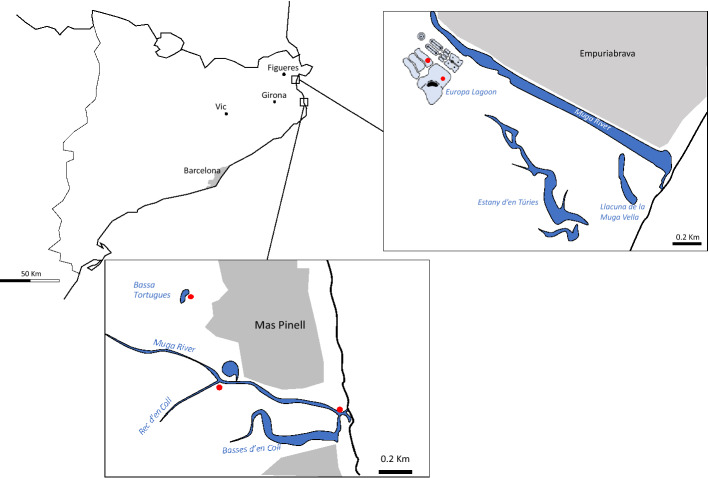
The benefits of plant-microbe interactions have been exploited extensively for nutrient removal. Radial oxygen loss in aquatic macrophytes potentially promotes nitrification and accelerates nitrogen removal through coupled nitrification-denitrification process. Nitrification is likely the limiting activity for an effective nitrogen removal in wetlands. In this work, we have quantified the effect of radial oxygen losses in Typha angustifolia plants in environments of contrasting salinities, including a temporary lagoon, a constructed wetland, and a river estuary. In all sites, radial oxygen diffusion occurred mainly at a narrow band, from 1 to 5 cm from the root tip, and were almost absent at the tip and basal sections of the root (> 5 cm). Root sections with active oxygen diffusion tended to show higher bacterial and archaeal densities in the rhizoplane according to 16S rRNA gene abundance data, except at higher salinities. Archaeal amoA /bacterial amoA gene ratios were highly variable among sites. Archaeal nitrifiers were only favoured over bacteria on the root surface of Typha collected from the constructed wetland. Collectively, radial oxygen loss had little effect on the nitrifying microbial community at the smaller scale (differences according to root-section), and observed differences were more likely related to prevailing physicochemical conditions of the studied environments or to long-term effects of the root microenvironment (root vs sediment comparisons).
植物-微生物相互作用的益处已被广泛用于营养物质的去除。水生植物的径向氧气损失可促进硝化作用,并通过耦合的硝化-反硝化过程加速氮的去除。硝化作用可能是湿地中有效去除氮的限制因素。在这项工作中,我们已经量化了在 Typha angustifolia 植物中,在具有不同盐度的环境中(包括临时泻湖、人工湿地和河口),径向氧气损失的影响。在所有地点,径向氧气扩散主要发生在一个狭窄的带,从根尖 1 到 5 厘米,而在根尖和根的基部(>5 厘米)几乎不存在。根据 16S rRNA 基因丰度数据,具有活性氧扩散的根段在根际表面往往表现出更高的细菌和古菌密度,除了在较高盐度下。在不同地点之间,古菌 amoA/细菌 amoA 基因比值变化很大。在人工湿地采集的 Typha 植物的根表面,只有古菌硝化菌比细菌更有利于硝化微生物群落。总的来说,径向氧气损失对较小尺度上的硝化微生物群落几乎没有影响(根据根段的差异),观察到的差异更可能与研究环境的流行物理化学条件或根微环境的长期影响(根与沉积物的比较)有关。