Duan Lili, Ma Jiaojiao, Yang Wanli, Cao Lu, Wang Xiaoqian, Niu Liaoran, Li Yiding, Zhou Wei, Zhang Yujie, Liu Jinqiang, Zhang Hongwei, Zhao Qingchuan, Hong Liu, Fan Daiming
State Key Laboratory of Cancer Biology, National Clinical Research Center for Digestive Diseases and Xijing Hospital of Digestive Diseases, Air Force Military Medical University, Xi'an, China.
Department of Endocrinology, The Second Affiliated Hospital of Xi'an Jiaotong University, Xi'an, China.
Front Oncol. 2020 Aug 21;10:1570. doi: 10.3389/fonc.2020.01570. eCollection 2020.
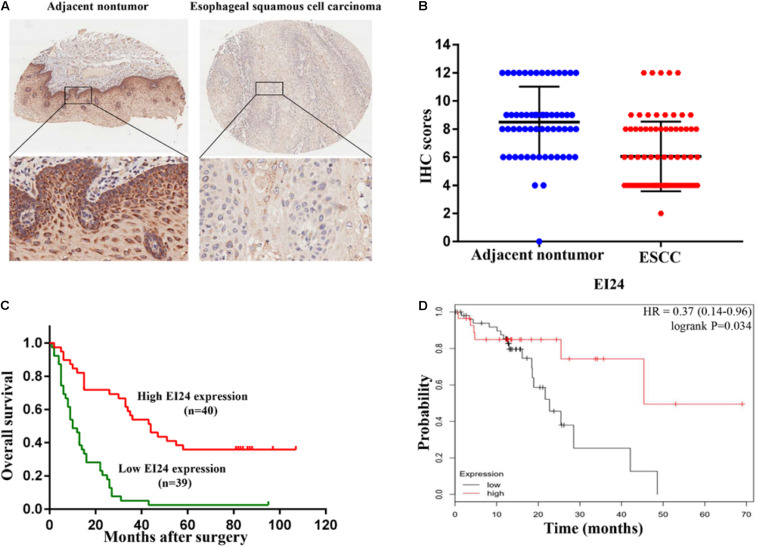
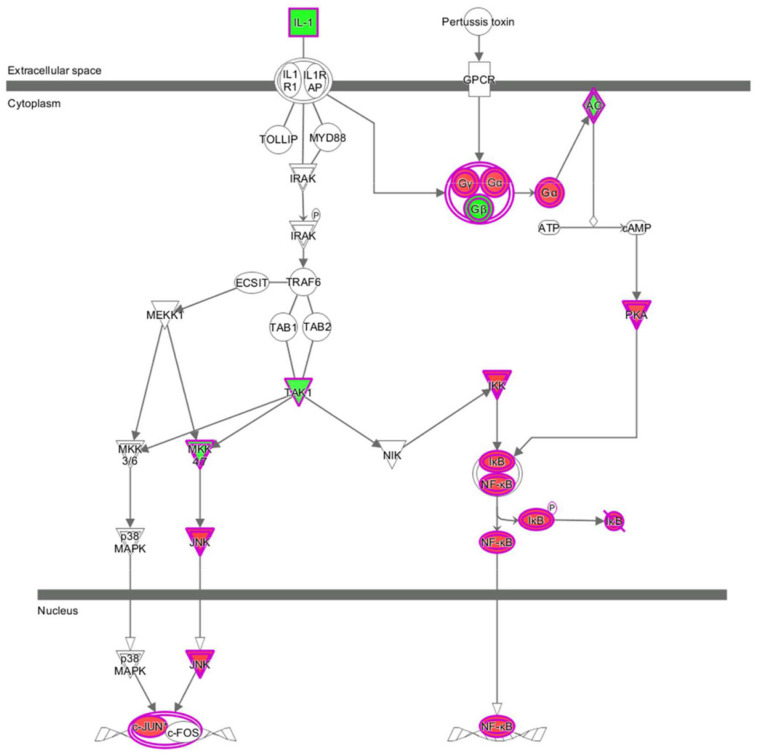
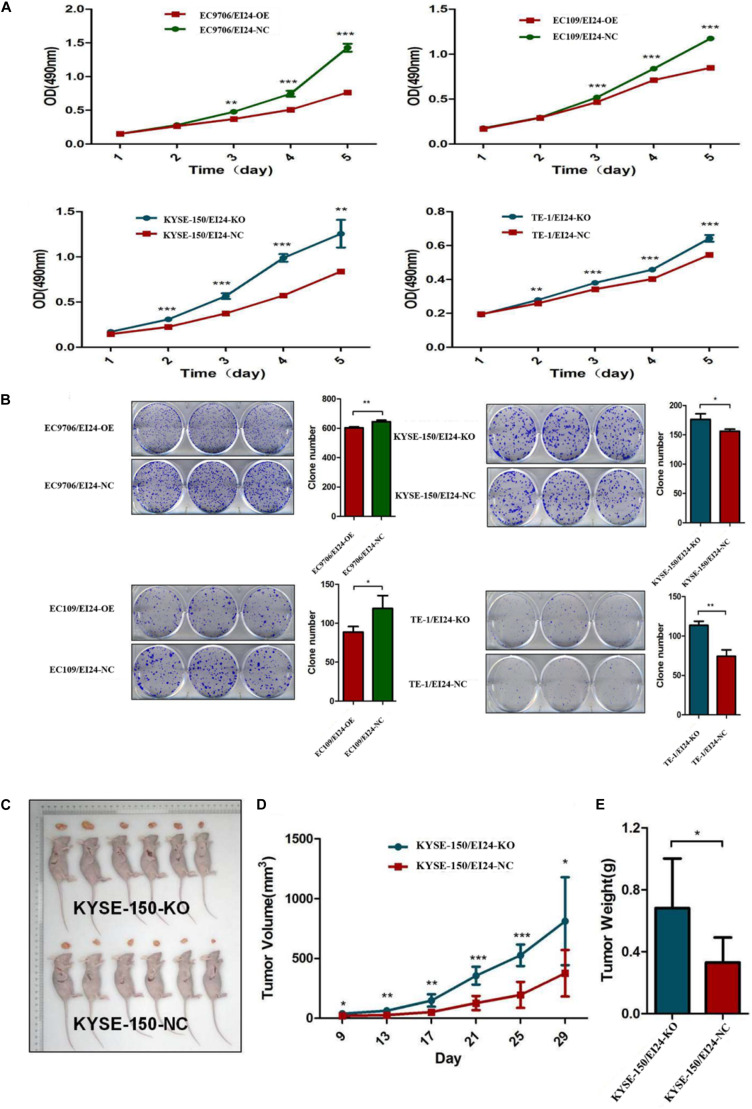
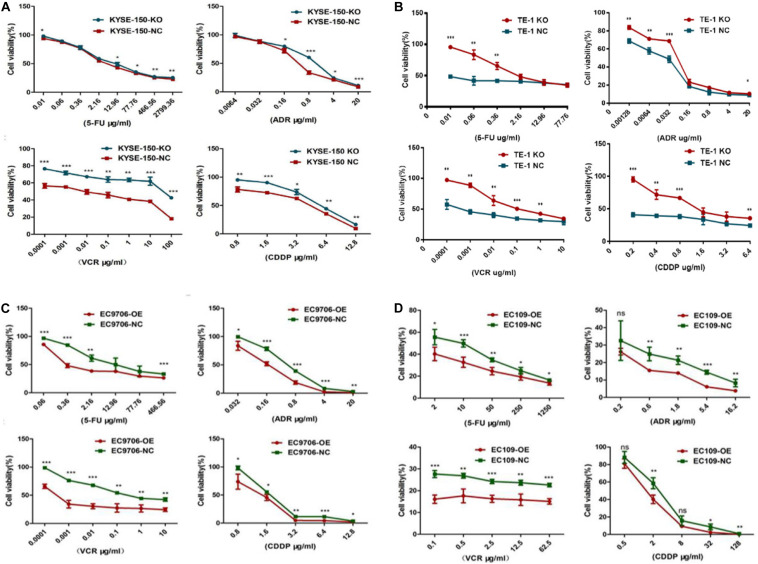
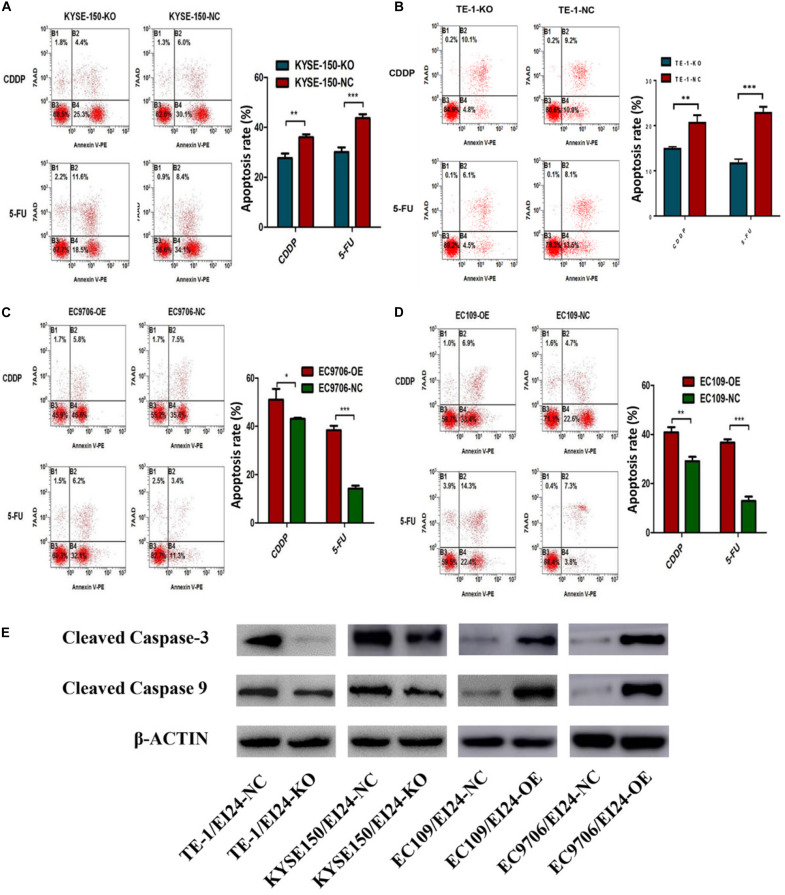
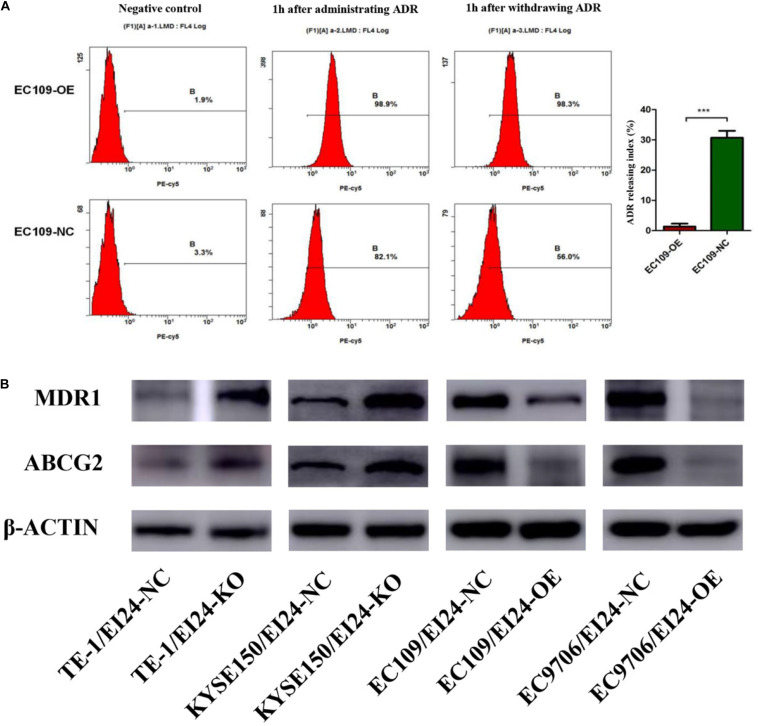
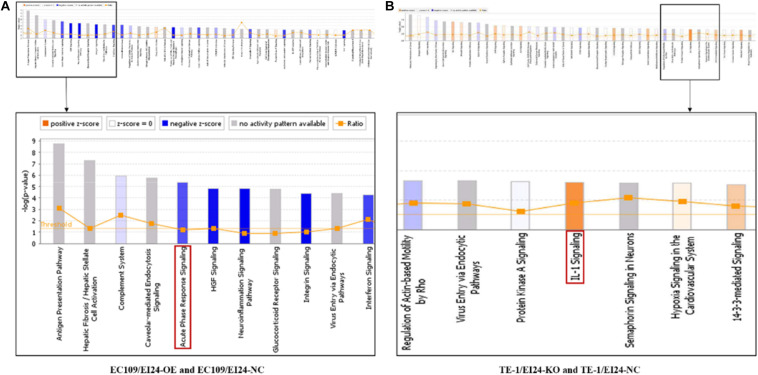
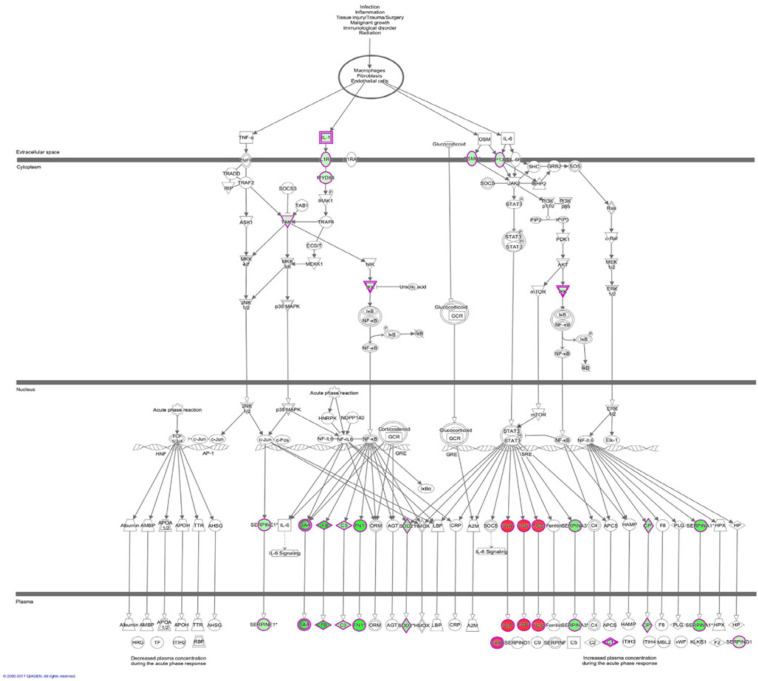
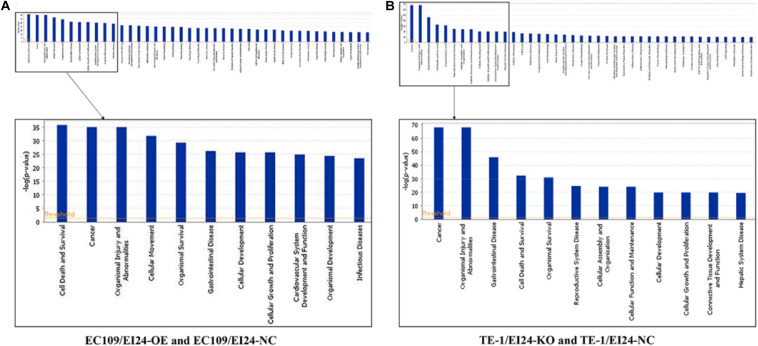
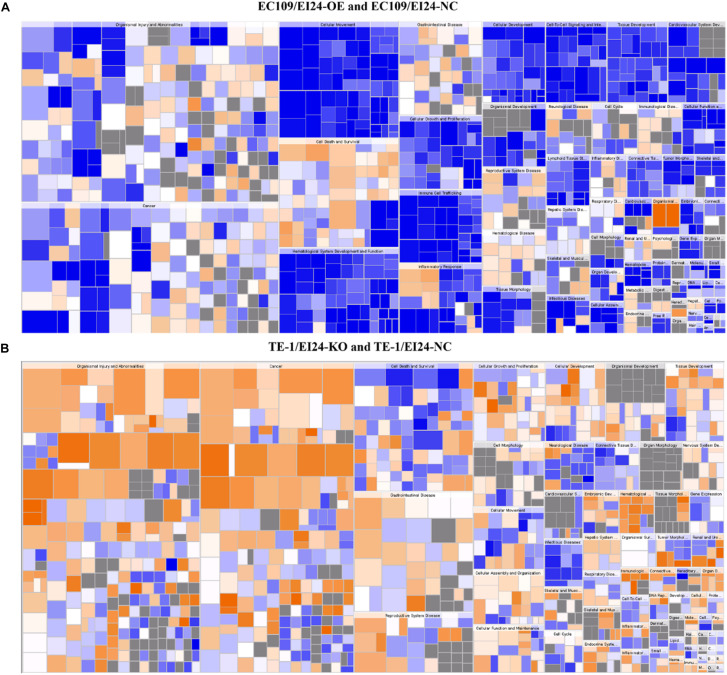
Drug resistance, whether intrinsic or acquired, often leads to treatment failure in esophageal squamous cell carcinoma (ESCC). Clarifying the mechanism of drug resistance in ESCC has great significance for reversing drug resistance, as well as improving the prognosis of patients. Previously, we demonstrated that etoposide-induced 2.4-kb mRNA (EI24) is the target of miR-483-3p, which promoted the growth, migration, and drug resistance in ESCC, suggesting that EI24 participates in repressing the tumorigenesis and progression of ESCC. Here, we observed that EI24 was remarkably decreased in ESCC tissues. Moreover, its expression was directly linked to the prognosis of patients. We then confirmed that the forced overexpression of EI24 repressed cell growth and sensitized ESCC cells to chemotherapeutic agents, whereas EI24 silencing had the opposite effect. Furthermore, gene microarray and ingenuity pathway analysis (IPA) were performed to establish the potential mechanisms and indicated that EI24 exerts a tumor-suppressive role via suppressing the acute phase response signaling pathway or IL-1 signaling pathway in ESCC. Collectively, our data reveal that EI24 overexpression attenuates malignant phenotypes of ESCC and that it is a novel possible ESCC therapeutic target.
耐药性,无论是内在的还是获得性的,往往导致食管鳞状细胞癌(ESCC)治疗失败。阐明ESCC的耐药机制对于逆转耐药性以及改善患者预后具有重要意义。此前,我们证明依托泊苷诱导的2.4 kb mRNA(EI24)是miR - 483 - 3p的靶标,miR - 483 - 3p促进ESCC的生长、迁移和耐药性,这表明EI24参与抑制ESCC的肿瘤发生和进展。在此,我们观察到EI24在ESCC组织中显著降低。此外,其表达与患者的预后直接相关。然后我们证实,EI24的强制过表达抑制细胞生长并使ESCC细胞对化疗药物敏感,而EI24沉默则产生相反的效果。此外,进行了基因微阵列和 Ingenuity 通路分析(IPA)以确定潜在机制,并表明EI24通过抑制ESCC中的急性期反应信号通路或IL - 1信号通路发挥肿瘤抑制作用。总体而言,我们的数据表明EI24过表达减弱了ESCC的恶性表型,并且它是一种新的可能的ESCC治疗靶点。