Department of Respiratory and Critical Care Medicine, Shanghai Pulmonary Hospital, Tongji University School of Medicine, Shanghai, China.
Department of Shanghai Key Laboratory of Infectious Diseases, Shanghai Pulmonary Hospital, Tongji University School of Medicine, Shanghai, China.
J Cell Mol Med. 2020 Nov;24(21):12716-12725. doi: 10.1111/jcmm.15849. Epub 2020 Sep 25.
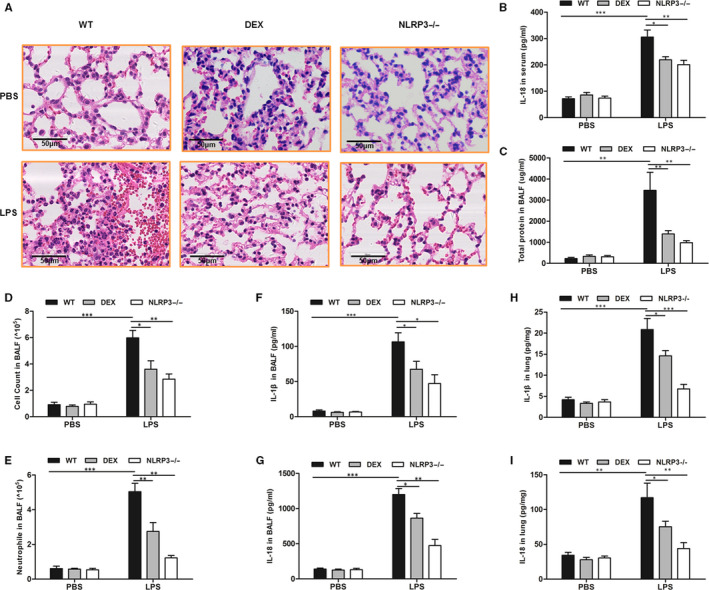
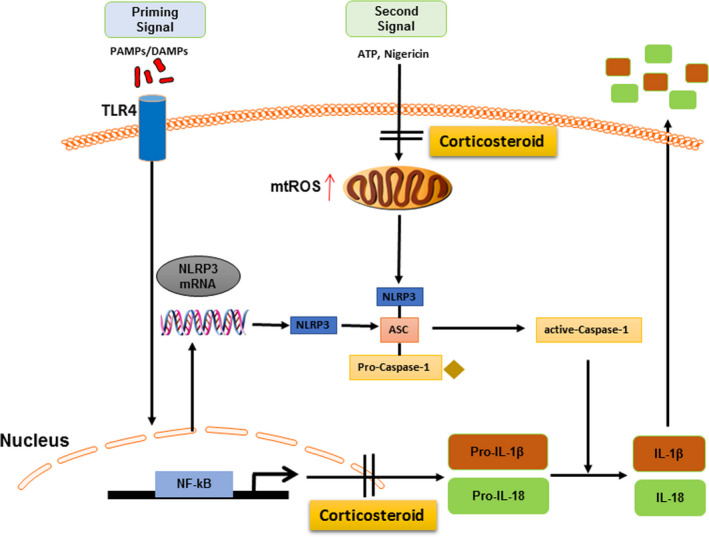
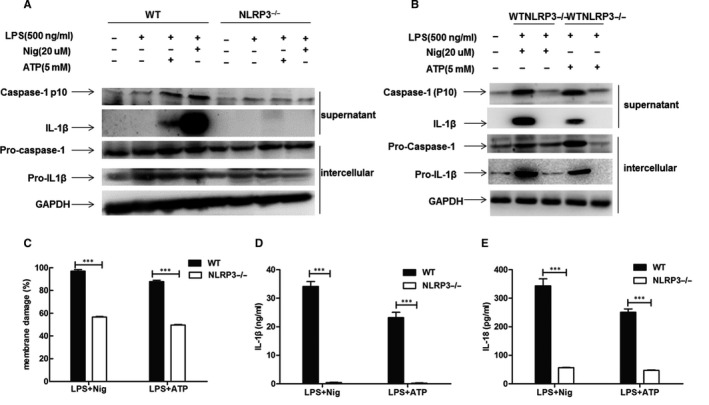
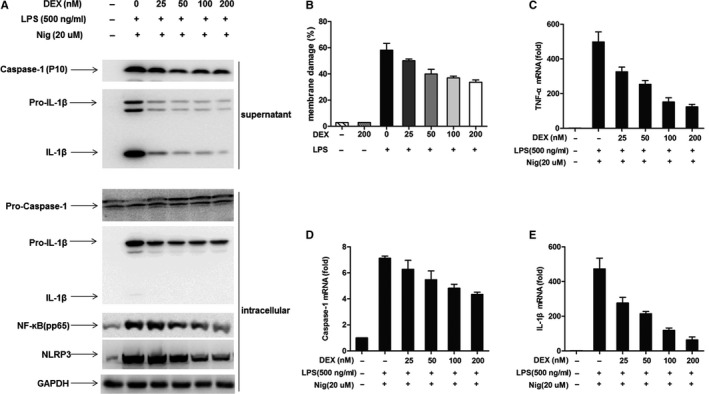
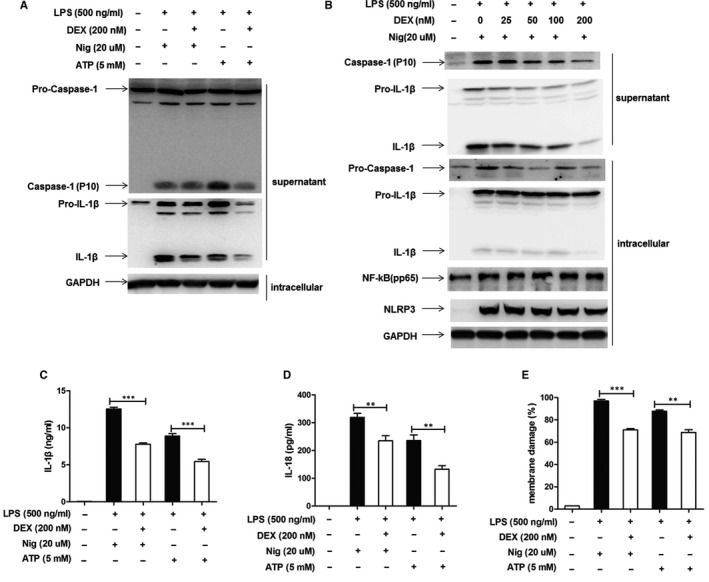
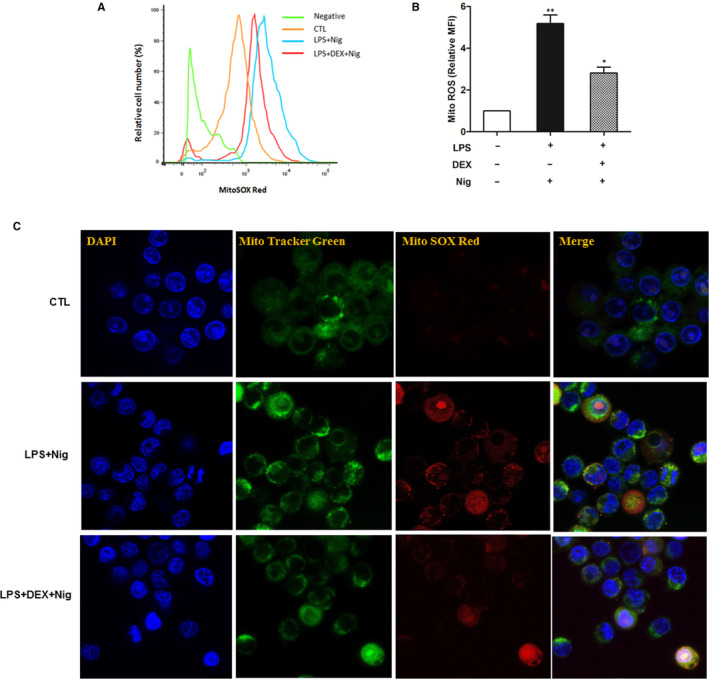
The role of corticosteroids in acute lung injury (ALI) remains uncertain. This study aims to determine the underlying mechanisms of corticosteroid treatment for lipopolysaccharide (LPS)-induced inflammation and ALI. We used corticosteroid treatment for LPS-induced murine ALI model to investigate the effect of corticosteroid on ALI in vivo. Moreover, LPS-stimulated macrophages were used to explore the specific anti-inflammatory effects of corticosteroids on NLRP3-inflammasome in vitro. We found corticosteroids attenuated LPS-induced ALI, which manifested in reduction of the alveolar structure destruction, the infiltration of neutrophils and the inflammatory cytokines release of interleukin-1β (IL-1β) and interleukin-18 (IL-18) in Lung. In vitro, when NLRP3-inflammasome was knocked out, inflammatory response of caspase-1 activation and IL-1β secretion was obviously declined. Further exploration, our results showed that when corticosteroid preprocessed macrophages before LPS primed, it obviously inhibited the activation of caspase-1 and the maturation of IL-1β, which depended on inhibiting the nuclear factor-κB (NF-κB) signal pathway activation. However, when corticosteroids intervened the LPS-primed macrophages, it also negatively regulated NLRP3-inflammasome activation through suppressing mitochondrial reactive oxygen species (mtROS) production. Our results revealed that corticosteroids played a protection role in LPS-induced inflammation and ALI by suppressing both NF-κB signal pathway and mtROS-dependent NLRP3 inflammasome activation.
皮质类固醇在急性肺损伤(ALI)中的作用仍不确定。本研究旨在确定皮质类固醇治疗脂多糖(LPS)诱导的炎症和 ALI 的潜在机制。我们使用皮质类固醇治疗 LPS 诱导的小鼠 ALI 模型来研究皮质类固醇对体内 ALI 的影响。此外,还使用 LPS 刺激的巨噬细胞在体外探索皮质类固醇对 NLRP3 炎性体的特定抗炎作用。我们发现皮质类固醇可减轻 LPS 诱导的 ALI,表现在肺泡结构破坏、中性粒细胞浸润和白细胞介素-1β(IL-1β)和白细胞介素-18(IL-18)的炎症细胞因子释放减少。在体外,当 NLRP3 炎性体被敲除时,半胱天冬酶-1 的激活和 IL-1β 的分泌的炎症反应明显下降。进一步探索,我们的结果表明,当皮质类固醇预处理巨噬细胞在 LPS 预刺激之前,它明显抑制半胱天冬酶-1 的激活和 IL-1β 的成熟,这依赖于抑制核因子-κB(NF-κB)信号通路的激活。然而,当皮质类固醇干预 LPS 预刺激的巨噬细胞时,它也通过抑制线粒体活性氧(mtROS)的产生来负调节 NLRP3 炎性体的激活。我们的结果表明,皮质类固醇通过抑制 NF-κB 信号通路和 mtROS 依赖性 NLRP3 炎性体激活,在 LPS 诱导的炎症和 ALI 中发挥保护作用。