Exosomics SpA, Siena, Italy.
Lab. CREA - A.I.L., Spedali Civili di Brescia, Brescia, Italy.
Sci Rep. 2020 Sep 25;10(1):15745. doi: 10.1038/s41598-020-72834-6.
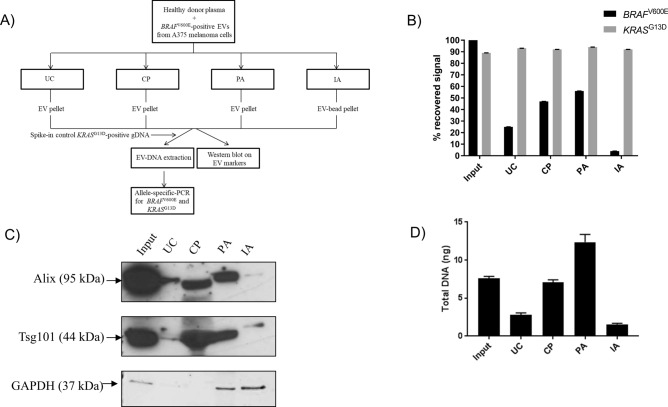
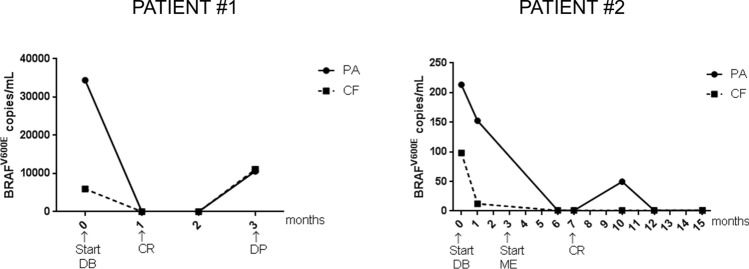
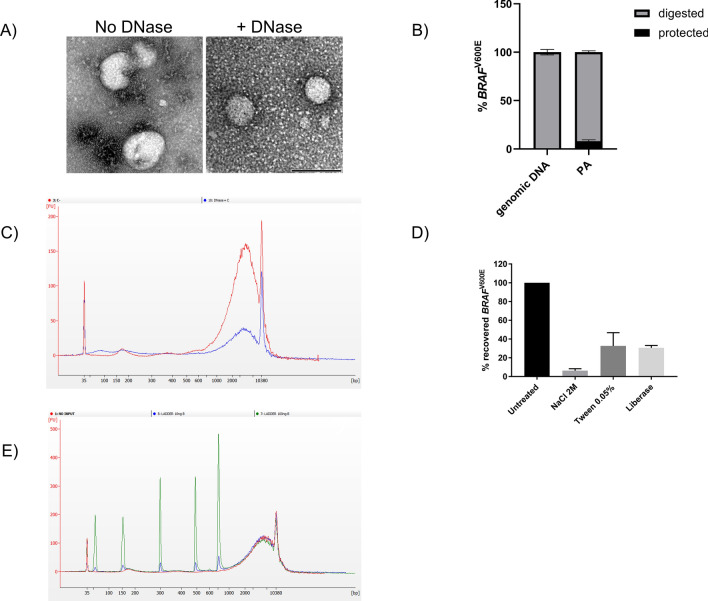
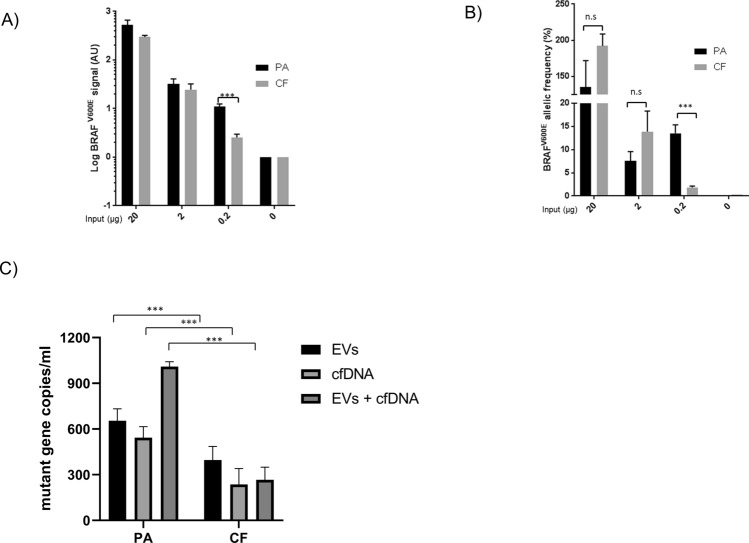
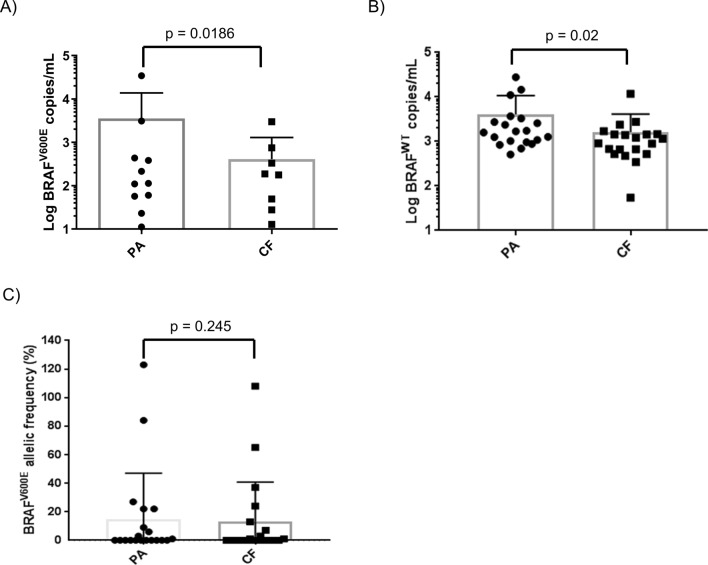
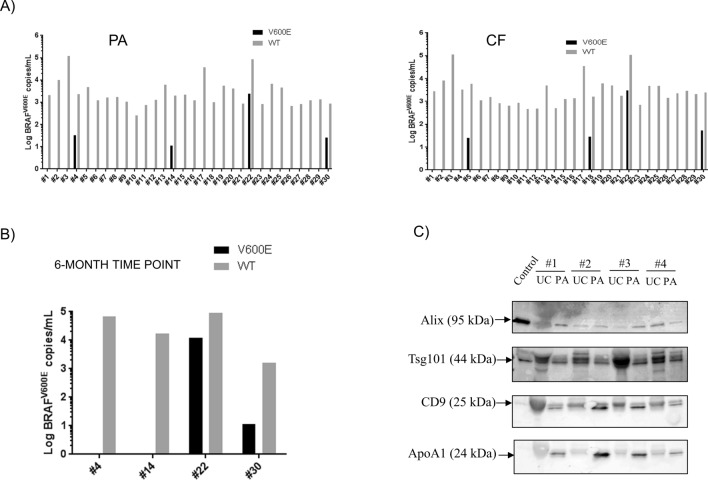
Detection of BRAF within cell free tumor DNA (ctDNA) is emerging as a promising means to improve patients' stratification or enable BRAF inhibitor (BRAFi) therapeutic monitoring in a minimally invasive manner. Here, we investigated whether extracellular vesicle-(EV)-associated-DNA (EV-DNA) has value as an alternative source of circulating BRAF. To do so, we identified a clinical practice-compatible protocol for the isolation of EV-DNA and assessed BRAF gene status on plasma samples from metastatic melanoma patients at the beginning and during BRAFi therapy. This protocol uses a peptide with high affinity for EVs and it has been found to recover more mutant DNA from plasma than standard ultracentrifugation. Molecular analyses revealed that mutant DNA is largely unprotected from nuclease digestion, interacting with the outer side of the EV membrane or directly with the peptide. When used on clinical samples, we found that the protocol improves the detection of BRAF gene copies in comparison to the reference protocol for ctDNA isolation. Taken together, these findings indicate that EVs are a promising source of mutant DNA and should be considered for the development of next-generation liquid biopsy approaches.
在游离肿瘤 DNA(ctDNA)中检测 BRAF 正逐渐成为一种很有前途的方法,可通过微创的方式改善患者的分层,或实现 BRAF 抑制剂(BRAFi)的治疗监测。在这里,我们研究了细胞外囊泡(EV)相关 DNA(EV-DNA)是否可以作为循环 BRAF 的替代来源。为此,我们确定了一种与临床实践兼容的 EV-DNA 分离方案,并评估了转移性黑色素瘤患者在开始和接受 BRAFi 治疗期间血浆样本中的 BRAF 基因状态。该方案使用了一种对 EV 具有高亲和力的肽,并且已发现它比标准超速离心从血浆中回收更多的突变 DNA。分子分析表明,突变 DNA 很大程度上不受核酸酶消化的影响,与 EV 膜的外侧或直接与肽相互作用。在临床样本上使用时,我们发现与 ctDNA 分离的参考方案相比,该方案可提高 BRAF 基因拷贝的检测。综上所述,这些发现表明 EV 是突变 DNA 的一个很有前途的来源,应考虑将其用于开发下一代液体活检方法。