Srinivasan S, Peh Wcg
Department of Diagnostic Radiology, Khoo Teck Puat Hospital, Singapore.
Malays Orthop J. 2020 Jul;14(2):16-22. doi: 10.5704/MOJ.2007.002.
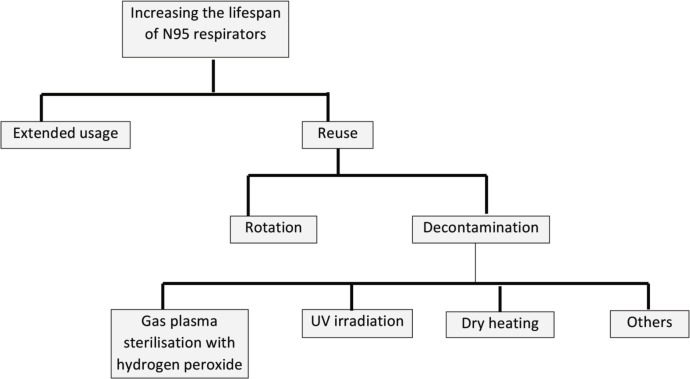
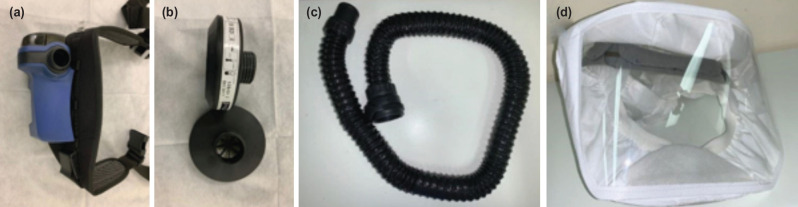
The coronavirus disease 2019 (COVID-19) is highly infectious, with the current pandemic causing significant morbidity and mortality worldwide. As large numbers of frontline healthcare workers (HCWs) have also been infected and several have died, there is much global concern about protective measures for them, particularly those performing surgery or other procedures with close patient contact. Since the beginning of the pandemic, there has been and there remains a shortage in the supply of personal protective equipment (PPE), including the N95 filtering facepiece (FFP) respirator, for HCWs. N95 respirators have filtration efficiency of 95% of aerosol particles. Surgical N95 respirators are used where fluid resistance is also required together with respiratory protection, e.g. during surgery or interventional procedures. The shortage of N95 respirators may be overcome by extended use and reuse - comprising rotation and decontamination by approved techniques. The additional role of powered air-purifying respirators (PAPR) is also discussed.
2019年冠状病毒病(COVID-19)具有高度传染性,当前的大流行在全球范围内造成了严重的发病率和死亡率。由于大量一线医护人员也受到感染,并有数人死亡,全球对他们的防护措施极为关注,尤其是那些进行手术或与患者密切接触的其他操作的医护人员。自疫情开始以来,医护人员个人防护装备(PPE)的供应一直短缺,包括N95过滤式面罩(FFP)呼吸器。N95呼吸器对气溶胶颗粒的过滤效率为95%。外科用N95呼吸器用于需要液体防护以及呼吸防护的场合,例如手术或介入操作期间。N95呼吸器的短缺可通过延长使用和重复使用来克服,包括轮转使用以及采用经批准的技术进行消毒。本文还讨论了电动空气净化呼吸器(PAPR)的额外作用。