Dayan Erez, Rovatti Paolo, Aston Sherell, Chia Christopher T, Rohrich Rod, Theodorou Spero
Plastic and Reconstructive Surgery, Avance Plastic Surgery Institute, Reno/Tahoe, Nev.
Studio Dott. Rovatti, Verona, Italy.
Plast Reconstr Surg Glob Open. 2020 Aug 26;8(8):e2862. doi: 10.1097/GOX.0000000000002862. eCollection 2020 Aug.
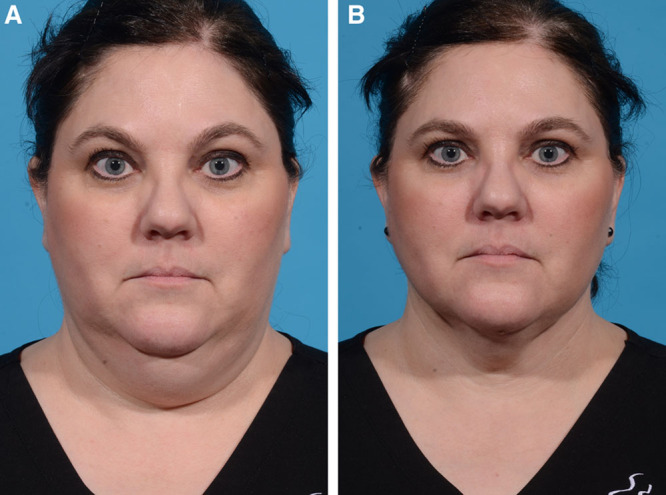
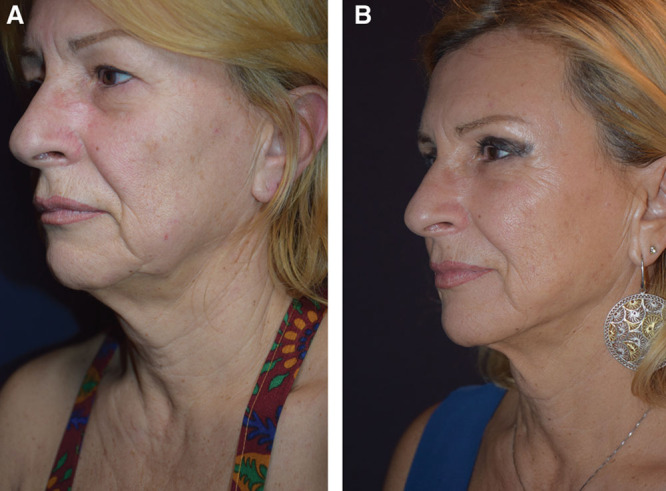
Nonexcisional facial skin tightening has long been an elusive goal in aesthetic surgery. The "treatment gap" includes cases who are not "severe" enough for excisions surgery but not "mild" enough for most traditional noninvasive aesthetic modalities. In this retrospective review, we present the largest evaluation to date of radiofrequency (RF) skin tightening technology combination including bipolar RF (FaceTite; InMode) and fractional bipolar RF (Fractora modified to Morpheus8; InMode).
A multicenter retrospective study was conducted between January 2013 and December 2018 using a combination of bipolar RF and fractional bipolar RF for the treatment of facial aging. Data collection included demographic information, Baker Face/Neck Classification, amount of energy used, adverse events, and patient satisfaction. Four cadaver dissections were also conducted to correlate the underlying neuromuscular anatomy with RF treatment of the lower face and neck.
Two hundred forty-seven patients (234 women and 13 men) were included in the study. Average age was 55.1 years (SD, ±8), body mass index was 24.3 (±2.4), and 9% (23/247) of patients were active smokers at the time of treatment. Patients had an average Baker Face/Neck Classification score of 3.1 (SD, ±1.4). The procedure was performed under local anesthesia in 240/247 cases (97.2%). Patients objectively improved their Baker Face/Neck Classification score by 1.4 points (SD, ±1.1). Ninety-three percent of patients indicated that they were pleased with their results and would undergo the procedure again. Complications recorded for our cohort included prolonged swelling >6 weeks (4.8%, 12/247), hardened area >12 weeks (3.2%, 8/247), and marginal mandibular neuropraxia (1.2%, 3/247), which all resolved without further intervention. When considering possible control variables, age seems to be a significant factor. That is, older patients were more likely to benefit from a larger magnitude of the treatment effect (as demonstrated by a decrease in the Baker rating from pre- to posttreatment) when compared with younger patients. However, both groups did demonstrate significant improvements across time.
While this combination RF treatment (FaceTite bipolar RF and fractional bipolar RF) does not aim to replace a facelift/necklift in appropriate candidates, it does broaden the plastic surgeons' armamentarium to potentially fill a treatment gap.
长期以来,非切除性面部皮肤紧致一直是美容手术中难以实现的目标。“治疗缺口”包括那些对于切除手术来说不够“严重”,但对于大多数传统非侵入性美容方式又不够“轻微”的病例。在这项回顾性研究中,我们对射频(RF)皮肤紧致技术组合进行了迄今为止最大规模的评估,该组合包括双极射频(FaceTite;InMode)和分次双极射频(Fractora改良为Morpheus8;InMode)。
2013年1月至2018年12月进行了一项多中心回顾性研究,使用双极射频和分次双极射频联合治疗面部衰老。数据收集包括人口统计学信息、贝克面部/颈部分类、使用的能量、不良事件和患者满意度。还进行了四次尸体解剖,以将潜在的神经肌肉解剖结构与下脸和颈部的射频治疗相关联。
247名患者(234名女性和13名男性)纳入研究。平均年龄为55.1岁(标准差,±8),体重指数为24.3(±2.4),9%(23/247)的患者在治疗时为现役吸烟者。患者的贝克面部/颈部分类平均评分为3.1(标准差,±1.4)。240/247例(97.2%)手术在局部麻醉下进行。患者的贝克面部/颈部分类评分客观上提高了1.4分(标准差,±1.1)。93%的患者表示对结果满意,并愿意再次接受该手术。我们队列记录的并发症包括肿胀持续>6周(4.8%,12/247)、硬化区域>12周(3.2%,8/247)和下颌缘神经失用症(1.2%,3/247),所有这些均无需进一步干预即可缓解。在考虑可能的控制变量时,年龄似乎是一个重要因素。也就是说,与年轻患者相比,老年患者更有可能从更大程度的治疗效果中获益(如治疗前后贝克评分的降低所示)。然而,两组随着时间推移均显示出显著改善。
虽然这种联合射频治疗(FaceTite双极射频和分次双极射频)并非旨在替代合适候选人的面部提升/颈部提升手术,但它确实拓宽了整形外科医生的治疗手段,有可能填补治疗缺口。