Chen Kaizhe, Zhou Qi, Kang Hui, Yan Yufei, Qian Niandong, Li Changwei, Wang Fei, Yang Kai, Deng Lianfu, Qi Jin
Shanghai Key Laboratory for Prevention and Treatment of Bone and Joint Diseases, Shanghai Institute of Traumatology and Orthopaedics, Ruijin Hospital, Shanghai Jiao Tong University School of Medicine, Shanghai, China.
Department of Orthopedics, Shanghai Tenth People's Hospital, Tongji University School of Medicine, Shanghai, China.
Front Bioeng Biotechnol. 2020 Aug 31;8:864. doi: 10.3389/fbioe.2020.00864. eCollection 2020.
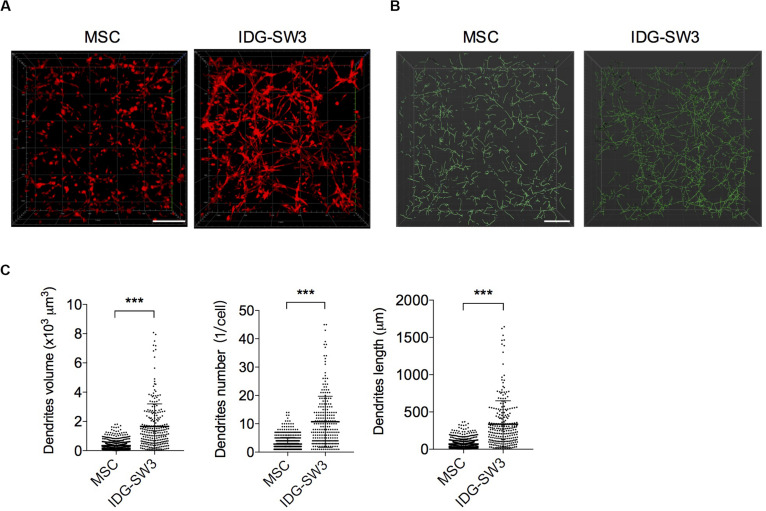
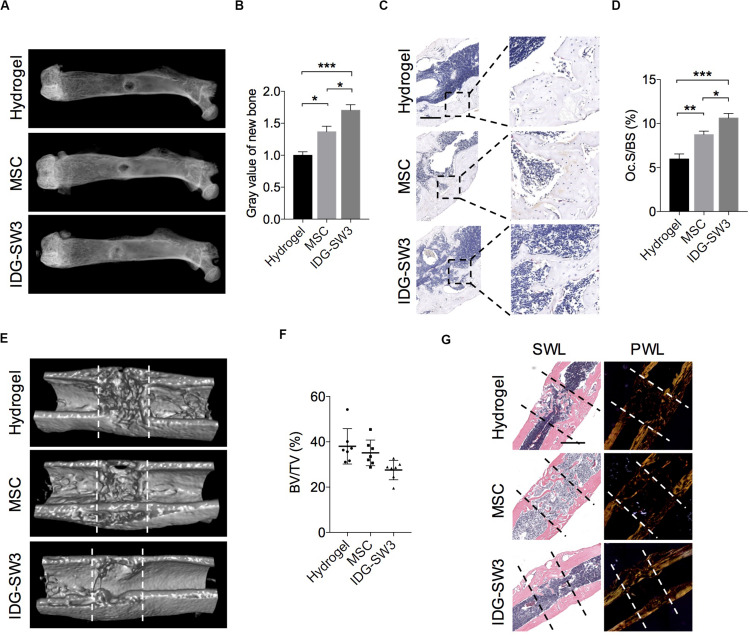
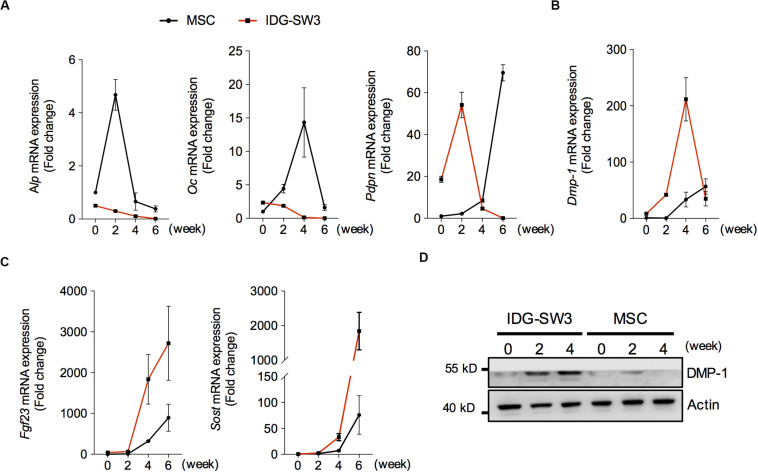
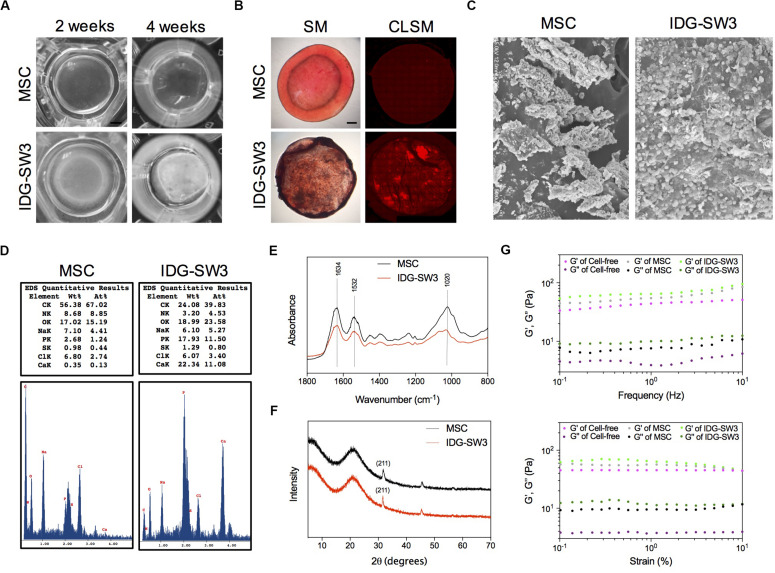
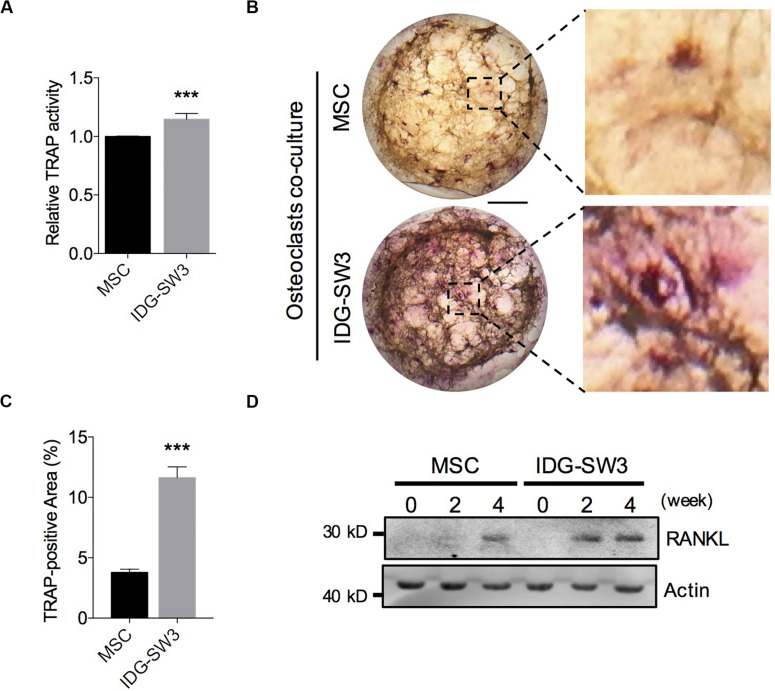
Tissue engineering with 3D scaffold is a simple and effective method for bone healing after large-scale bone loss. So far, bone marrow-derived mesenchymal stem cells (BMSCs) are mostly used in the treatment of bone healing in animal models due to their self-renewal capability and osteogenic potential. Due to the fact that the main functional cells in promoting osteoid mineralization and bone remodeling were osteocytes, we chose an osteoblast-to-osteocyte transition cell line, IDG-SW3, which are not proliferative under physiological conditions, and compared the healing capability of these cells to that of BMSCs in bone defect. , IDG-SW3 cells revealed a stronger mineralization capacity when grown in 3D collagen gel, compared to that of BMSCs. Although both BMSC and IDG-SW3 can generate stable calcium-phosphate crystal similar to hydroxyapatite (HA), the content was much more enriched in IDG-SW3-mixed collagen gel. Moreover, the osteoclasts co-cultured with IDG-SW3-mixed collagen gel were easier to be activated, indicating that the IDG-SW3 grafting could promote the bone remodeling more efficiently . Last, in order to reduce the self-healing capability, we assessed the healing capability between the IDG-SW3 cells and BMSCs in osteoporotic mice. We found that the collagen hydrogel mixed with IDG-SW3 cells has a better healing pattern than what was seen in hydrogel mixed with BMSCs. Therefore, these results demonstrated that by promoting osteoblast-to-osteocyte transition, the therapeutic effect of BMSCs in bone defect repair could be improved.
利用三维支架进行组织工程是治疗大面积骨缺损后骨愈合的一种简单有效的方法。到目前为止,骨髓间充质干细胞(BMSCs)因其自我更新能力和成骨潜力,在动物模型的骨愈合治疗中应用最为广泛。由于促进类骨质矿化和骨重塑的主要功能细胞是骨细胞,我们选择了一种在生理条件下不增殖的成骨细胞向骨细胞转变的细胞系IDG-SW3,并比较了这些细胞与BMSCs在骨缺损中的愈合能力。与BMSCs相比,IDG-SW3细胞在三维胶原凝胶中生长时显示出更强的矿化能力。虽然BMSC和IDG-SW3都能生成类似于羟基磷灰石(HA)的稳定磷酸钙晶体,但IDG-SW3混合胶原凝胶中的含量更为丰富。此外,与IDG-SW3混合胶原凝胶共培养的破骨细胞更容易被激活,这表明IDG-SW3移植能更有效地促进骨重塑。最后,为了降低自我愈合能力,我们评估了IDG-SW3细胞和BMSCs在骨质疏松小鼠中的愈合能力。我们发现,与BMSCs混合水凝胶相比,IDG-SW3细胞混合胶原水凝胶具有更好的愈合模式。因此,这些结果表明,通过促进成骨细胞向骨细胞的转变,可以提高BMSCs在骨缺损修复中的治疗效果。