Ali Eunus S, Rychkov Grigori Y, Barritt Greg J
Department of Medical Biochemistry, College of Medicine and Public Health, Flinders University, Adelaide 5001, South Australia, Australia.
School of Medicine, The University of Adelaide, Adelaide 5005, South Australia, Australia.
Cancers (Basel). 2020 Sep 24;12(10):2755. doi: 10.3390/cancers12102755.
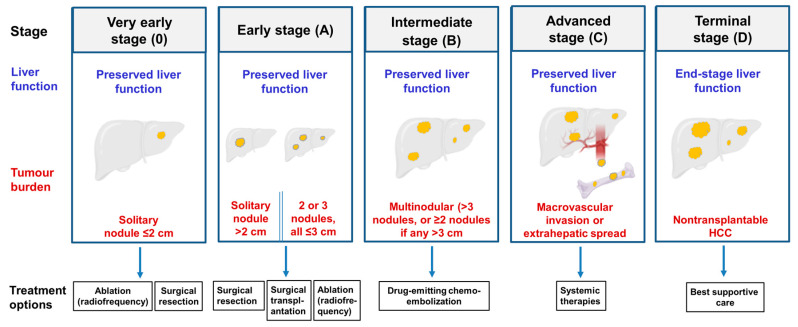
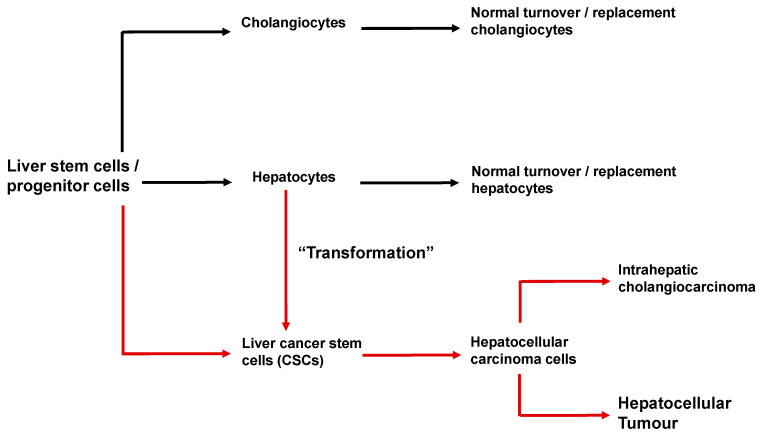
Hepatocellular carcinoma (HCC) is a considerable health burden worldwide and a major contributor to cancer-related deaths. HCC is often not noticed until at an advanced stage where treatment options are limited and current systemic drugs can usually only prolong survival for a short time. Understanding the biology and pathology of HCC is a challenge, due to the cellular and anatomic complexities of the liver. While not yet fully understood, liver cancer stem cells play a central role in the initiation and progression of HCC and in resistance to drugs. There are approximately twenty Ca-signaling proteins identified as potential targets for therapeutic treatment at different stages of HCC. These potential targets include inhibition of the self-renewal properties of liver cancer stem cells; HCC initiation and promotion by hepatitis B and C and non-alcoholic fatty liver disease (principally involving reduction of reactive oxygen species); and cell proliferation, tumor growth, migration and metastasis. A few of these Ca-signaling pathways have been identified as targets for natural products previously known to reduce HCC. Promising Ca-signaling targets include voltage-operated Ca channel proteins (liver cancer stem cells), inositol trisphosphate receptors, store-operated Ca entry, TRP channels, sarco/endoplasmic reticulum (Ca+Mg) ATP-ase and Ca/calmodulin-dependent protein kinases. However, none of these Ca-signaling targets has been seriously studied any further than laboratory research experiments. The future application of more systematic studies, including genomics, gene expression (RNA-seq), and improved knowledge of the fundamental biology and pathology of HCC will likely reveal new Ca-signaling protein targets and consolidate priorities for those already identified.
肝细胞癌(HCC)是全球范围内一项重大的健康负担,也是癌症相关死亡的主要原因之一。HCC往往在晚期才被发现,此时治疗选择有限,目前的全身性药物通常只能短暂延长生存期。由于肝脏的细胞和解剖结构复杂,了解HCC的生物学和病理学是一项挑战。虽然尚未完全了解,但肝癌干细胞在HCC的发生、发展以及耐药性方面起着核心作用。在HCC的不同阶段,大约有二十种钙信号蛋白被确定为潜在的治疗靶点。这些潜在靶点包括抑制肝癌干细胞的自我更新特性;乙肝、丙肝和非酒精性脂肪性肝病引发和促进HCC(主要涉及减少活性氧);以及细胞增殖、肿瘤生长、迁移和转移。其中一些钙信号通路已被确定为先前已知可降低HCC的天然产物的靶点。有前景的钙信号靶点包括电压门控钙通道蛋白(肝癌干细胞)、三磷酸肌醇受体、储存性钙内流、瞬时受体电位通道、肌浆网/内质网(钙+镁)ATP酶和钙/钙调蛋白依赖性蛋白激酶。然而,除了实验室研究实验外,这些钙信号靶点均未得到进一步深入研究。未来开展更系统的研究,包括基因组学、基因表达(RNA测序),以及增进对HCC基本生物学和病理学的了解,可能会揭示新的钙信号蛋白靶点,并巩固已确定靶点的优先级。