The Institute of Cancer Research, Sutton, London, United Kingdom.
The Royal Marsden NHS Foundation Trust, Sutton, London, United Kingdom.
Clin Cancer Res. 2021 Jan 15;27(2):566-574. doi: 10.1158/1078-0432.CCR-20-2371. Epub 2020 Sep 28.
Cyclin-dependent kinase 12 (CDK12) aberrations have been reported as a biomarker of response to immunotherapy for metastatic castration-resistant prostate cancer (mCRPC). Herein, we characterize CDK12-mutated mCRPC, presenting clinical, genomic, and tumor-infiltrating lymphocyte (TIL) data.
Patients with mCRPC consented to the molecular analyses of diagnostic and mCRPC biopsies. Genomic analyses involved targeted next-generation (MiSeq; Illumina) and exome sequencing (NovaSeq; Illumina). TILs were assessed by validated immunocytochemistry coupled with deep learning-based artificial intelligence analyses including multiplex immunofluorescence assays for CD4, CD8, and FOXP3 evaluating TIL subsets. The control group comprised a randomly selected mCRPC cohort with sequencing and clinical data available.
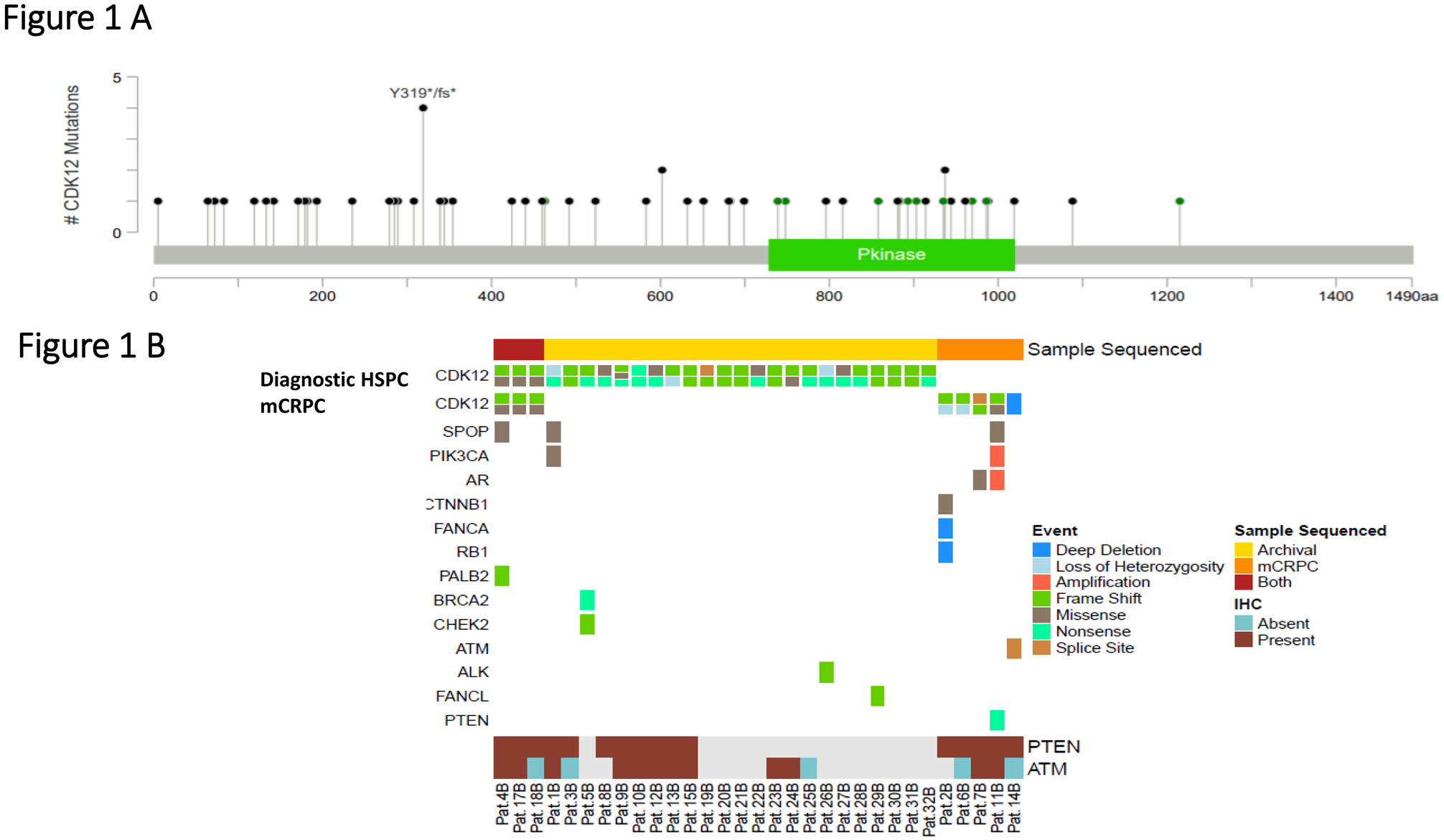
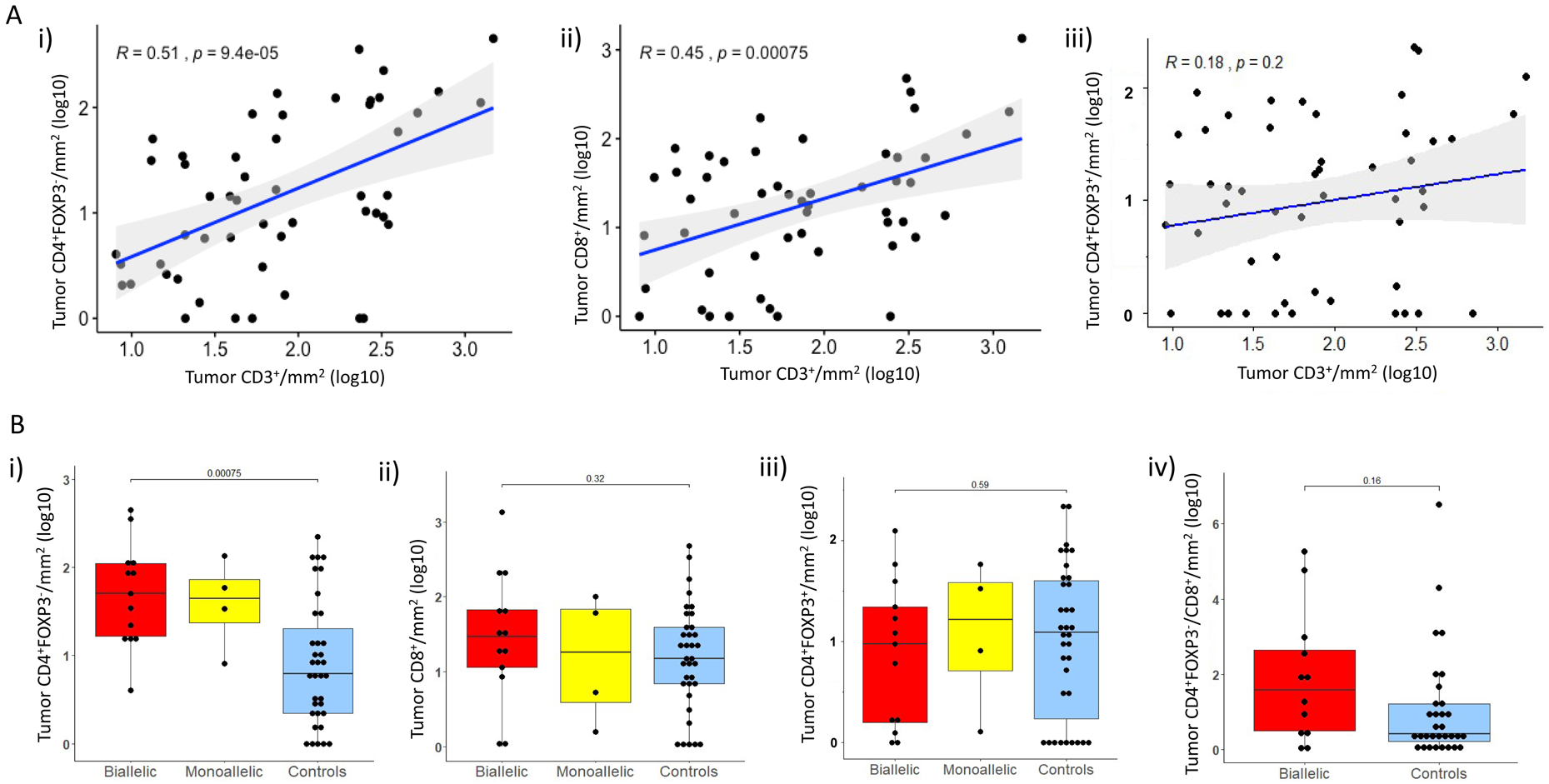
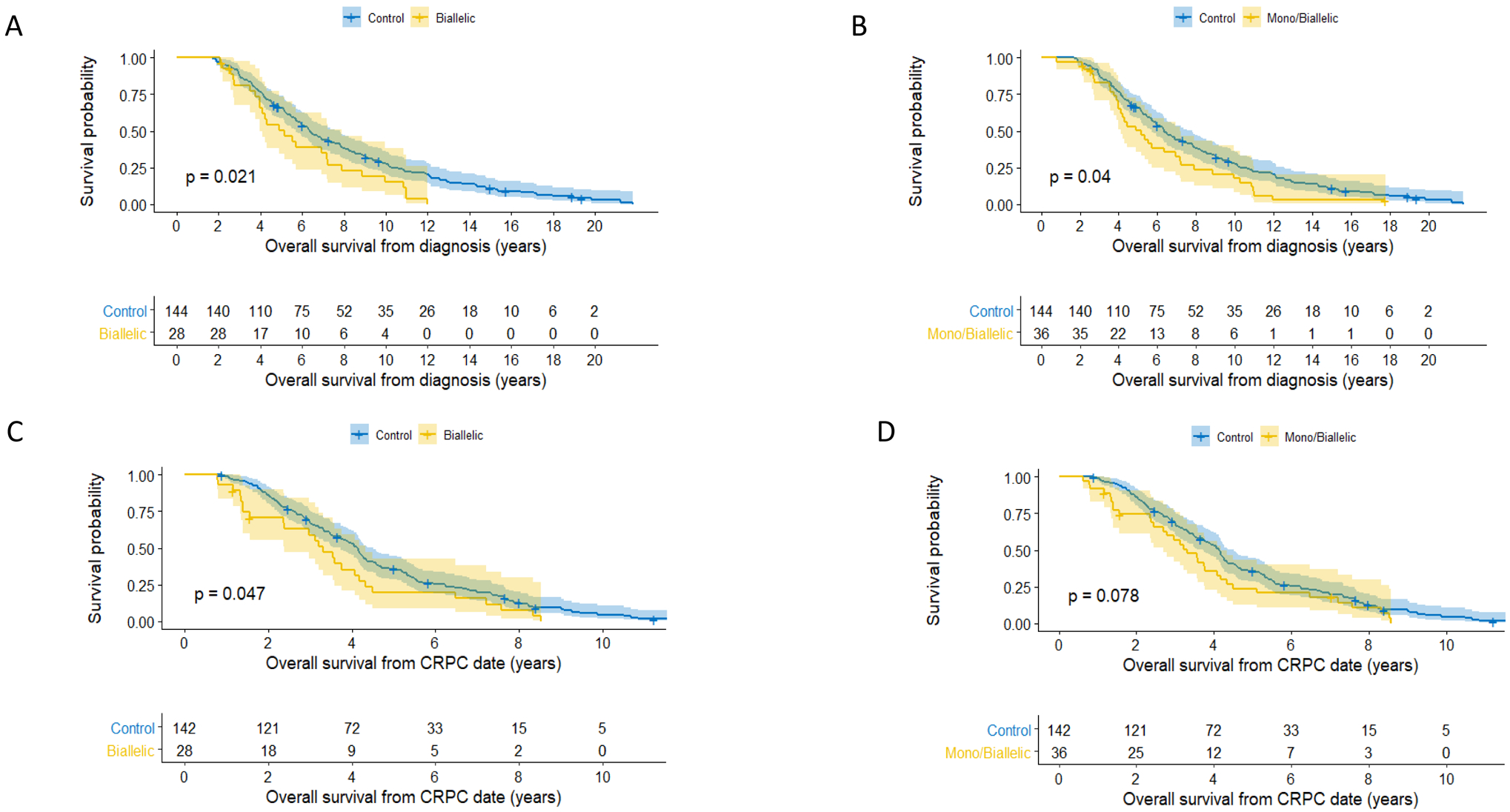
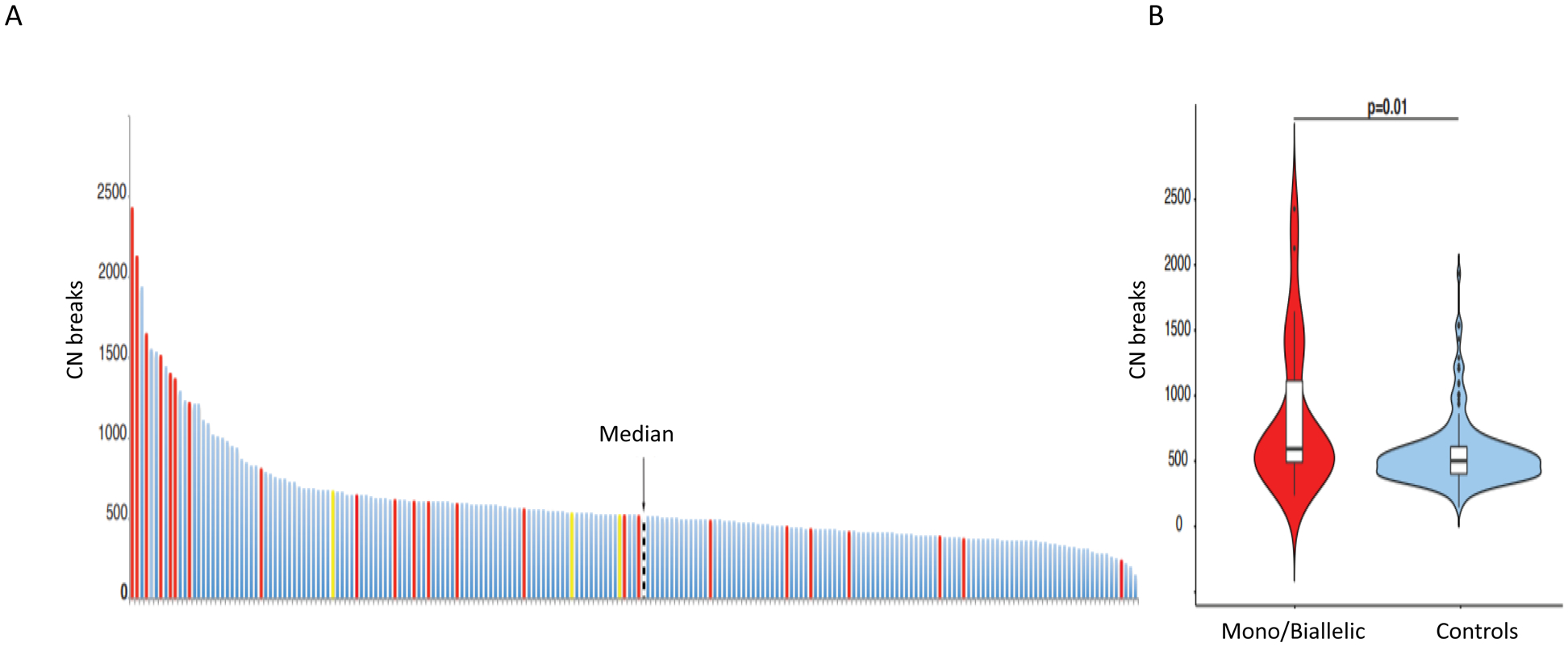
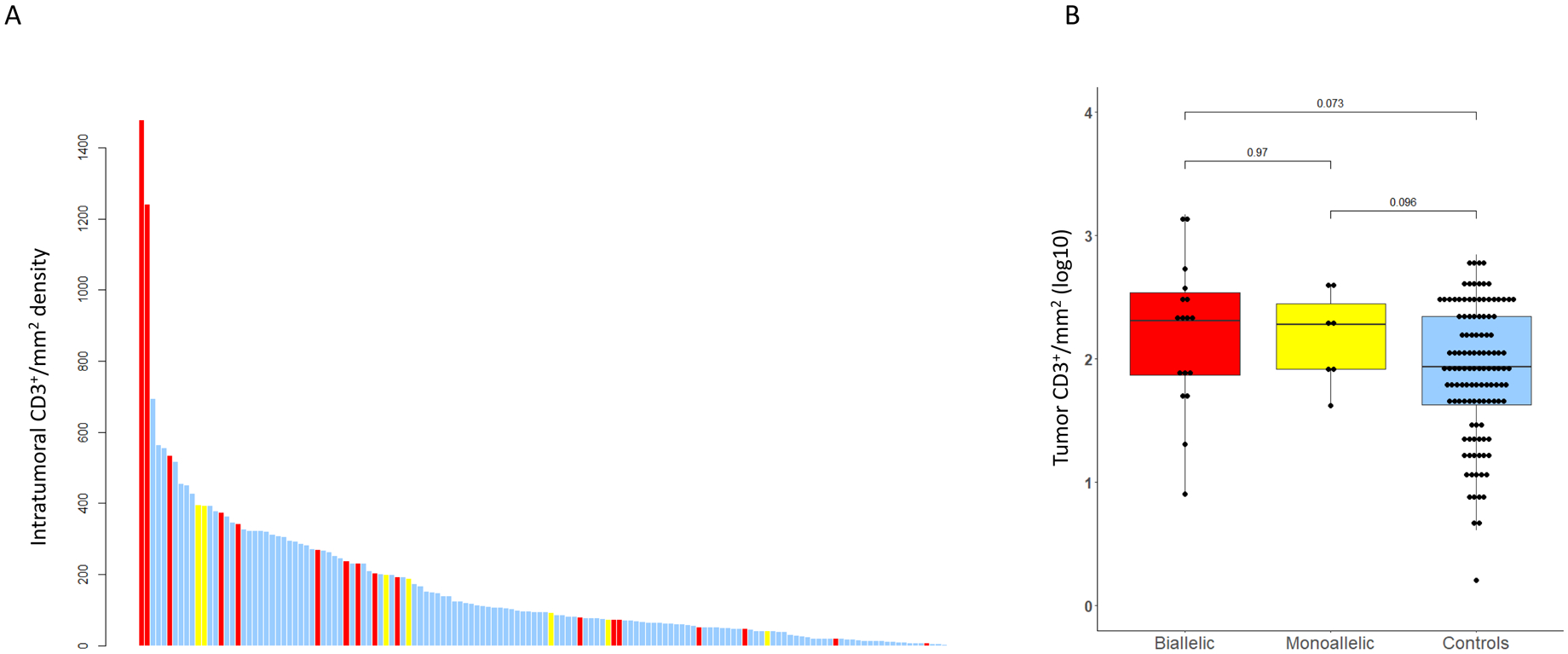
Biopsies from 913 patients underwent targeted sequencing between February 2015 and October 2019. Forty-three patients (4.7%) had tumors with CDK12 alterations. CDK12-altered cancers had distinctive features, with some revealing high chromosomal break numbers in exome sequencing. Biallelic CDK12-aberrant mCRPCs had shorter overall survival from diagnosis than controls [5.1 years (95% confidence interval (CI), 4.0-7.9) vs. 6.4 years (95% CI, 5.7-7.8); hazard ratio (HR), 1.65 (95% CI, 1.07-2.53); = 0.02]. Median intratumoral CD3 cell density was higher in CDK12 cancers, although this was not statistically significant (203.7 vs. 86.7 cells/mm; = 0.07). This infiltrate primarily comprised of CD4FOXP3 cells (50.5 vs. 6.2 cells/mm; < 0.0001), where high counts tended to be associated with worse survival from diagnosis (HR, 1.64; 95% CI, 0.95-2.84; = 0.077) in the overall population.
CDK12-altered mCRPCs have worse prognosis, with these tumors surprisingly being primarily enriched for CD4FOXP3 cells that seem to associate with worse outcome and may be immunosuppressive..
细胞周期蛋白依赖性激酶 12(CDK12)异常已被报道为转移性去势抵抗性前列腺癌(mCRPC)免疫治疗反应的生物标志物。在此,我们对 CDK12 突变的 mCRPC 进行了临床、基因组和肿瘤浸润淋巴细胞(TIL)特征描述。
患有 mCRPC 的患者同意对诊断和 mCRPC 活检进行分子分析。基因组分析涉及靶向下一代(MiSeq;Illumina)和外显子测序(NovaSeq;Illumina)。TIL 通过经过验证的免疫细胞化学结合基于深度学习的人工智能分析进行评估,包括用于评估 TIL 亚群的 CD4、CD8 和 FOXP3 的多重免疫荧光分析。对照组包括一个随机选择的具有测序和临床数据的 mCRPC 队列。
2015 年 2 月至 2019 年 10 月期间,对 913 名患者的活检进行了靶向测序。43 名患者(4.7%)的肿瘤存在 CDK12 改变。具有 CDK12 改变的癌症具有独特的特征,其中一些在外显子测序中显示出高染色体断裂数。与对照组相比,双等位基因 CDK12 异常的 mCRPC 从诊断开始的总生存期更短[5.1 年(95%置信区间(CI),4.0-7.9)vs. 6.4 年(95% CI,5.7-7.8);风险比(HR),1.65(95% CI,1.07-2.53);=0.02]。CDK12 癌症的肿瘤内 CD3 细胞密度较高,尽管这没有统计学意义(203.7 与 86.7 个细胞/mm;=0.07)。这种浸润主要由 CD4FOXP3 细胞组成(50.5 与 6.2 个细胞/mm;<0.0001),其中高计数往往与从诊断开始的生存预后更差相关(HR,1.64;95% CI,0.95-2.84;=0.077)。
CDK12 改变的 mCRPC 预后更差,这些肿瘤出人意料地主要富含 CD4FOXP3 细胞,这些细胞似乎与更差的结果相关,并且可能具有免疫抑制作用。