Gautam Alok Sagar, Dilwaliya Nikhilesh Kumar, Srivastava Ayushi, Kumar Sanjeev, Bauddh Kuldeep, Siingh Devendraa, Shah M A, Singh Karan, Gautam Sneha
Department of Physics, Hemvati Nandan Bahuguna Garhwal University, Srinagar, Garhwal, Uttarakhand 246174 India.
Department of Physics, National Institute of Technology Srinagar, Hazarathbal, Srinagar, Jammu and Kashmir 190006 India.
Environ Dev Sustain. 2021;23(6):8774-8797. doi: 10.1007/s10668-020-00994-6. Epub 2020 Sep 24.
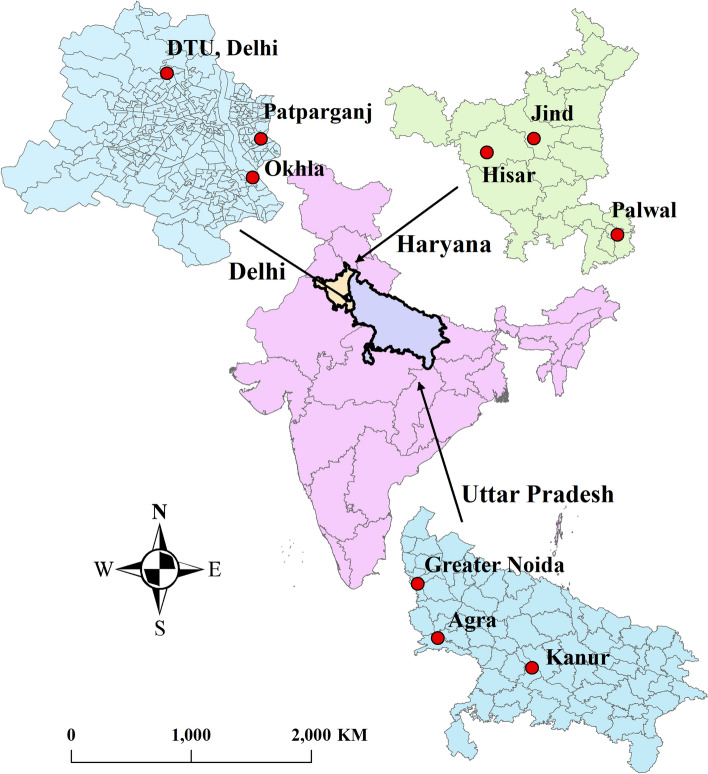
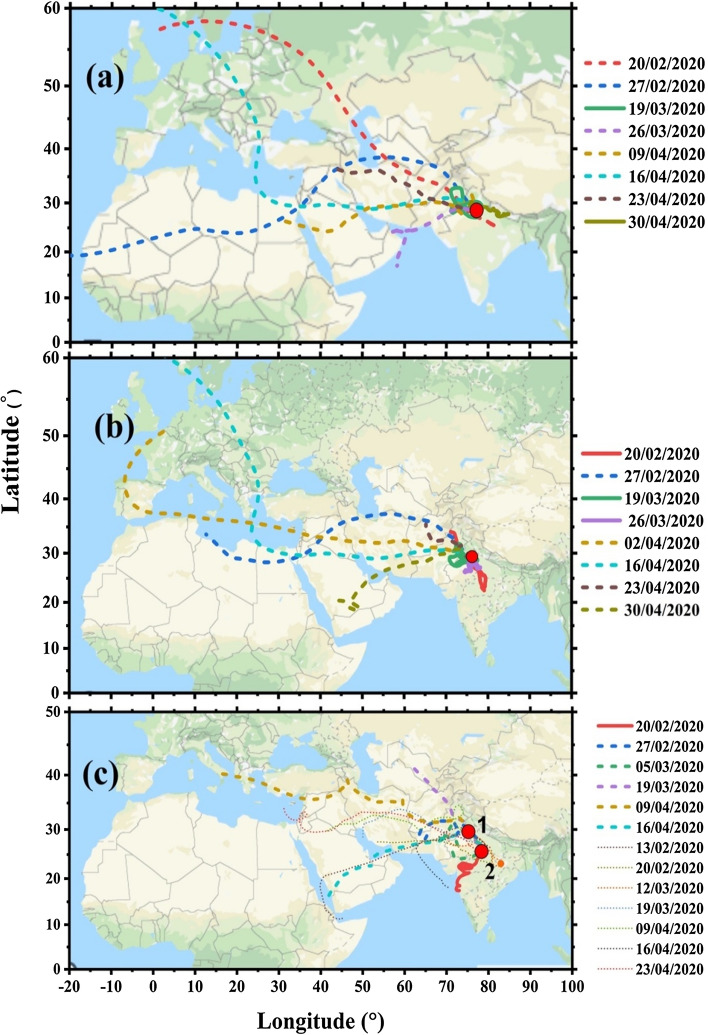
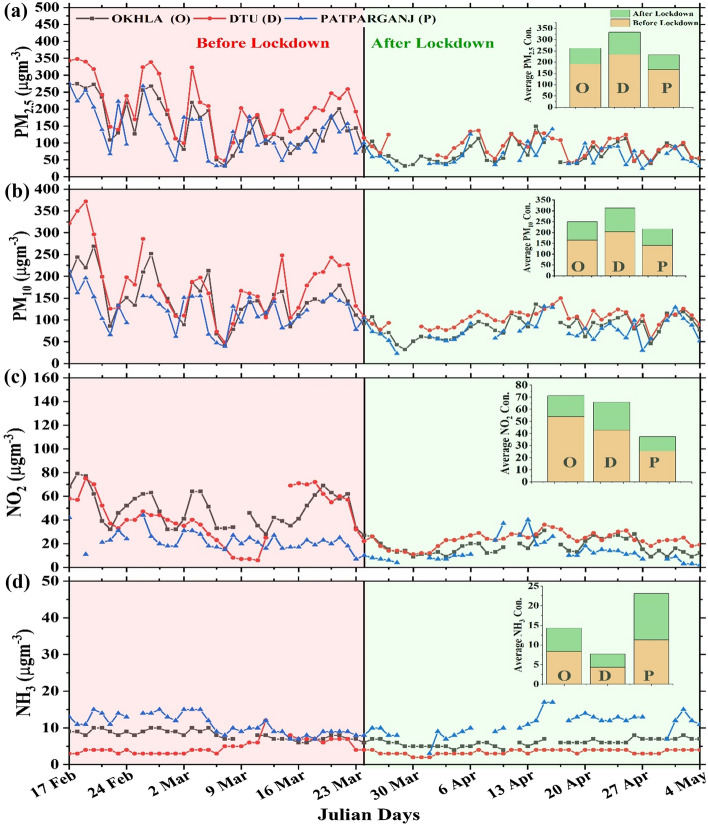
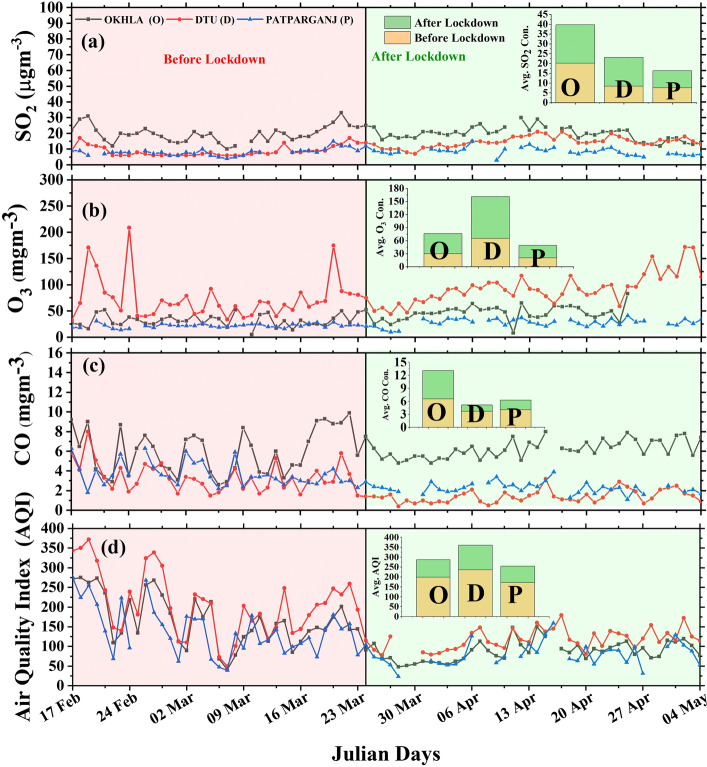
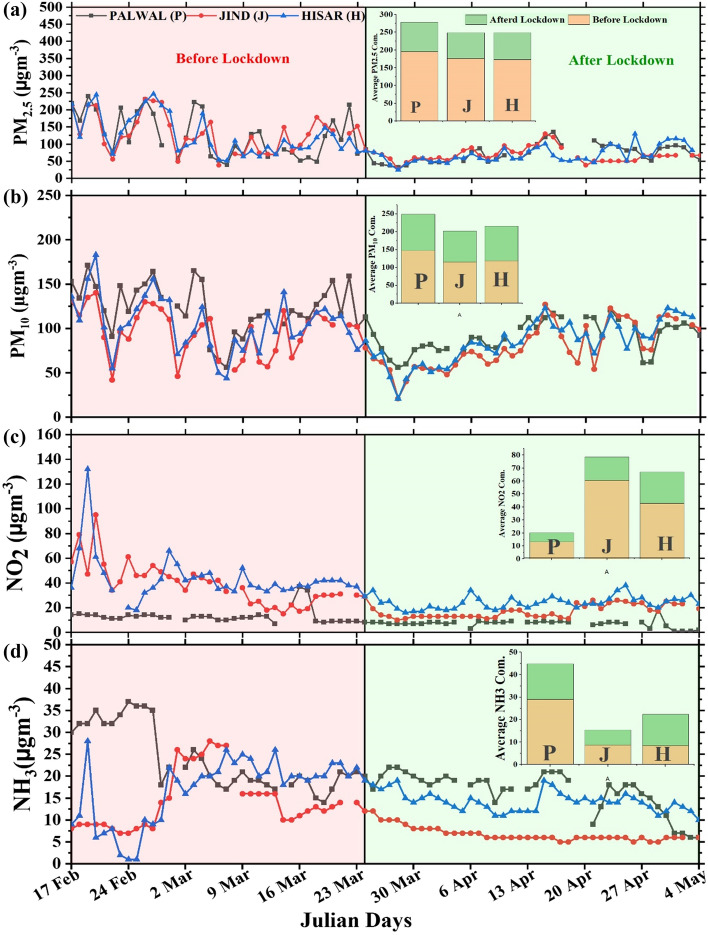
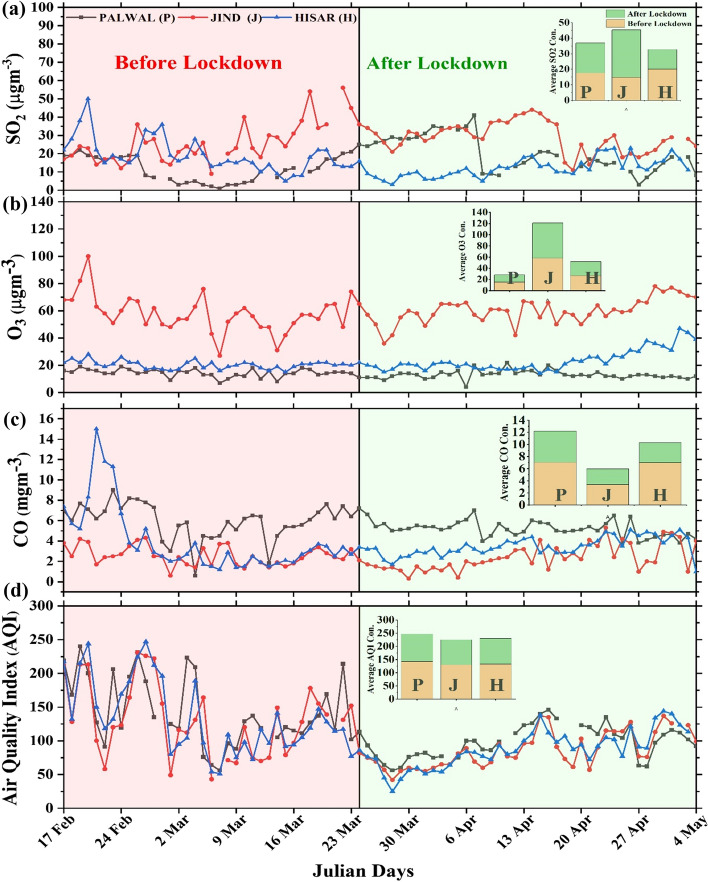
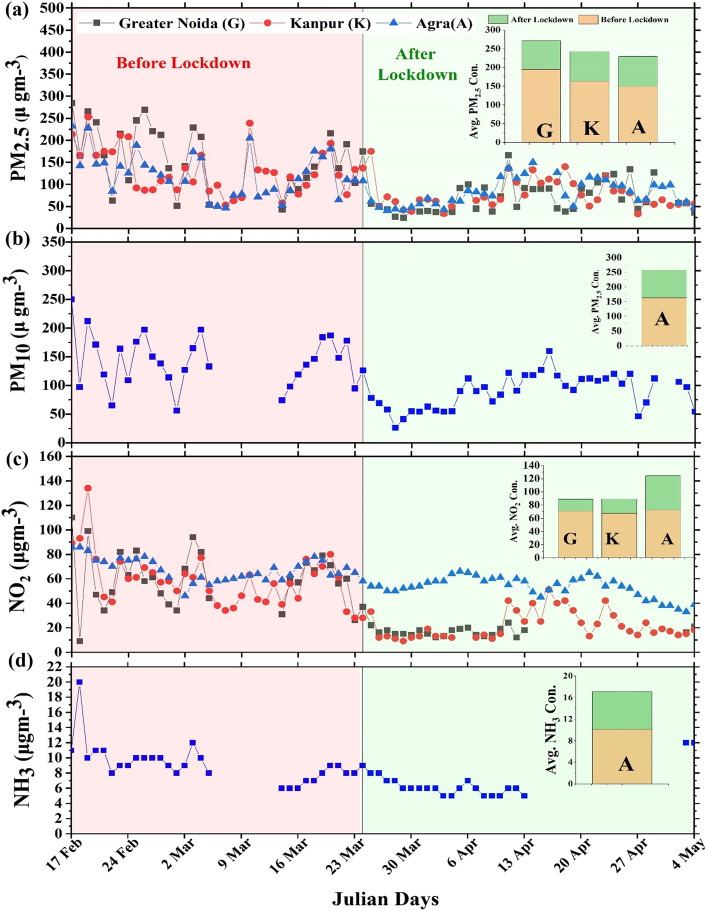
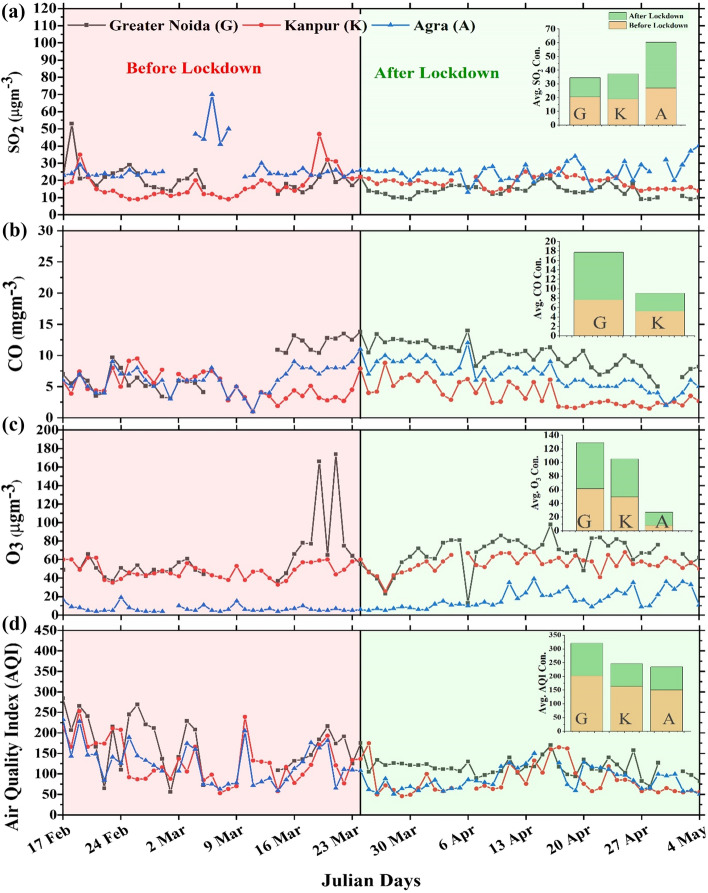
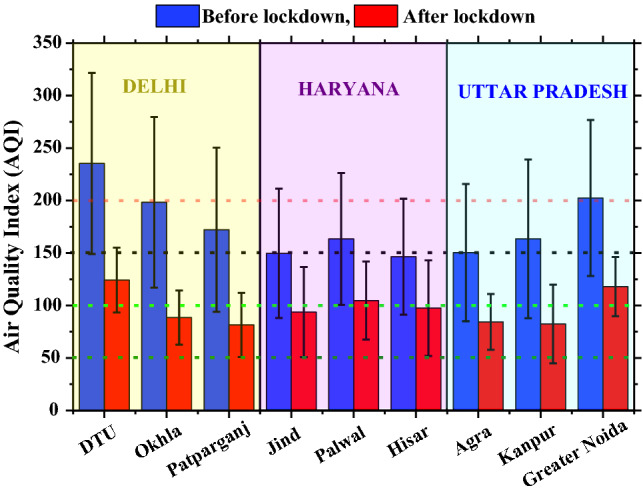
Due to fast and deadly spread of corona virus (COVID-19), the Government of India implemented lockdown in the entire country from 25 April 2020. So, we studied the differences in the air quality index (AQI) of Delhi (DTU, Okhla and Patparganj), Haryana (Jind, Palwal and Hisar) and Uttar Pradesh (Agra, Kanpur and Greater Noida) from 17 February 2020 to 4 May 2020. The AQI was calculated by combination of individual sub-indices of seven pollutants, namely PM, PM, NO, NH, SO, CO and O, collected from the Central Pollution Control Board website. The AQI has improved by up to 30-46.67% after lockdown. The AQI slope values - 1.87, - 1.70 and - 1.35 were reported for Delhi, - 1.11, - 1.31 and - 1.04 were observed for Haryana and - 1.48, - 1.79 and - 1.78 were found for Uttar Pradesh (UP), which may be attributed to limited access of transportation and industrial facilities due to lockdown. The ozone (O) concentration was high at Delhi because of lesser greenery as compared to UP and Haryana, which provides higher atmospheric temperature favourable for O formation. The air mass back trajectory (AMBT) analysis reveals the contribution of air mass from Europe, Africa and Gulf countries as well as local emissions from Indo-Gangetic Plain, Madhya Pradesh and Maharashtra states of India.
由于冠状病毒(COVID-19)的快速致命传播,印度政府于2020年4月25日在全国实施了封锁。因此,我们研究了2020年2月17日至2020年5月4日德里(德勤理工大学、奥克拉和帕特帕甘吉)、哈里亚纳邦(金德、帕尔瓦尔和希萨尔)以及北方邦(阿格拉、坎普尔和大诺伊达)空气质量指数(AQI)的差异。空气质量指数是通过将从中央污染控制委员会网站收集的七种污染物(即PM、PM、NO、NH、SO、CO和O)的各个子指数相结合来计算的。封锁后空气质量指数提高了30%-46.67%。德里的空气质量指数斜率值为-1.87、-1.70和-1.35,哈里亚纳邦观测到的斜率值为-1.11、-1.31和-1.04,北方邦(UP)的斜率值为-1.48、-1.79和-1.78,这可能归因于封锁导致交通和工业设施的使用受限。与北方邦和哈里亚纳邦相比,德里的绿地较少,臭氧(O)浓度较高,这为臭氧形成提供了更高的大气温度。气团后向轨迹(AMBT)分析揭示了来自欧洲、非洲和海湾国家的气团贡献以及印度恒河平原、中央邦和马哈拉施特拉邦的本地排放。