Hannover Medical School, Hannover, Germany.
KIMedi GmbH, Donauwörth, Germany.
J Med Internet Res. 2020 Sep 29;22(9):e21849. doi: 10.2196/21849.
Diagnostic delay in rare disease (RD) is common, occasionally lasting up to more than 20 years. In attempting to reduce it, diagnostic support tools have been studied extensively. However, social platforms have not yet been used for systematic diagnostic support. This paper illustrates the development and prototypic application of a social network using scientifically developed questions to match individuals without a diagnosis.
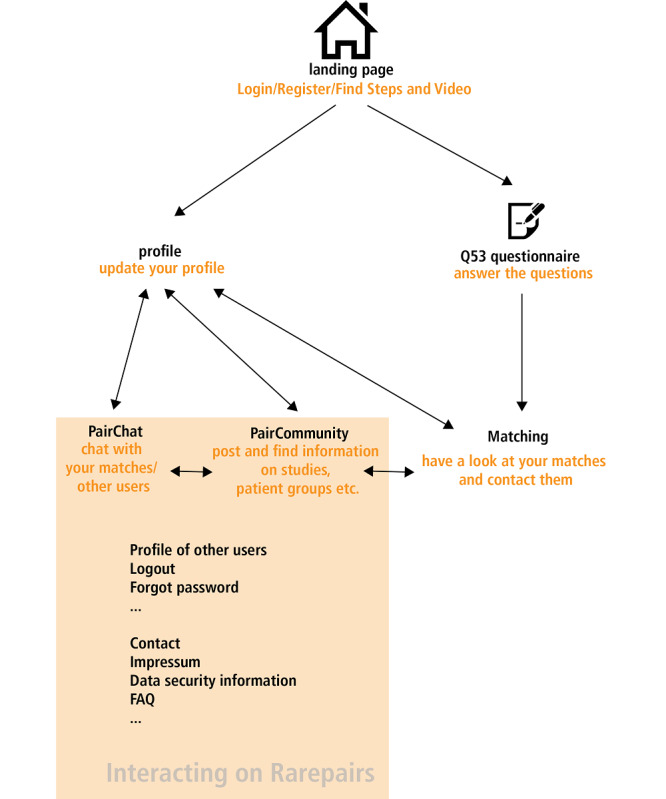
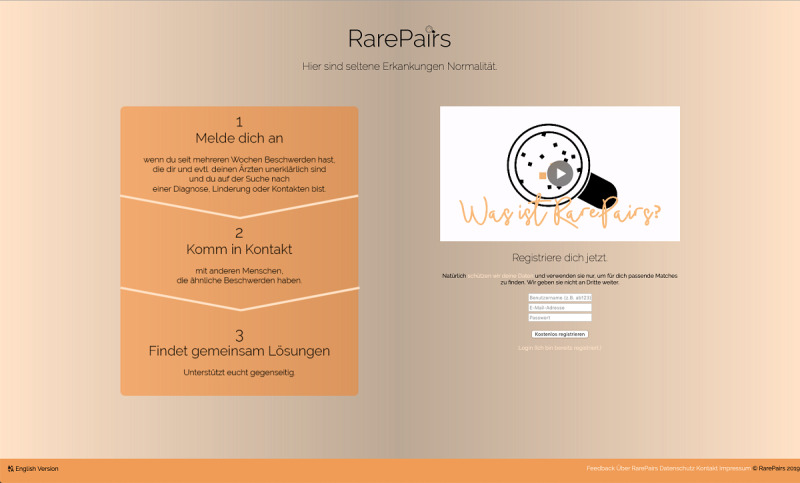
The study aimed to outline, create, and evaluate a prototype tool (a social network platform named RarePairs), helping patients with undiagnosed RDs to find individuals with similar symptoms. The prototype includes a matching algorithm, bringing together individuals with similar disease burden in the lead-up to diagnosis.
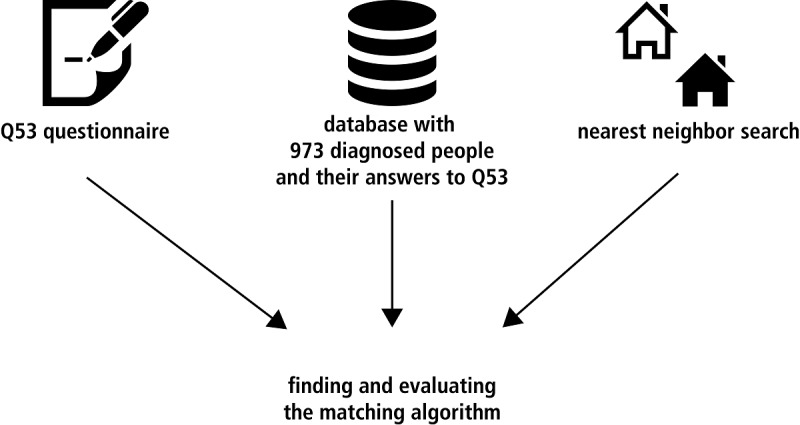
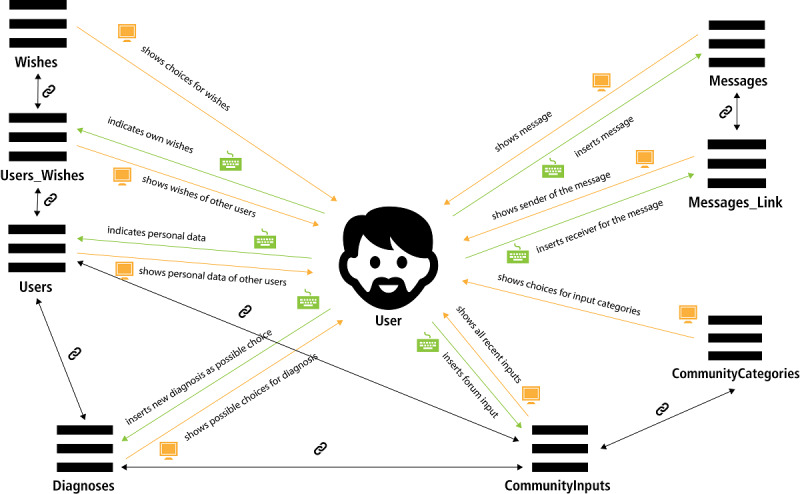
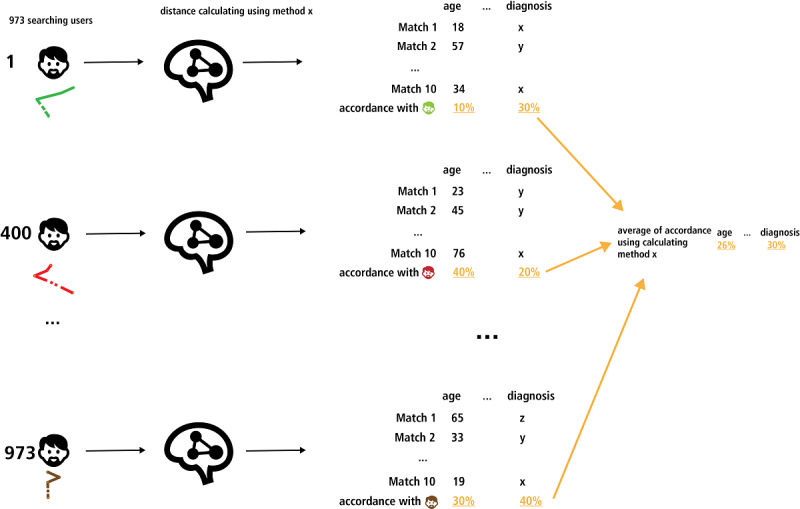
We divided our project into 4 phases. In phase 1, we used known data and findings in the literature to understand and specify the context of use. In phase 2, we specified the user requirements. In phase 3, we designed a prototype based on the results of phases 1 and 2, as well as incorporating a state-of-the-art questionnaire with 53 items for recognizing an RD. Lastly, we evaluated this prototype with a data set of 973 questionnaires from individuals suffering from different RDs using 24 distance calculating methods.
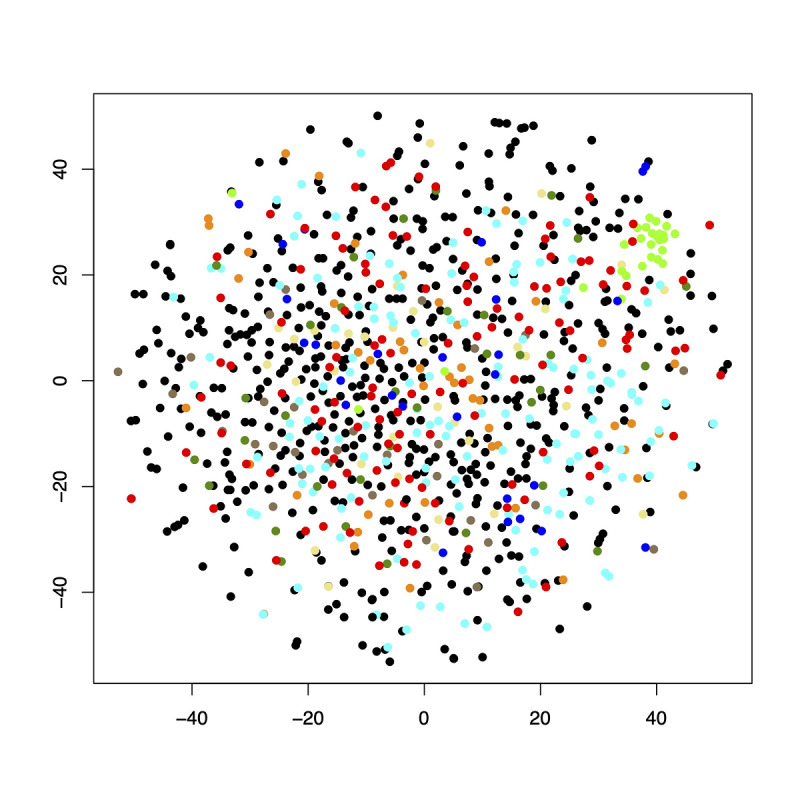
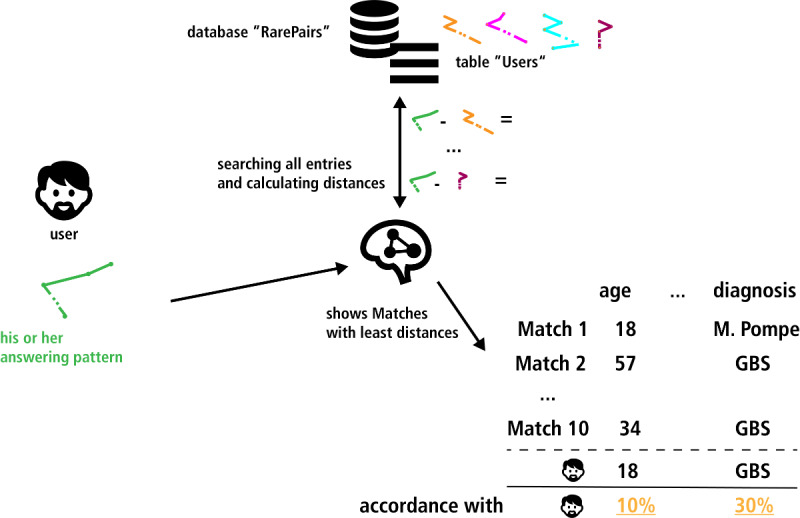
Based on a step-by-step construction process, the digital patient platform prototype, RarePairs, was developed. In order to match individuals with similar experiences, it uses answer patterns generated by a specifically designed questionnaire (Q53). A total of 973 questionnaires answered by patients with RDs were used to construct and test an artificial intelligence (AI) algorithm like the k-nearest neighbor search. With this, we found matches for every single one of the 973 records. The cross-validation of those matches showed that the algorithm outperforms random matching significantly. Statistically, for every data set the algorithm found at least one other record (match) with the same diagnosis.
Diagnostic delay is torturous for patients without a diagnosis. Shortening the delay is important for both doctors and patients. Diagnostic support using AI can be promoted differently. The prototype of the social media platform RarePairs might be a low-threshold patient platform, and proved suitable to match and connect different individuals with comparable symptoms. This exchange promoted through RarePairs might be used to speed up the diagnostic process. Further studies include its evaluation in a prospective setting and implementation of RarePairs as a mobile phone app.
罕见病(RD)的诊断延迟很常见,有时甚至长达 20 多年。为了缩短诊断延迟,人们广泛研究了诊断支持工具。然而,社交平台尚未用于系统的诊断支持。本文介绍了一种使用科学开发的问题来匹配未确诊个体的社交网络的开发和原型应用。
本研究旨在概述、创建和评估一种原型工具(名为 RarePairs 的社交网络平台),帮助未确诊 RD 患者找到具有相似症状的个体。该原型包括一种匹配算法,将具有相似疾病负担的个体聚集在一起,以促进诊断。
我们将项目分为 4 个阶段。在第 1 阶段,我们使用已知数据和文献中的发现来了解和指定使用情境。在第 2 阶段,我们指定了用户需求。在第 3 阶段,我们根据第 1 阶段和第 2 阶段的结果设计了一个原型,并结合了一种具有 53 个项目的用于识别 RD 的最新问卷。最后,我们使用来自不同 RD 患者的 973 份问卷的数据集,使用 24 种距离计算方法评估了这个原型。
基于逐步构建过程,开发了数字患者平台原型 RarePairs。为了匹配具有相似经历的个体,它使用专门设计的问卷(Q53)生成的答案模式。总共使用了 973 份 RD 患者回答的问卷来构建和测试人工智能(AI)算法,如最近邻搜索。通过这种方式,我们为 973 条记录中的每一条都找到了匹配。对这些匹配的交叉验证表明,该算法显著优于随机匹配。从统计学上讲,对于每个数据集,该算法都至少找到了另一条具有相同诊断的记录(匹配)。
诊断延迟对未确诊的患者来说是痛苦的。缩短诊断延迟对医生和患者都很重要。可以通过不同的方式来促进 AI 辅助诊断。社交媒体平台 RarePairs 的原型可能是一个低门槛的患者平台,并且已被证明适合匹配和连接具有可比症状的不同个体。通过 RarePairs 进行的这种交流可能有助于加速诊断过程。进一步的研究包括在前瞻性环境中对其进行评估以及将 RarePairs 作为移动应用程序实施。