Inflammation and Immunology, Pfizer Inc, 500 Arcola Rd, Collegeville, PA, 19426, USA.
University of Amsterdam, Amsterdam, The Netherlands.
BioDrugs. 2020 Dec;34(6):723-732. doi: 10.1007/s40259-020-00446-7.
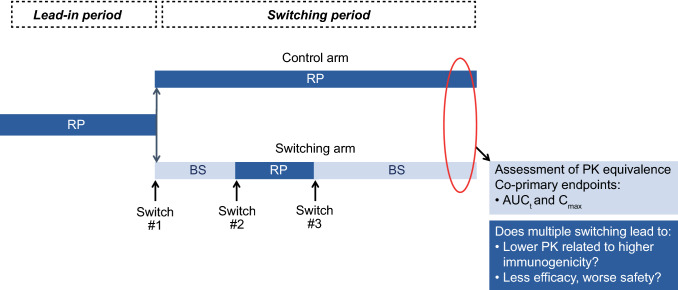
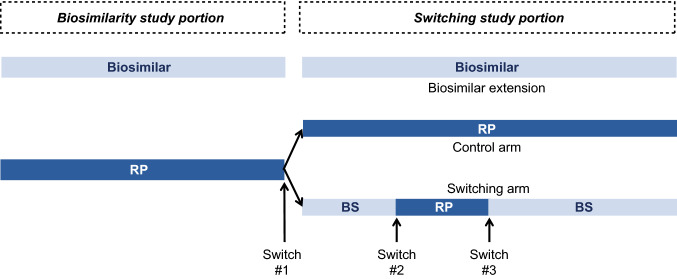
A biosimilar is a biologic drug that is "highly similar to a reference (originator) product, with no clinically meaningful differences between the two products in safety, purity, and potency". Regulatory approval of a biosimilar is based on analytical, structural, and functional comparisons with the reference product, comparative nonclinical (in vivo) studies, clinical pharmacokinetics and/or pharmacodynamics, and immunogenicity. In addition, comparative clinical efficacy and safety assessments are usually conducted and, taken together, comprise the "totality of the evidence" supporting biosimilarity. For a biosimilar to meet the additional designation of interchangeability in the United States (US), the applicant must demonstrate that the biological drug can be expected to produce the "same clinical result as the reference product in any given patient" and "if the biological drug is administered more than once to an individual, the risk in terms of safety or diminished efficacy of alternating or switching between the use of the biological drug and the reference product is no greater than the risk of using the reference product without such alternation or switch". The challenges faced in conducting clinical studies to support a designation of interchangeability, as defined in the final interchangeability guidance from the US Food and Drug Administration, are considered. Potential alternative approaches to generating adequate and sufficient clinical data to support a designation of interchangeability are also presented.
生物类似药是一种“高度类似于参照(原创)产品的生物药物,在安全性、纯度和效力方面,两者之间没有临床意义上的差异”。生物类似药的监管批准基于与参照产品的分析、结构和功能比较、非临床(体内)比较研究、临床药代动力学和/或药效学以及免疫原性。此外,通常还进行比较临床疗效和安全性评估,这些评估共同构成支持生物类似性的“全部证据”。为了使生物类似药在美国(美国)获得可互换性的额外指定,申请人必须证明生物药物“可预期在任何给定患者中产生与参照产品相同的临床结果”,并且“如果生物药物多次给予个体,在安全性方面的风险或功效降低,在使用生物药物和参照产品之间交替或切换时,与不进行这种交替或切换使用参照产品的风险没有更大”。考虑了在进行支持可互换性指定的临床研究中面临的挑战,这些指定是根据美国食品和药物管理局的最终可互换性指南定义的。还提出了潜在的替代方法来生成足够和充分的临床数据以支持可互换性的指定。