IBM Research, T. J. Watson Research Center, New York, USA.
Department of Psychology, Université de Montréal, CRIUGM Research Center, Montréal, Canada.
Cortex. 2020 Nov;132:191-205. doi: 10.1016/j.cortex.2020.08.020. Epub 2020 Sep 8.
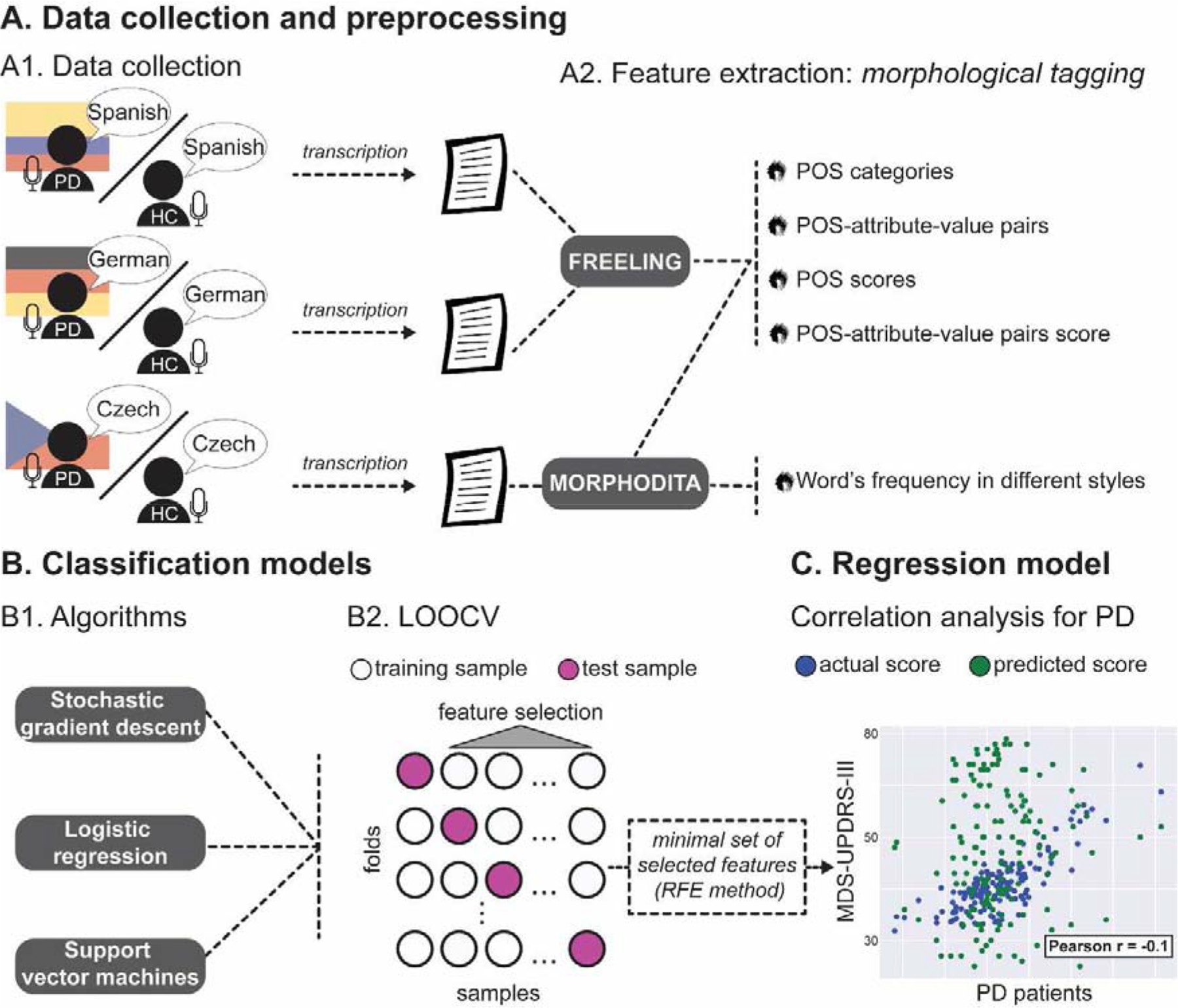
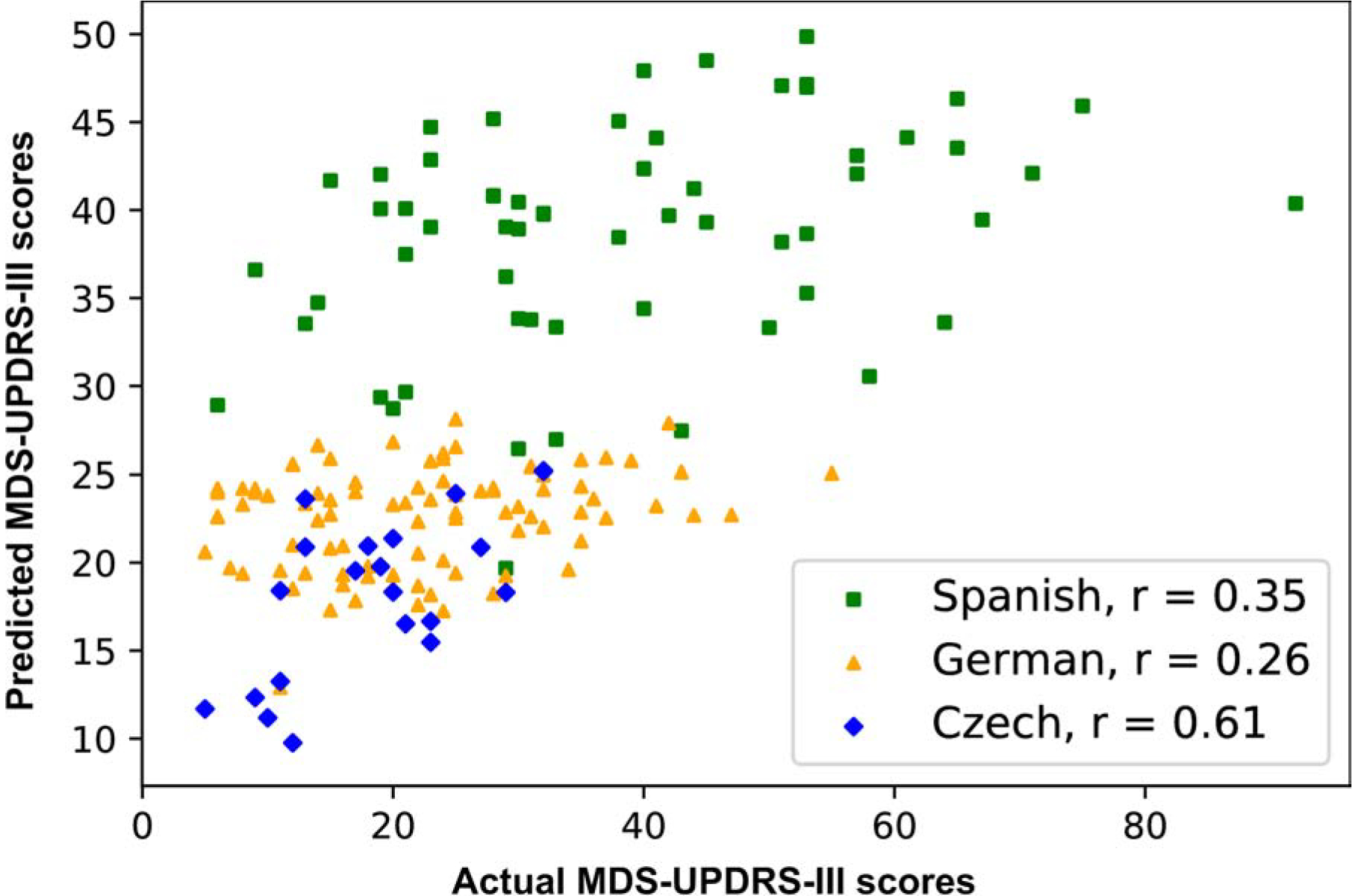
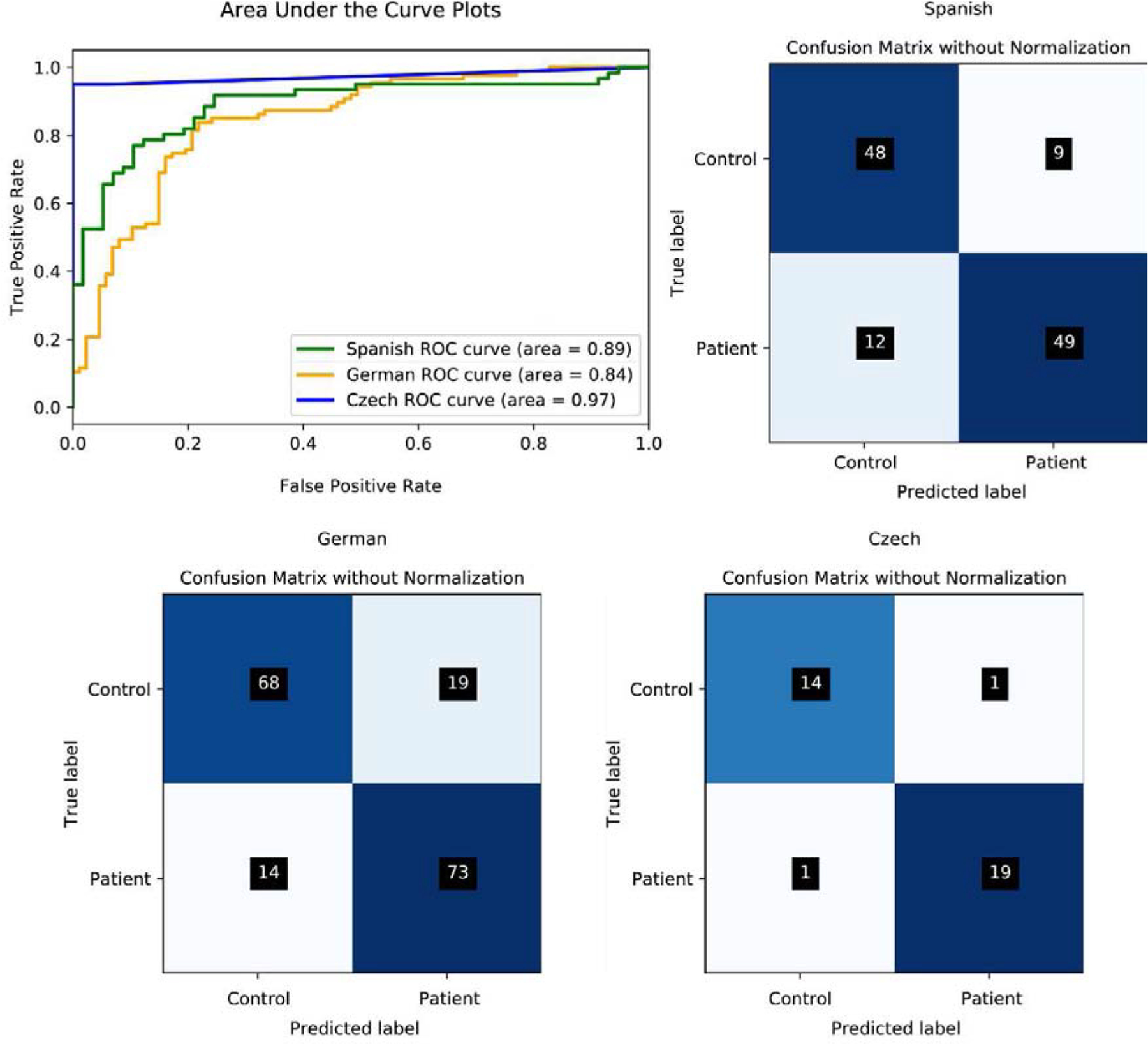
Embodied cognition research on Parkinson's disease (PD) points to disruptions of frontostriatal language functions as sensitive targets for clinical assessment. However, no existing approach has been tested for crosslinguistic validity, let alone by combining naturalistic tasks with machine-learning tools. To address these issues, we conducted the first classifier-based examination of morphological processing (a core frontostriatal function) in spontaneous monologues from PD patients across three typologically different languages. The study comprised 330 participants, encompassing speakers of Spanish (61 patients, 57 matched controls), German (88 patients, 88 matched controls), and Czech (20 patients, 16 matched controls). All subjects described the activities they perform during a regular day, and their monologues were automatically coded via morphological tagging, a computerized method that labels each word with a part-of-speech tag (e.g., noun, verb) and specific morphological tags (e.g., person, gender, number, tense). The ensuing data were subjected to machine-learning analyses to assess whether differential morphological patterns could classify between patients and controls and reflect the former's degree of motor impairment. Results showed robust classification rates, with over 80% of patients being discriminated from controls in each language separately. Moreover, the most discriminative morphological features were associated with the patients' motor compromise (as indicated by Pearson r correlations between predicted and collected motor impairment scores that ranged from moderate to moderate-to-strong across languages). Taken together, our results suggest that morphological patterning, an embodied frontostriatal domain, may be distinctively affected in PD across languages and even under ecological testing conditions.
帕金森病(PD)的具身认知研究指出,额纹状体语言功能的紊乱是临床评估的敏感靶点。然而,目前还没有一种方法被测试过其是否具有跨语言有效性,更不用说将自然任务与机器学习工具相结合了。为了解决这些问题,我们首次在三种不同类型的语言中对 PD 患者的自发独白进行了基于分类器的形态处理(核心额纹状体功能)研究。该研究包括 330 名参与者,涵盖西班牙语(61 名患者,57 名匹配对照组)、德语(88 名患者,88 名匹配对照组)和捷克语(20 名患者,16 名匹配对照组)的患者和对照。所有受试者都描述了他们在日常生活中进行的活动,他们的独白通过形态标记自动编码,这是一种通过词性标签(如名词、动词)和特定形态标签(如人称、性别、数、时态)为每个单词标记的计算机方法。随后对这些数据进行了机器学习分析,以评估不同的形态模式是否可以区分患者和对照组,并反映前者的运动障碍程度。结果显示出强大的分类率,在每种语言中,超过 80%的患者可以与对照组区分开来。此外,最具区分性的形态特征与患者的运动障碍有关(如皮尔逊 r 相关系数所表明的,从中度到中度到强,在不同语言之间的收集运动障碍评分之间的相关性)。总的来说,我们的研究结果表明,形态模式,一个具身的额纹状体域,可能在语言上甚至在生态测试条件下都会受到 PD 的显著影响。