Nursing School, Department of Maternal and Child Nursing and Public Health, Universidade Federal de Minas Gerais, Belo Horizonte, Brazil.
Postgraduate Program in Nursing, Nursing School, Universidade Federal de Minas Gerais, Belo Horizonte, Brazil.
Popul Health Metr. 2020 Sep 30;18(Suppl 1):18. doi: 10.1186/s12963-020-00219-y.
The prevalence and burden of disease resulting from obesity have increased worldwide. In Brazil, more than half of the population is now overweight. However, the impact of this growing risk factor on disease burden remains inexact. Using the 2017 Global Burden of Disease (GBD) results, this study sought to estimate mortality and disability-adjusted life years (DALYs) lost to non-communicable diseases caused by high body mass index (BMI) in both sexes and across age categories. This study also aimed to describe the prevalence of overweight and obesity throughout the states of Brazil.
Age-standardized prevalence of overweight and obesity were estimated between 1990 and 2017. A comparative risk assessment was applied to estimate DALYs and deaths for non-communicable diseases and for all causes linked to high BMI.
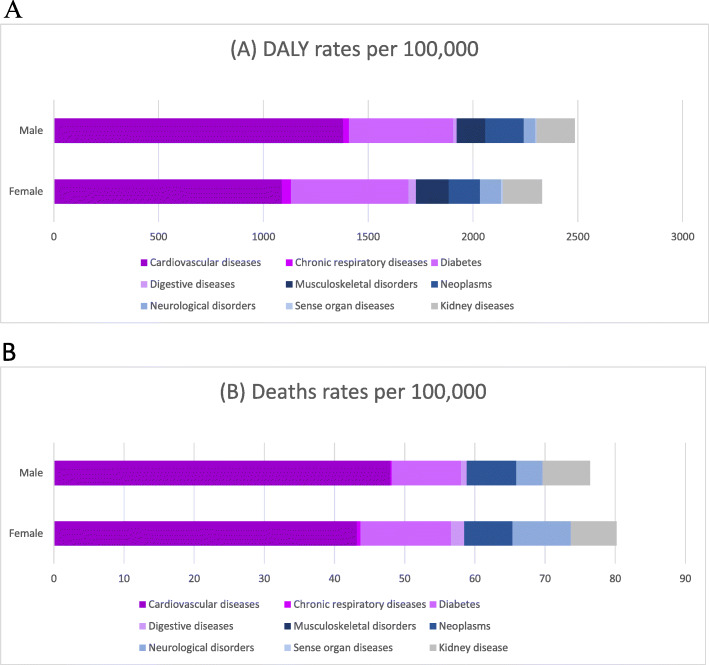
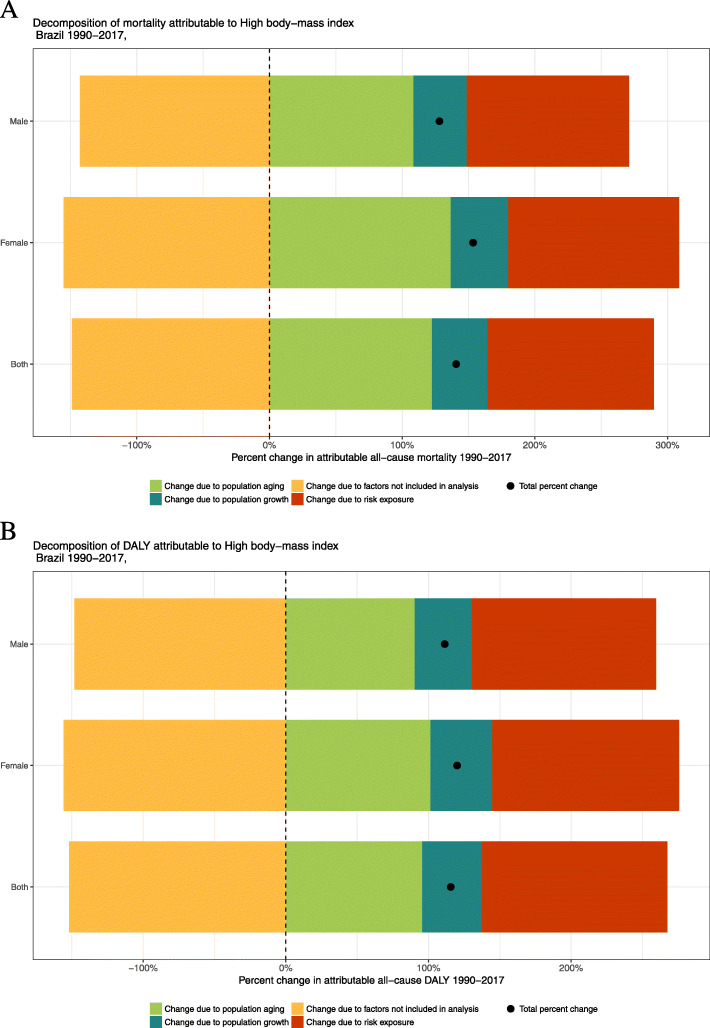
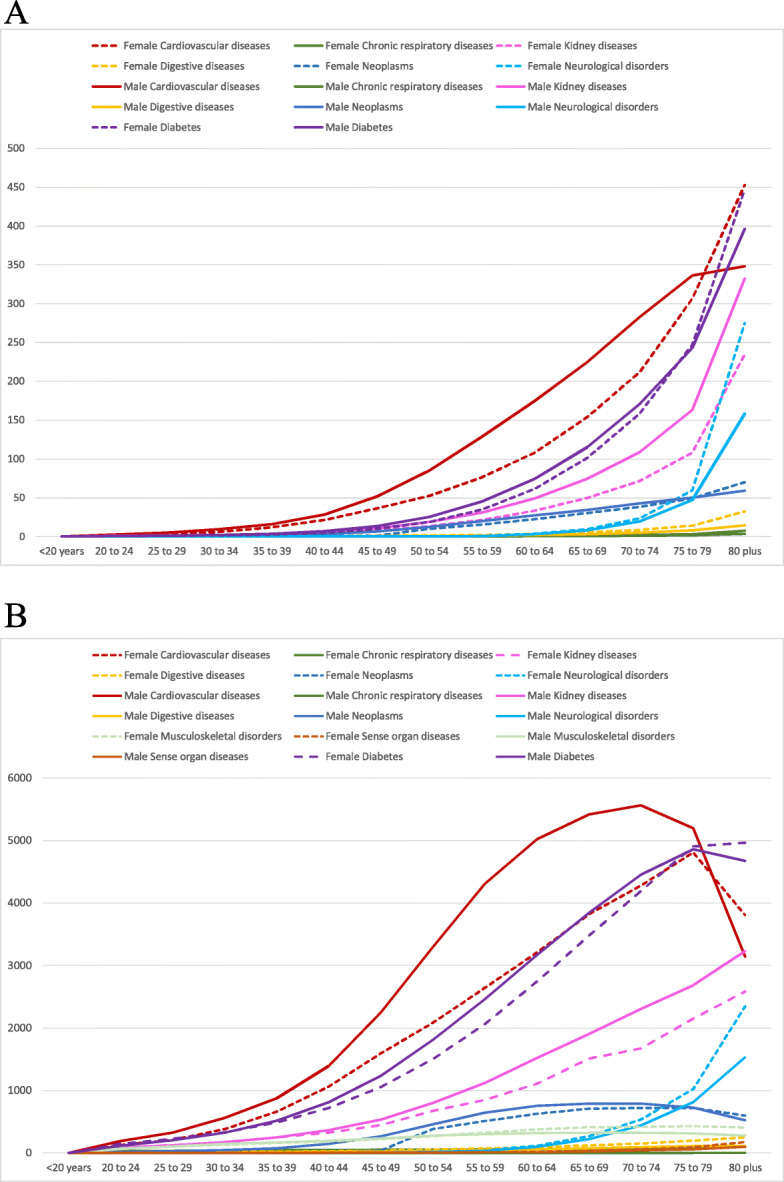
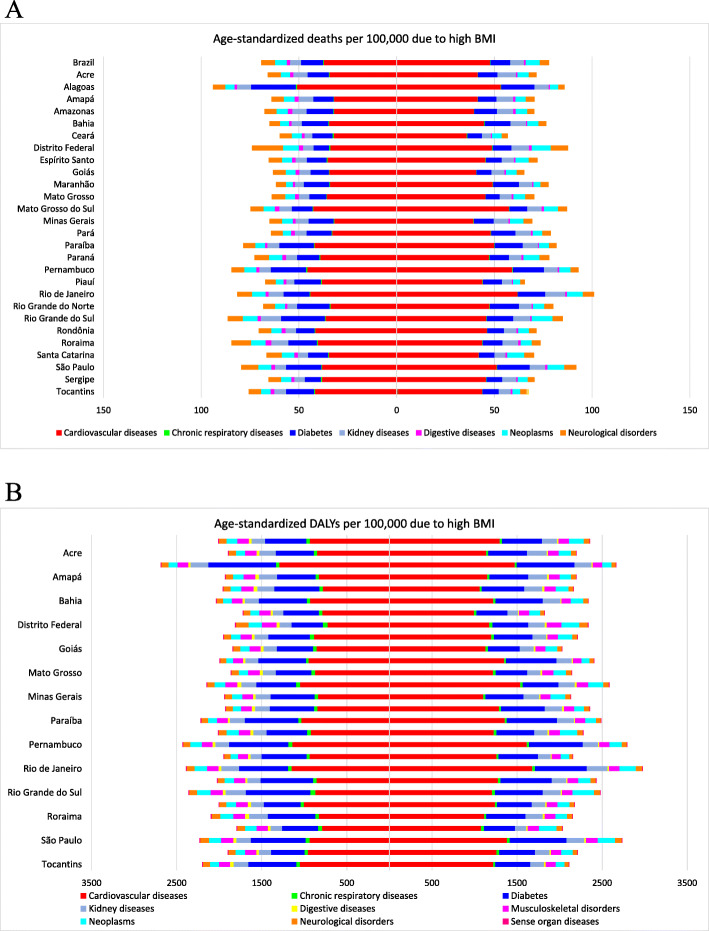
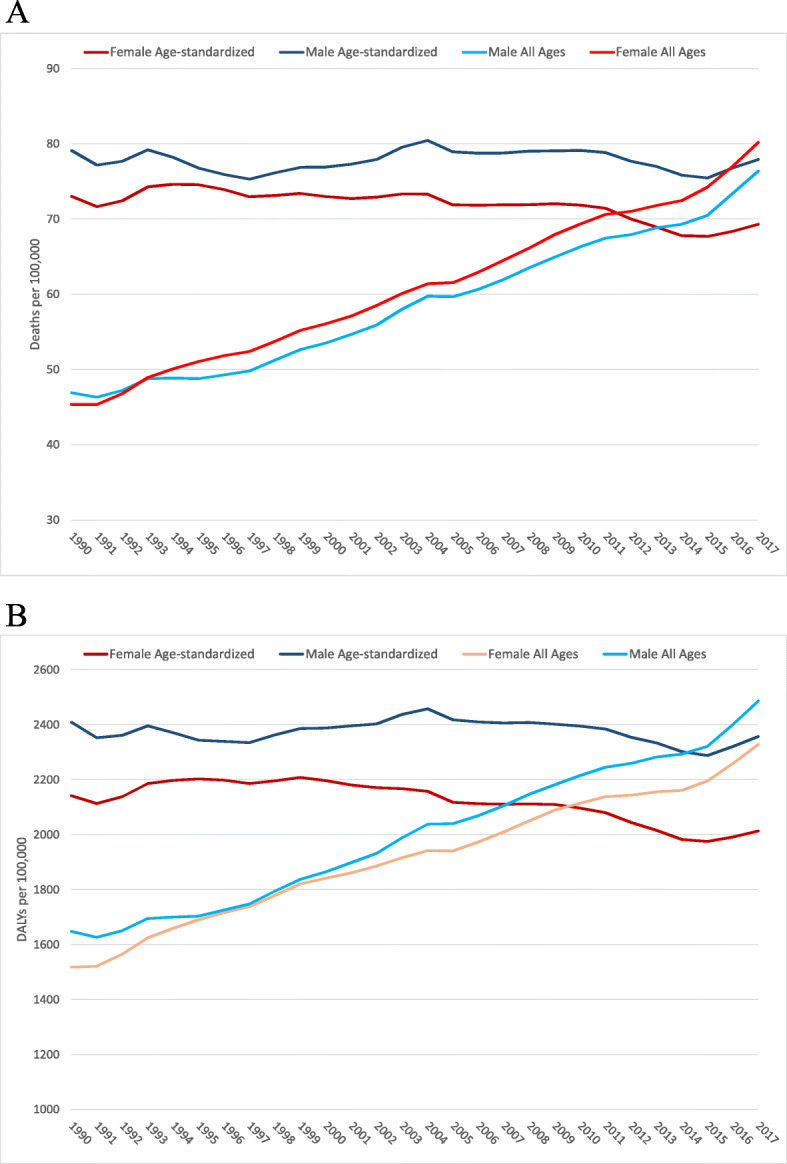
The prevalence of overweight and obesity increased during the period of analysis. Overall, age-standardized prevalence of obesity in Brazil was higher in females (29.8%) than in males (24.6%) in 2017; however, since 1990, males have presented greater rise in obesity (244.1%) than females (165.7%). Increases in prevalence burden were greatest in states from the North and Northeast regions of Brazil. Overall, burden due to high BMI also increased from 1990 to 2017. In 2017, high BMI was responsible for 12.3% (8.8-16.1%) of all deaths and 8.4% (6.3-10.7%) of total DALYs lost to non-communicable diseases, up from 7.2% (4.1-10.8%), and 4.6% (2.4-6.0%) in 1990, respectively. Change due to risk exposure is the leading contributor to the growth of BMI burden in Brazil. In 2017, high BMI was responsible for 165,954 deaths and 5,095,125 DALYs. Cardiovascular disease and diabetes have proven to be the most prevalent causes of deaths, along with DALYs caused by high BMI, regardless of sex or state.
This study demonstrates increasing age-standardized prevalence of obesity in all Brazilian states. High BMI plays an important role in disease burdens in terms of cardiovascular diseases, diabetes, and all causes of mortality. Assessing levels and trends in exposures to high BMI and the resulting disease burden highlights the current priority for primary prevention and public health action initiatives focused on obesity.
肥胖导致的疾病患病率和疾病负担在全球范围内都有所增加。在巴西,超过一半的人口现在超重。然而,这种日益增长的风险因素对疾病负担的影响仍不明确。本研究使用 2017 年全球疾病负担(GBD)研究结果,旨在估计男女各年龄段因高体重指数(BMI)导致的非传染性疾病的死亡率和伤残调整生命年(DALY)损失。本研究还旨在描述巴西各州超重和肥胖的流行情况。
1990 年至 2017 年期间,估计了超重和肥胖的年龄标准化患病率。应用比较风险评估来估计与高 BMI 相关的非传染性疾病和所有原因导致的 DALY 和死亡。
在分析期间,超重和肥胖的患病率有所增加。总体而言,2017 年巴西女性(29.8%)的肥胖患病率高于男性(24.6%);然而,自 1990 年以来,男性的肥胖患病率增长幅度(244.1%)大于女性(165.7%)。巴西北部和东北部各州的流行负担增长最大。总体而言,高 BMI 的负担也从 1990 年增加到 2017 年。2017 年,高 BMI 导致的所有死亡人数的 12.3%(8.8-16.1%)和非传染性疾病导致的总 DALY 损失的 8.4%(6.3-10.7%),高于 1990 年的 7.2%(4.1-10.8%)和 4.6%(2.4-6.0%)。风险暴露变化是巴西 BMI 负担增长的主要原因。2017 年,高 BMI 导致 165954 人死亡和 5095125 人伤残调整生命年损失。无论性别或州如何,心血管疾病和糖尿病一直是导致死亡和高 BMI 导致的 DALY 最常见的原因。
本研究表明,巴西所有州的肥胖标准化患病率都在增加。高 BMI 在心血管疾病、糖尿病和所有死因导致的疾病负担方面发挥着重要作用。评估高 BMI 暴露水平和趋势及其导致的疾病负担,突出了当前以初级预防和公共卫生行动为重点的肥胖防控工作的优先事项。