Zhang Zhenbo, Yang Zhibiao, Lu Song, Harte Allan, Morana Roberto, Preuss Michael
School of Materials, University of Manchester, M13 9PL, Manchester, UK.
Center for Adaptative System Engineering, School of Creativity and Arts, ShanghaiTech University, Shanghai, 201210, China.
Nat Commun. 2020 Sep 29;11(1):4890. doi: 10.1038/s41467-020-18641-z.
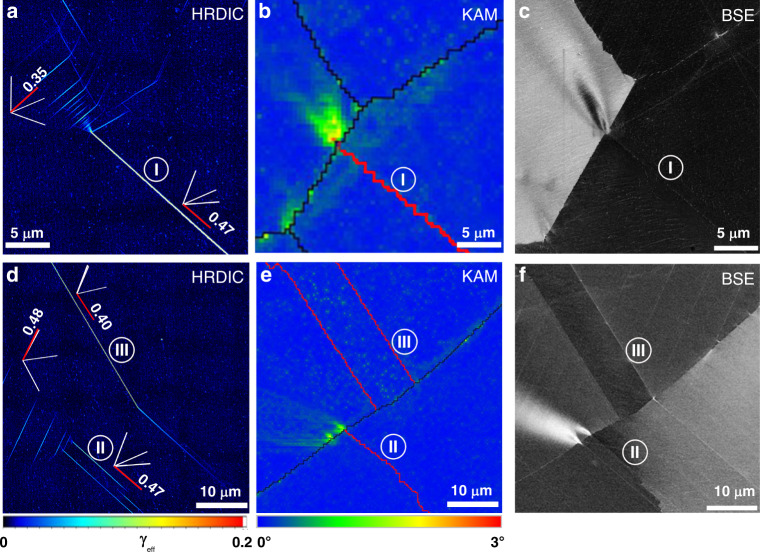
Twin boundaries (TBs) in Ni-based superalloys are vulnerable sites for failure in demanding environments, and a current lack of mechanistic understanding hampers the reliable lifetime prediction and performance optimisation of these alloys. Here we report the discovery of an unexpected γ″ precipitation mechanism at TBs that takes the responsibility for alloy failure in demanding environments. Using multiscale microstructural and mechanical characterisations (from millimetre down to atomic level) and DFT calculations, we demonstrate that abnormal γ″ precipitation along TBs accounts for the premature dislocation activities and pronounced strain localisation associated with TBs during mechanical loading, which serves as a precursor for crack initiation. We clarify the physical origin of the TBs-related cracking at the atomic level of γ″-strengthened Ni-based superalloys in a hydrogen containing environment, and provide practical methods to mitigate the adverse effect of TBs on the performance of these alloys.
镍基高温合金中的孪晶界(TBs)在苛刻环境下是易发生失效的薄弱部位,目前缺乏机理认识阻碍了这些合金可靠的寿命预测和性能优化。在此,我们报告了在孪晶界发现一种意想不到的γ″析出机制,该机制导致合金在苛刻环境下失效。通过多尺度微观结构和力学表征(从毫米级到原子级)以及密度泛函理论(DFT)计算,我们证明沿孪晶界的异常γ″析出是导致机械加载过程中与孪晶界相关的过早位错活动和明显应变局部化的原因,而这是裂纹萌生的先兆。我们在含氢环境中从γ″强化镍基高温合金的原子层面阐明了与孪晶界相关开裂的物理起源,并提供了减轻孪晶界对这些合金性能不利影响的实用方法。