Chougule Amit, Kolli Vipula, Baroi Sudipta, Ebraheim Nabil, Czernik Piotr J, Loh Y Peng, Lecka-Czernik Beata
Department of Orthopaedic Surgery University of Toledo, College of Medicine and Life Sciences Toledo OH USA.
Center for Diabetes and Endocrine Research University of Toledo, College of Medicine and Life Sciences Toledo OH USA.
JBMR Plus. 2020 Aug 12;4(9):e10392. doi: 10.1002/jbm4.10392. eCollection 2020 Sep.
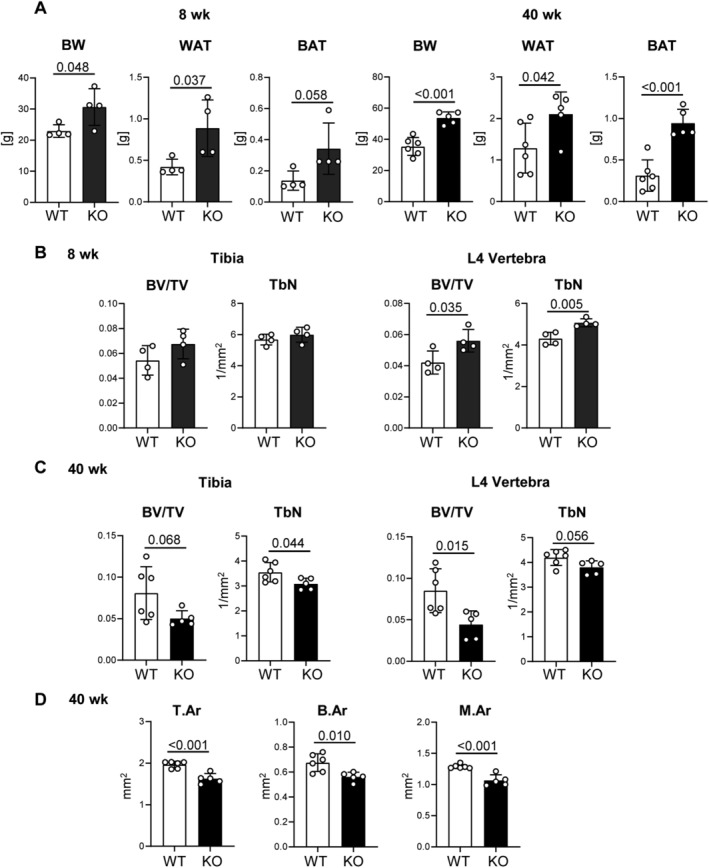
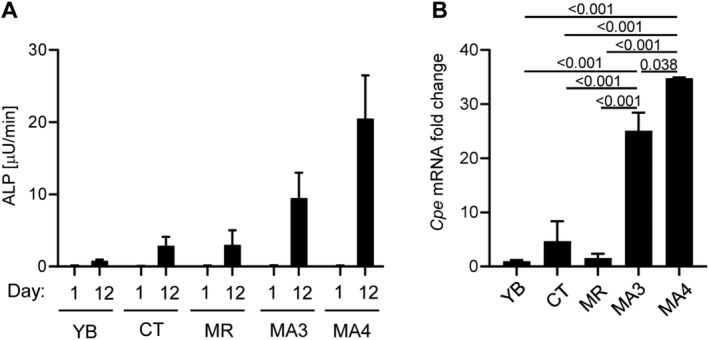
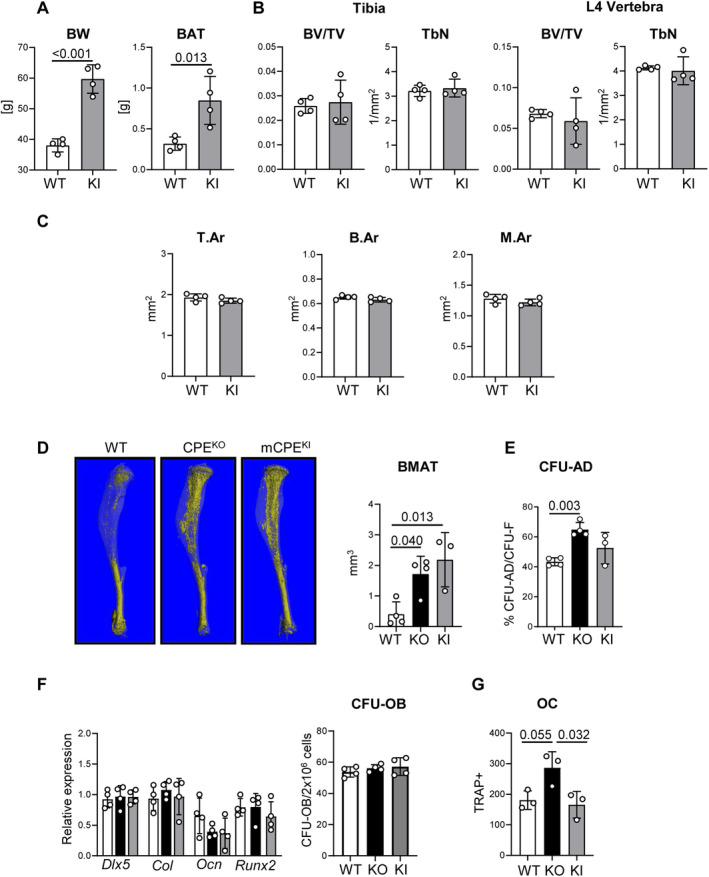
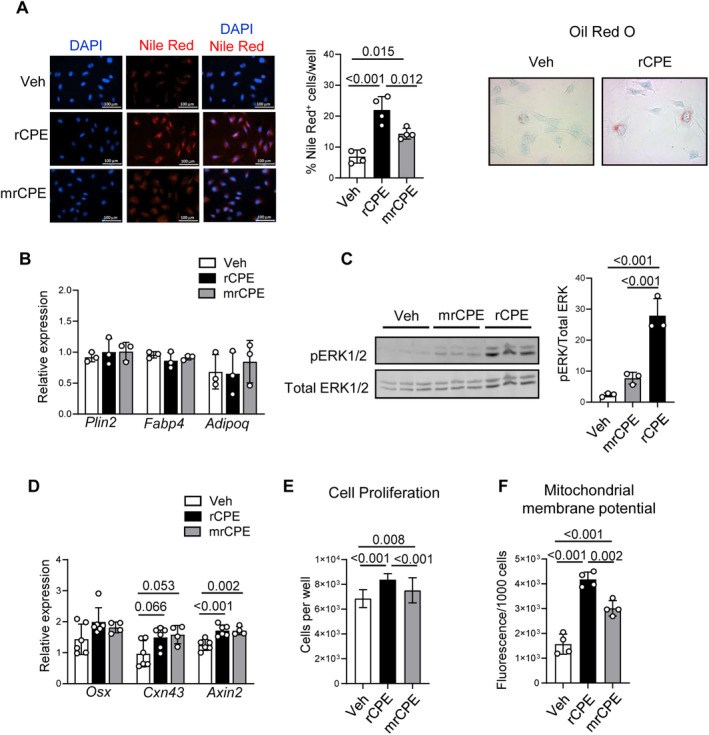
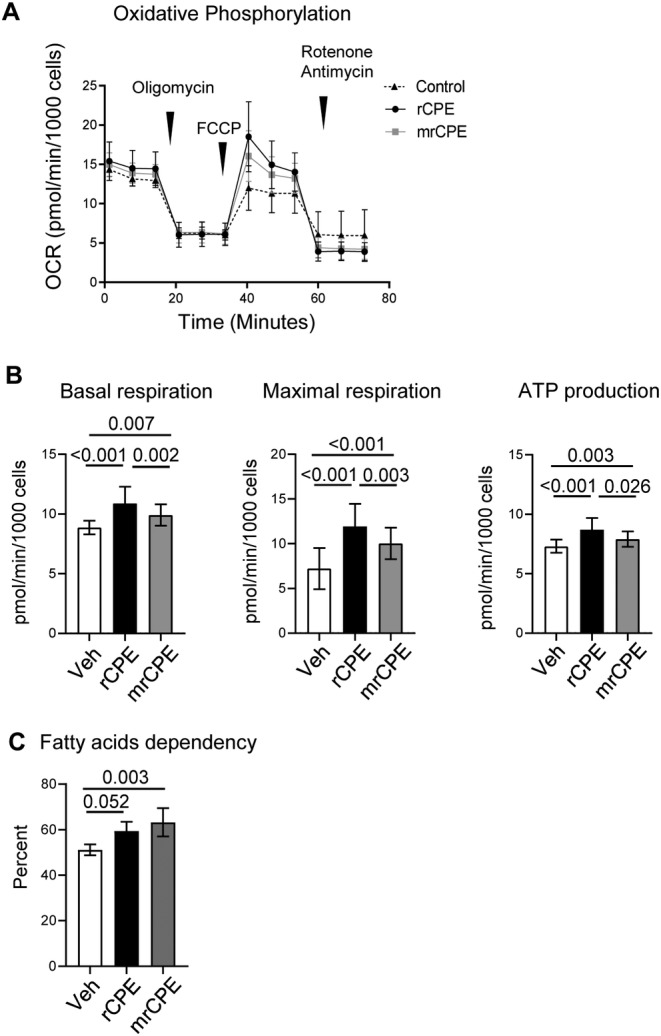
Bone and energy metabolism are integrated by common regulatory mechanisms. Carboxypeptidase E (CPE), also known as obesity susceptibility protein or neurotrophic factor-α1, is recognized for its function in processing prohormones, including proinsulin and pro-opiomelanocortin polypeptide. Independent of its enzymatic activity, CPE may also act as a secreted factor with divergent roles in neuroprotection and cancer growth; however, its role in the regulation of bone mass and skeletal cell differentiation is unknown. Male mice with global deficiency in CPE are characterized with profound visceral obesity, low bone mass in both appendicular and axial skeleton, and high volume of marrow fat. Interestingly, although metabolic deficit of CPE KO mice develops early in life, bone deficit develops in older age, suggesting that CPE bone-specific activities differ from its enzymatic activities. Indeed, mutated CPE knockin (mCPE KI) mice ectopically expressing CPE-E342Q, a mutated protein lacking enzymatic activity, develop the same obese phenotype and accumulate the same volume of marrow fat as CPE KO mice, but their bone mass is normal. In addition, differentiation of marrow hematopoietic cells toward tartrate-resistant acid phosphatase-positive multinucleated osteoclasts is highly increased in CPE KO mice, but normal in mCPE KI mice. Moreover, in murine skeletal stem cells, nonenzymatic trophic CPE has activated ERK signaling, increased cell proliferation and increased mitochondrial activity. Treatment of preosteoblastic cells with intact or mutated recombinant CPE led to a transient accumulation of small lipid droplets, increased oxidative phosphorylation, and increased cellular dependence on fatty acids as fuel for energy production. In human marrow aspirates, CPE expression increases up to 30-fold in osteogenic conditions. These findings suggest that nonenzymatic and trophic activities of CPE regulate bone mass, whereas marrow adiposity is controlled by CPE enzymatic activity. Thus, CPE can be positioned as a factor regulating simultaneously bone and energy metabolism through a combination of shared and distinct mechanisms. © 2020 The Authors. published by Wiley Periodicals, Inc. on behalf of American Society for Bone and Mineral Research © 2020 The Authors. published by Wiley Periodicals LLC. on behalf of American Society for Bone and Mineral Research.
骨骼与能量代谢通过共同的调节机制相互整合。羧肽酶E(CPE),也被称为肥胖易感性蛋白或神经营养因子-α1,因其在加工前体激素(包括胰岛素原和阿片促黑素皮质素原多肽)中的作用而被人们所熟知。独立于其酶活性之外,CPE也可能作为一种分泌因子,在神经保护和癌症生长中发挥不同作用;然而,其在骨量调节和骨骼细胞分化中的作用尚不清楚。CPE全球缺乏的雄性小鼠表现为严重的内脏肥胖、四肢和中轴骨骼的低骨量以及高骨髓脂肪量。有趣的是,尽管CPE基因敲除(KO)小鼠的代谢缺陷在生命早期就出现了,但骨缺陷在老年时才出现,这表明CPE的骨骼特异性活性与其酶活性不同。事实上,异位表达CPE-E342Q(一种缺乏酶活性的突变蛋白)的突变型CPE基因敲入(mCPE KI)小鼠表现出与CPE KO小鼠相同的肥胖表型,并积累相同量的骨髓脂肪,但它们的骨量正常。此外,CPE KO小鼠中骨髓造血细胞向抗酒石酸酸性磷酸酶阳性多核破骨细胞的分化显著增加,但在mCPE KI小鼠中正常。此外,在小鼠骨骼干细胞中,非酶促营养性CPE激活了ERK信号通路,增加了细胞增殖并提高了线粒体活性。用完整或突变的重组CPE处理前成骨细胞会导致小脂滴的短暂积累、氧化磷酸化增加以及细胞对脂肪酸作为能量产生燃料的依赖性增加。在人类骨髓抽吸物中,在成骨条件下CPE表达增加高达30倍。这些发现表明,CPE的非酶促和营养性活性调节骨量,而骨髓脂肪生成则由CPE的酶活性控制。因此,CPE可被定位为一种通过共享和独特机制组合同时调节骨骼和能量代谢的因子。© 2020作者。由Wiley Periodicals, Inc.代表美国骨与矿物质研究学会出版 © 2020作者。由Wiley Periodicals LLC代表美国骨与矿物质研究学会出版。