Song Ge, He Wan-Ting, Callaghan Sean, Anzanello Fabio, Huang Deli, Ricketts James, Torres Jonathan L, Beutler Nathan, Peng Linghang, Vargas Sirena, Cassell Jon, Parren Mara, Yang Linlin, Ignacio Caroline, Smith Davey M, Voss James E, Nemazee David, Ward Andrew B, Rogers Thomas, Burton Dennis R, Andrabi Raiees
Department of Immunology and Microbiology, The Scripps Research Institute, La Jolla, CA 92037, USA.
IAVI Neutralizing Antibody Center, The Scripps Research Institute, La Jolla, CA 92037, USA.
bioRxiv. 2020 Sep 23:2020.09.22.308965. doi: 10.1101/2020.09.22.308965.
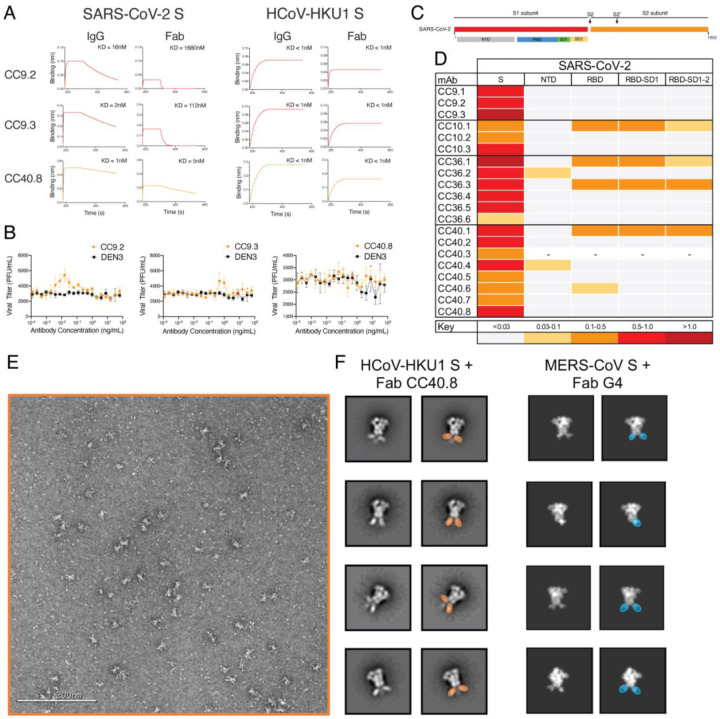
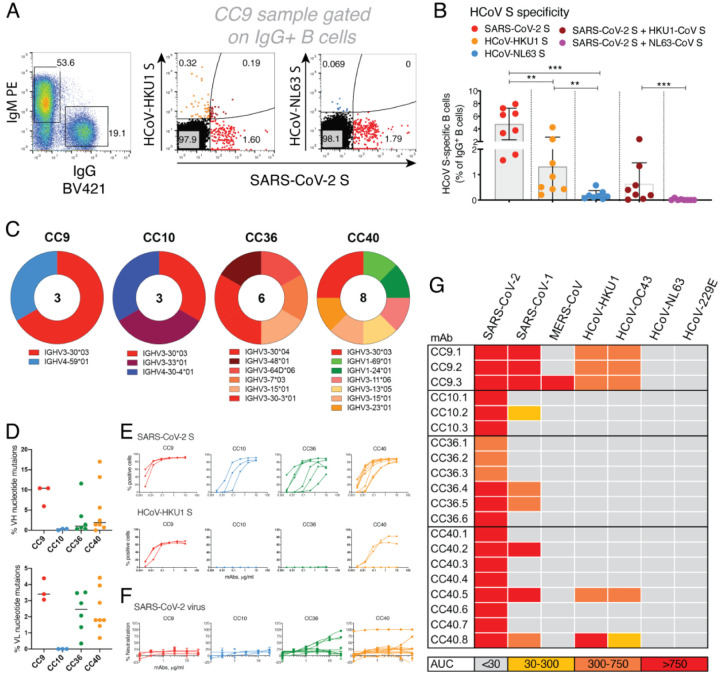
Pre-existing immune responses to seasonal endemic coronaviruses could have profound consequences for antibody responses to SARS-CoV-2, either induced in natural infection or through vaccination. Such consequences are well established in the influenza and flavivirus fields. A first step to establish whether pre-existing responses can impact SARS-CoV-2 infection is to understand the nature and extent of cross-reactivity in humans to coronaviruses. We compared serum antibody and memory B cell responses to coronavirus spike (S) proteins from pre-pandemic and SARS-CoV-2 convalescent donors using a series of binding and functional assays. We found weak evidence of pre-existing SARS-CoV-2 cross-reactive serum antibodies in pre-pandemic donors. However, we found stronger evidence of pre-existing cross-reactive memory B cells that were activated on SARS-CoV-2 infection. Monoclonal antibodies (mAbs) isolated from the donors showed varying degrees of cross-reactivity with betacoronaviruses, including SARS and endemic coronaviruses. None of the cross-reactive mAbs were neutralizing except for one that targeted the S2 subunit of the S protein. The results suggest that pre-existing immunity to endemic coronaviruses should be considered in evaluating antibody responses to SARS-CoV-2.
对季节性地方性冠状病毒预先存在的免疫反应可能会对针对严重急性呼吸综合征冠状病毒2(SARS-CoV-2)的抗体反应产生深远影响,无论是在自然感染中还是通过疫苗接种诱导产生的抗体反应。这种影响在流感和黄病毒领域已得到充分证实。确定预先存在的免疫反应是否会影响SARS-CoV-2感染的第一步是了解人类对冠状病毒交叉反应的性质和程度。我们使用一系列结合和功能测定方法,比较了大流行前和SARS-CoV-2康复供体血清抗体及记忆B细胞对冠状病毒刺突(S)蛋白的反应。我们发现,在大流行前的供体中,存在预先存在的SARS-CoV-2交叉反应血清抗体的证据较弱。然而,我们发现了更强的证据,表明存在预先存在的交叉反应记忆B细胞,这些细胞在SARS-CoV-2感染时被激活。从供体中分离出的单克隆抗体(mAb)与β冠状病毒(包括SARS和地方性冠状病毒)表现出不同程度的交叉反应。除了一种靶向S蛋白S2亚基的单克隆抗体外,没有一种交叉反应单克隆抗体具有中和作用。结果表明,在评估对SARS-CoV-2的抗体反应时,应考虑对地方性冠状病毒预先存在的免疫力。