Chen Jennifer S, Alfajaro Mia Madel, Wei Jin, Chow Ryan D, Filler Renata B, Eisenbarth Stephanie C, Wilen Craig B
Department of Laboratory Medicine, Yale University School of Medicine, New Haven, CT, USA.
Department of Immunobiology, Yale University School of Medicine, New Haven, CT, USA.
bioRxiv. 2020 Sep 25:2020.09.24.312769. doi: 10.1101/2020.09.24.312769.
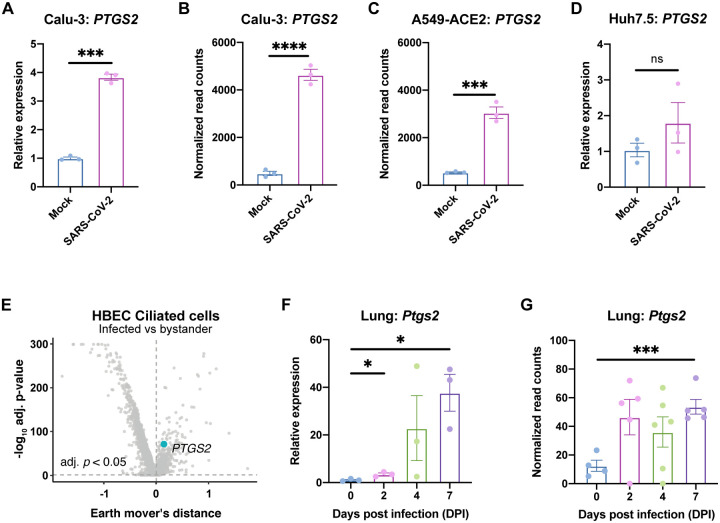
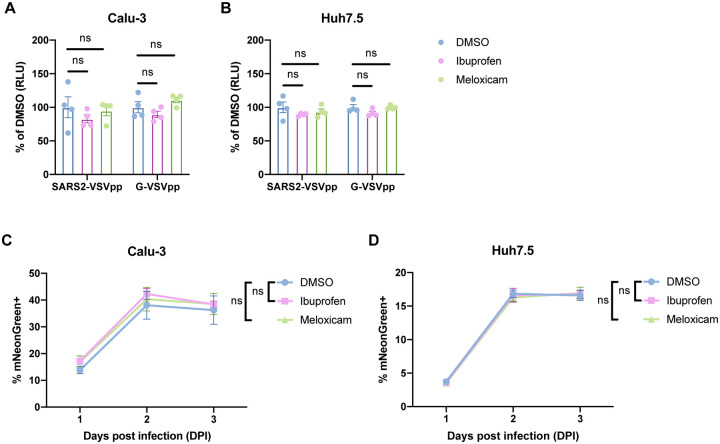
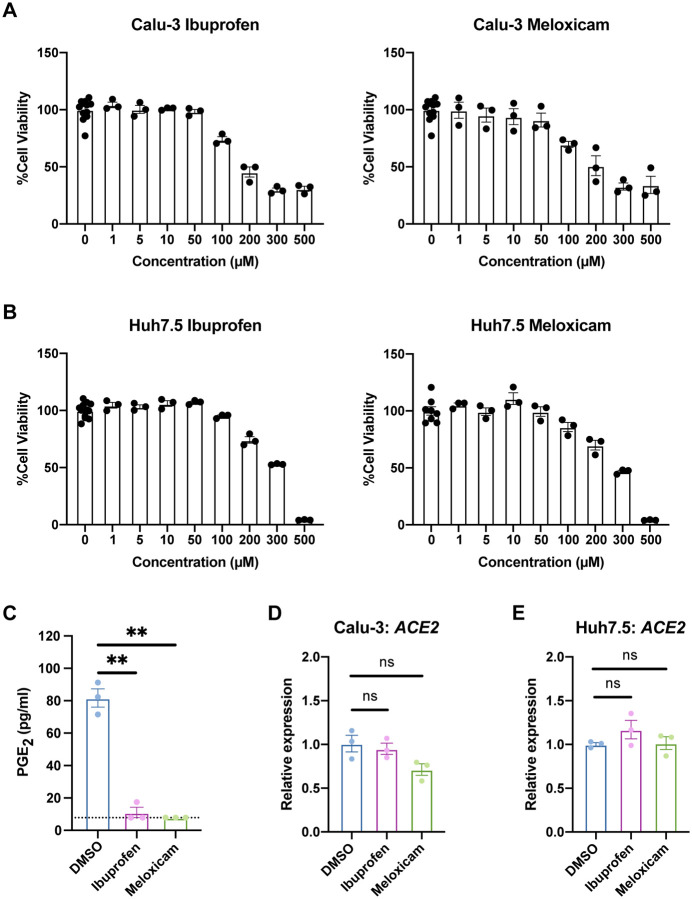
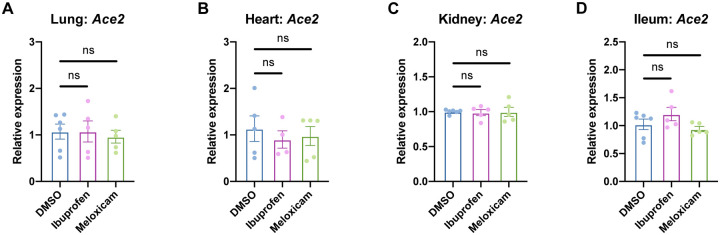
Identifying drugs that regulate severe acute respiratory syndrome coronavirus 2 (SARS-CoV-2) infection and its symptoms has been a pressing area of investigation during the coronavirus disease 2019 (COVID-19) pandemic. Nonsteroidal anti-inflammatory drugs (NSAIDs), which are frequently used for the relief of pain and inflammation, could modulate both SARS-CoV-2 infection and the host response to the virus. NSAIDs inhibit the enzymes cyclooxygenase-1 (COX-1) and cyclooxygenase-2 (COX-2), which mediate the production of prostaglandins (PGs). PGE, one of the most abundant PGs, has diverse biological roles in homeostasis and inflammatory responses. Previous studies have shown that NSAID treatment or inhibition of PGE receptor signaling leads to upregulation of angiotensin-converting enzyme 2 (ACE2), the cell entry receptor for SARS-CoV-2, thus raising concerns that NSAIDs could increase susceptibility to infection. COX/PGE signaling has also been shown to regulate the replication of many viruses, but it is not yet known whether it plays a role in SARS-CoV-2 replication. The purpose of this study was to dissect the effect of NSAIDs on COVID-19 in terms of SARS-CoV-2 entry and replication. We found that SARS-CoV-2 infection induced COX-2 upregulation in diverse human cell culture and mouse systems. However, suppression of COX-2/PGE signaling by two commonly used NSAIDs, ibuprofen and meloxicam, had no effect on expression, viral entry, or viral replication. Our findings suggest that COX-2 signaling driven by SARS-CoV-2 may instead play a role in regulating the lung inflammation and injury observed in COVID-19 patients.
在2019冠状病毒病(COVID-19)大流行期间,确定能够调控严重急性呼吸综合征冠状病毒2(SARS-CoV-2)感染及其症状的药物一直是一个紧迫的研究领域。非甾体抗炎药(NSAIDs)常用于缓解疼痛和炎症,它可能会调节SARS-CoV-2感染以及宿主对该病毒的反应。NSAIDs抑制环氧化酶-1(COX-1)和环氧化酶-2(COX-2),这两种酶介导前列腺素(PGs)的产生。PGE是最丰富的PGs之一,在体内平衡和炎症反应中具有多种生物学作用。先前的研究表明,NSAIDs治疗或抑制PGE受体信号传导会导致血管紧张素转换酶2(ACE2)上调,而ACE2是SARS-CoV-2的细胞进入受体,因此人们担心NSAIDs可能会增加感染易感性。COX/PGE信号传导也已被证明可调节多种病毒的复制,但尚不清楚它是否在SARS-CoV-2复制中发挥作用。本研究的目的是从SARS-CoV-2进入和复制方面剖析NSAIDs对COVID-19的影响。我们发现,在多种人类细胞培养和小鼠系统中,SARS-CoV-2感染会诱导COX-2上调。然而,两种常用的NSAIDs布洛芬和美洛昔康对COX-2/PGE信号传导的抑制对病毒表达、病毒进入或病毒复制均无影响。我们的研究结果表明,由SARS-CoV-2驱动的COX-2信号传导可能反而在调节COVID-19患者中观察到的肺部炎症和损伤方面发挥作用。