Wurdeman Taylor, Strader Christopher, Alidina Shehnaz, Barash David, Citron Isabelle, Kapologwe Ntuli, Maina Erastus, Massaga Fabian, Mazhiqi Adelina, Meara John G, Menon Gopal, Reynolds Cheri, Sydlowski Meaghan, Varallo John, Maongezi Sarah, Ulisubisya Mpoki
Program in Global Surgery and Social Change, Harvard Medical School, 641 Huntington Avenue, Boston, MA, 02115, USA.
University of Miami Miller School of Medicine, Miami, FL, USA.
World J Surg. 2021 Jan;45(1):41-49. doi: 10.1007/s00268-020-05802-w. Epub 2020 Sep 29.
Postoperative mortality rate is one of six surgical indicators identified by the Lancet Commission on Global Surgery for monitoring access to high-quality surgical care. The primary aim of this study was to measure the postoperative mortality rate in Tanzania's Lake Zone to provide a baseline for surgical strengthening efforts. The secondary aim was to measure the effect of Safe Surgery 2020, a multi-component intervention to improve surgical quality, on postoperative mortality after 10 months.
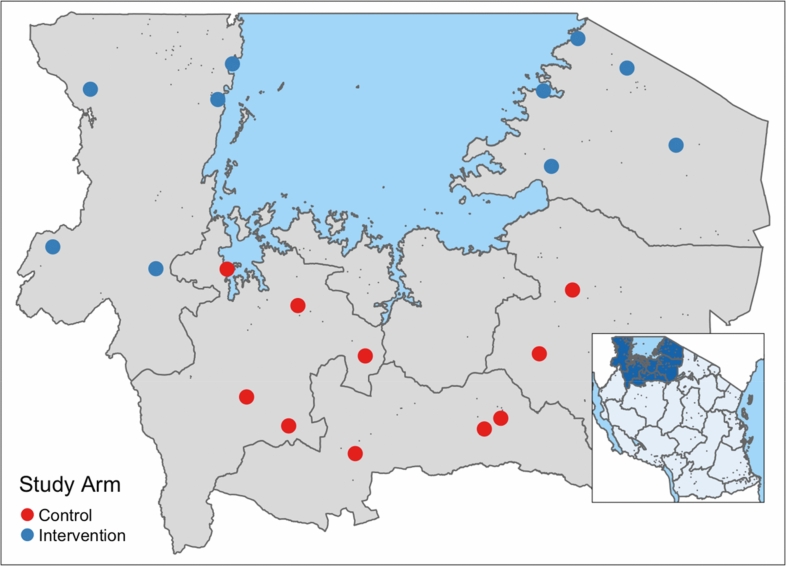
We prospectively collected data on postoperative mortality from 20 health centers, district hospitals, and regional hospitals in Tanzania's Lake Zone over two time periods: pre-intervention (February to April 2018) and post-intervention (March to May 2019). We analyzed postoperative mortality rates by procedure type. We used logistic regression to determine the impact of Safe Surgery 2020 on postoperative mortality.
The overall average in-hospital non-obstetric postoperative mortality rate for all surgery procedures was 2.62%. The postoperative mortality rates for laparotomy were 3.92% and for cesarean delivery was 0.24%. Logistic regression demonstrated no difference in the postoperative mortality rate after the Safe Surgery 2020 intervention.
Our results inform national surgical planning in Tanzania by providing a sub-national baseline estimate of postoperative mortality rates for multiple surgical procedures and serve as a basis from which to measure the impact of future surgical quality interventions. Our study showed no improvement in postoperative mortality after implementation of Safe Surgery 2020, possibly due to low power to detect change.
术后死亡率是《柳叶刀》全球外科委员会确定的六项外科指标之一,用于监测获得高质量外科治疗的情况。本研究的主要目的是测量坦桑尼亚湖区的术后死亡率,为加强外科治疗工作提供基线数据。次要目的是测量“2020年安全手术”(一项旨在提高手术质量的多组分干预措施)在实施10个月后对术后死亡率的影响。
我们前瞻性地收集了坦桑尼亚湖区20家卫生中心、地区医院和区域医院在两个时间段的术后死亡率数据:干预前(2018年2月至4月)和干预后(2019年3月至5月)。我们按手术类型分析术后死亡率。我们使用逻辑回归来确定“2020年安全手术”对术后死亡率的影响。
所有手术的总体平均院内非产科术后死亡率为2.62%。剖腹手术的术后死亡率为3.92%,剖宫产的术后死亡率为0.24%。逻辑回归显示,“2020年安全手术”干预后术后死亡率没有差异。
我们的研究结果通过提供多个外科手术的国家以下层面术后死亡率基线估计,为坦桑尼亚的国家外科规划提供了参考,并作为衡量未来外科质量干预措施影响的基础。我们的研究表明,实施“2020年安全手术”后术后死亡率没有改善,可能是由于检测变化的效能较低。