Ma Yan, Xu Yun, Jiang Lijuan, Shao Xiaonan
Department of Obstetrics and Gynecology, The Third Affiliated Hospital of Soochow University, Changzhou, Jiangsu, China (mainland).
Department of Clinical Laboratory, The Third Affiliated Hospital of Soochow University, Changzhou, Jiangsu, China (mainland).
Med Sci Monit. 2020 Sep 30;26:e924756. doi: 10.12659/MSM.924756.
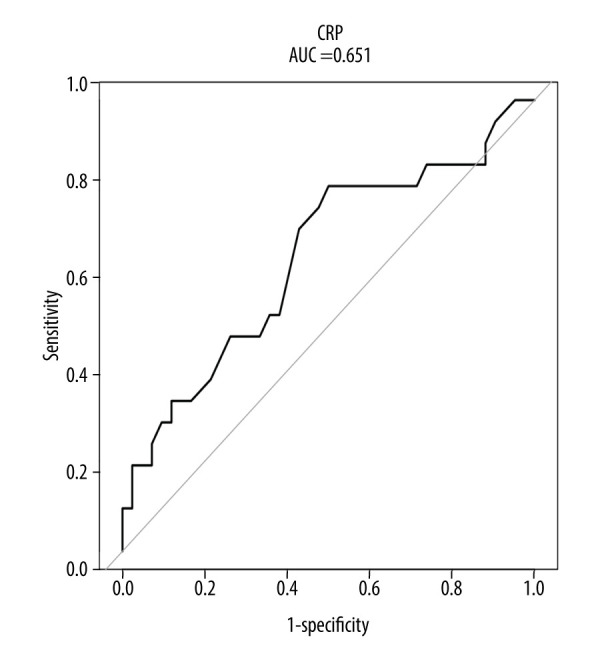
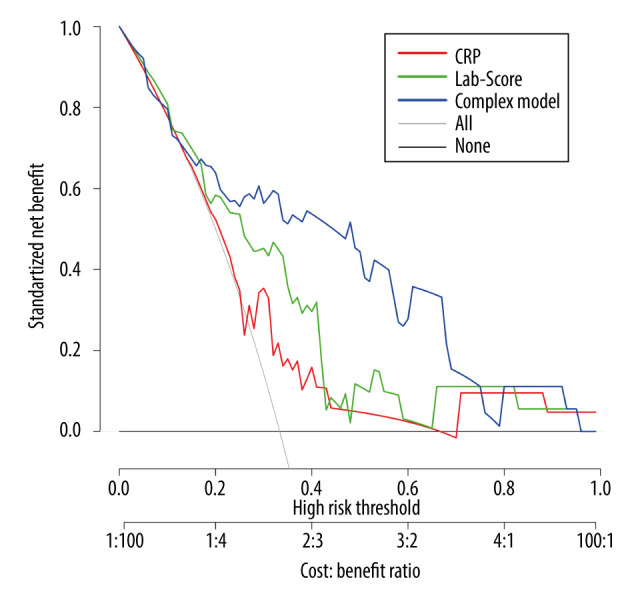
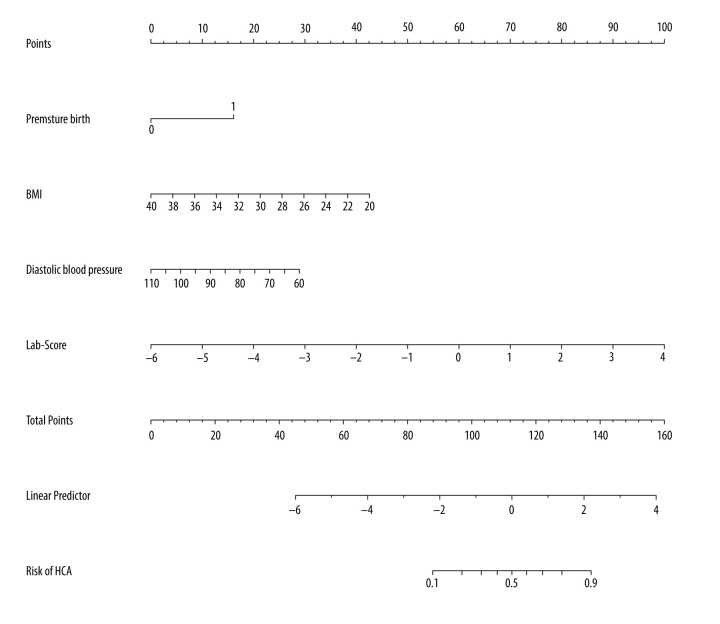
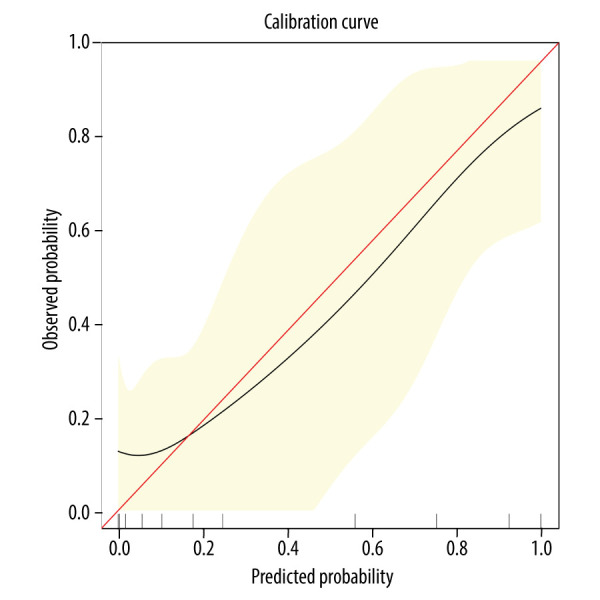
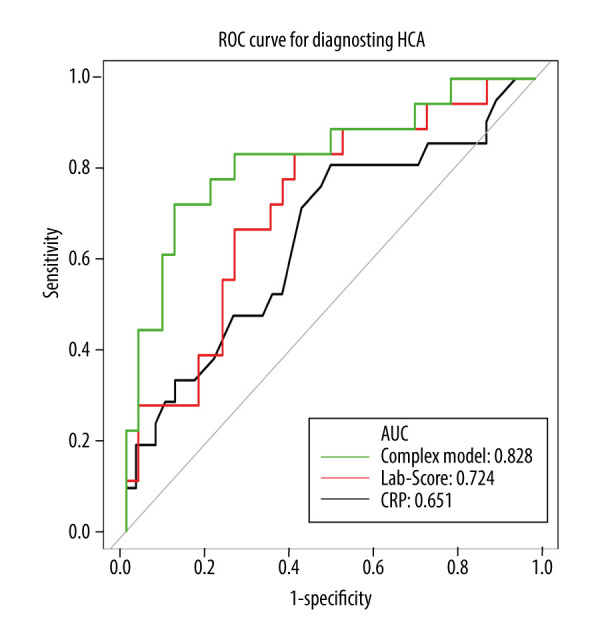
BACKGROUND This study aimed to establish a prediction model based on the maternal laboratory index score (Lab-score) for histologic chorioamnionitis (HCA) in patients with prelabor rupture of membranes (PROM) during late pregnancy. MATERIAL AND METHODS Sixty-nine cases of pregnant women with PROM were retrospectively analyzed. The general information and laboratory indicators were compared between the HCA (n=22) and non-HCA (n=47) groups. A multivariate logistic regression method was used to establish the prediction model. We plotted the receiver operating characteristic curve and calculated the area under the curve (AUC). The clinical effectiveness of each model was compared by decision curve analysis. RESULTS Only C-reactive protein (CRP) in the laboratory index predicted HCA, but its diagnostic efficacy was not ideal (AUC=0.651). Then, we added CRP to the platelet/white blood cell count ratio and triglyceride level to construct the Lab-score. Based on the Lab-score, important clinical parameters, including body mass index, diastolic blood pressure, and preterm birth, were introduced to construct a complex joint prediction model. The AUC of this model was significantly larger than that of CRP (0.828 vs. 0.651, P=0.035), but not significantly different from that of Lab-score (0.828 vs. 0.724, P=0.120). Considering the purpose of HCA screening, the net benefit of the complex model was better than that of Lab-score and CRP. CONCLUSIONS The complex model based on Lab-score is useful in the clinical screening of high-risk populations with PROM and HCA during late pregnancy.
背景 本研究旨在基于孕晚期胎膜早破(PROM)患者的母体实验室指标评分(实验室评分)建立组织学绒毛膜羊膜炎(HCA)的预测模型。材料与方法 回顾性分析69例PROM孕妇病例。比较HCA组(n = 22)和非HCA组(n = 47)的一般信息和实验室指标。采用多因素逻辑回归方法建立预测模型。绘制受试者工作特征曲线并计算曲线下面积(AUC)。通过决策曲线分析比较各模型的临床有效性。结果 实验室指标中仅C反应蛋白(CRP)可预测HCA,但其诊断效能不理想(AUC = 0.651)。然后,将CRP与血小板/白细胞计数比值和甘油三酯水平相加构建实验室评分。基于实验室评分,引入包括体重指数、舒张压和早产等重要临床参数构建复杂联合预测模型。该模型的AUC显著大于CRP(0.828对0.651,P = 0.035),但与实验室评分无显著差异(0.828对0.724,P = 0.120)。考虑到HCA筛查的目的,复杂模型的净效益优于实验室评分和CRP。结论 基于实验室评分的复杂模型在孕晚期PROM和HCA高危人群的临床筛查中具有应用价值。