Ghosh Krishna Kanta, Padmanabhan Parasuraman, Yang Chang-Tong, Mishra Sachin, Halldin Christer, Gulyás Balázs
Lee Kong Chian School of Medicine, Nanyang Technological University Singapore, 59 Nanyang Drive, Singapore, 636921, Singapore.
Department of Nuclear Medicine and Molecular Imaging, Radiological Sciences Division, Singapore General Hospital, Outram Road, Singapore, 169608, Singapore.
EJNMMI Res. 2020 Sep 23;10(1):109. doi: 10.1186/s13550-020-00692-4.
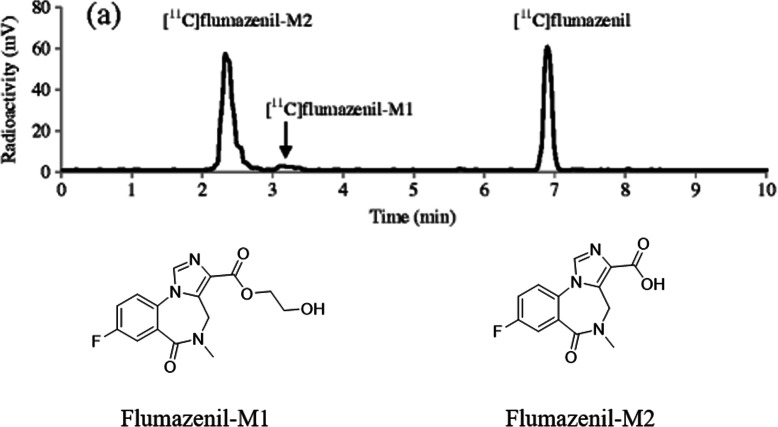
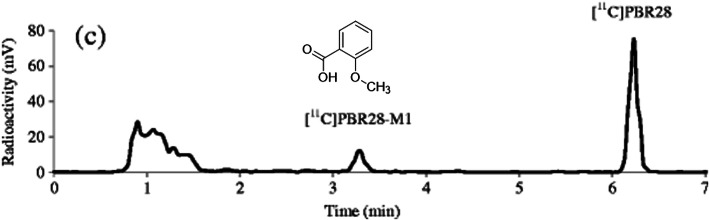
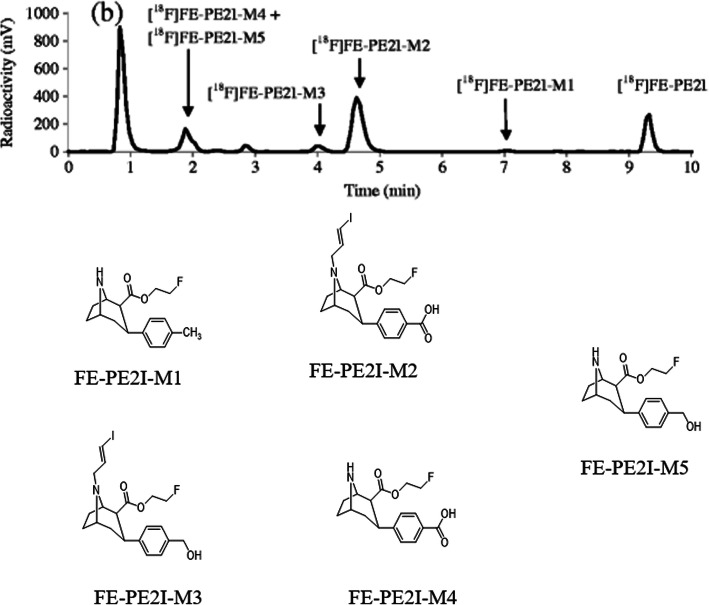
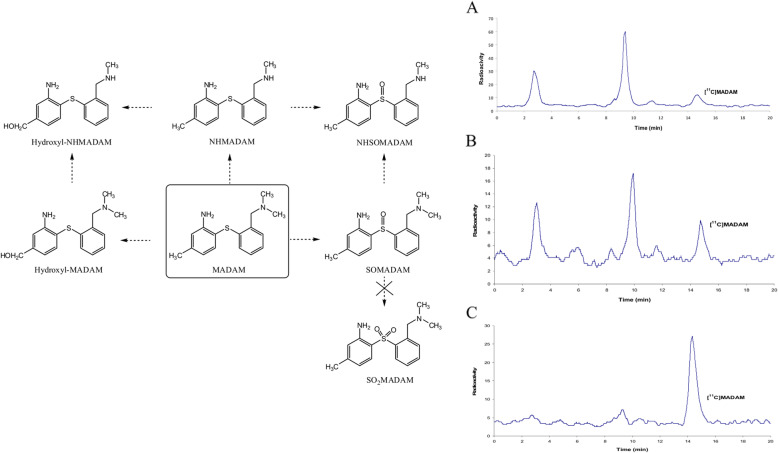
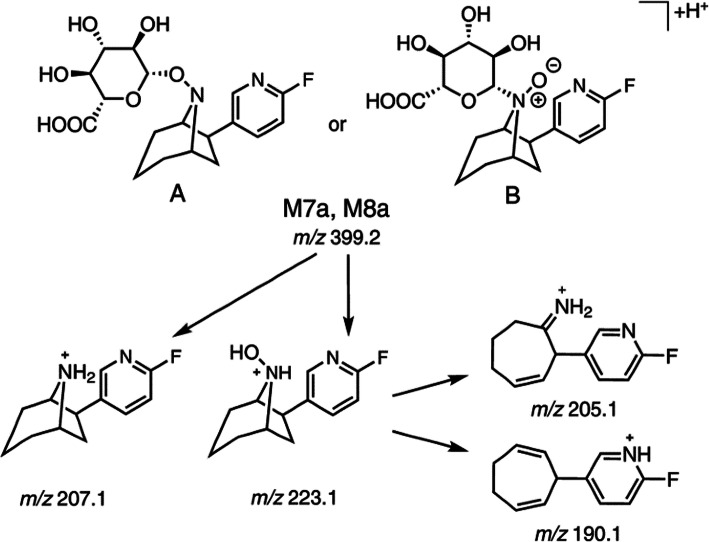
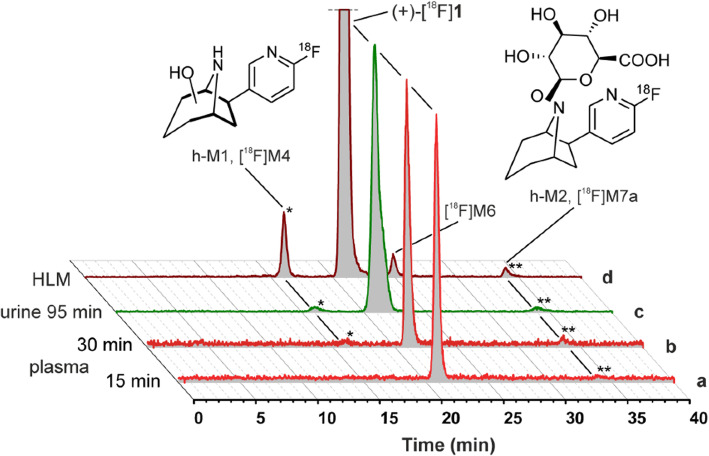
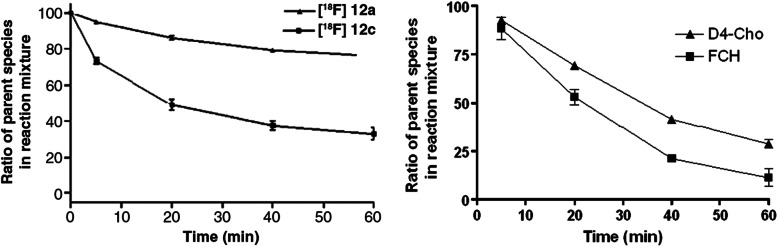
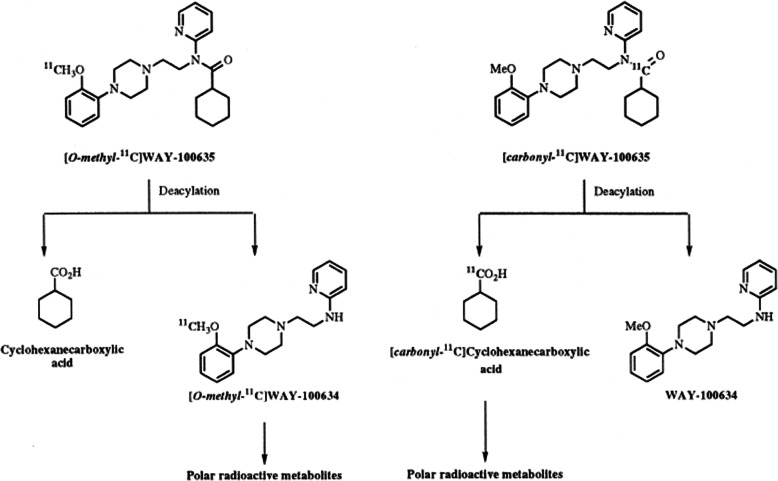
Positron emission tomography (PET) offers the study of biochemical, physiological, and pharmacological functions at a cellular and molecular level. The performance of a PET study mostly depends on the used radiotracer of interest. However, the development of a novel PET tracer is very difficult, as it is required to fulfill a lot of important criteria. PET radiotracers usually encounter different chemical modifications including redox reaction, hydrolysis, decarboxylation, and various conjugation processes within living organisms. Due to this biotransformation, different chemical entities are produced, and the amount of the parent radiotracer is declined. Consequently, the signal measured by the PET scanner indicates the entire amount of radioactivity deposited in the tissue; however, it does not offer any indication about the chemical disposition of the parent radiotracer itself. From a radiopharmaceutical perspective, it is necessary to quantify the parent radiotracer's fraction present in the tissue. Hence, the identification of radiometabolites of the radiotracers is vital for PET imaging. There are mainly two reasons for the chemical identification of PET radiometabolites: firstly, to determine the amount of parent radiotracers in plasma, and secondly, to rule out (if a radiometabolite enters the brain) or correct any radiometabolite accumulation in peripheral tissue. Besides, radiometabolite formations of the tracer might be of concern for the PET study, as the radiometabolic products may display considerably contrasting distribution patterns inside the body when compared with the radiotracer itself. Therefore, necessary information is needed about these biochemical transformations to understand the distribution of radioactivity throughout the body. Various published review articles on PET radiometabolites mainly focus on the sample preparation techniques and recently available technology to improve the radiometabolite analysis process. This article essentially summarizes the chemical and structural identity of the radiometabolites of various radiotracers including [C]PBB3, [C]flumazenil, [F]FEPE2I, [C]PBR28, [C]MADAM, and (+)[F]flubatine. Besides, the importance of radiometabolite analysis in PET imaging is also briefly summarized. Moreover, this review also highlights how a slight chemical modification could reduce the formation of radiometabolites, which could interfere with the results of PET imaging.
正电子发射断层扫描(PET)能够在细胞和分子水平上研究生物化学、生理学和药理学功能。PET研究的性能主要取决于所使用的感兴趣的放射性示踪剂。然而,开发一种新型PET示踪剂非常困难,因为它需要满足许多重要标准。PET放射性示踪剂在生物体内通常会经历不同的化学修饰,包括氧化还原反应、水解、脱羧以及各种共轭过程。由于这种生物转化,会产生不同的化学实体,母体放射性示踪剂的量会减少。因此,PET扫描仪测量的信号表示沉积在组织中的放射性总量;然而,它并未提供关于母体放射性示踪剂本身化学处置的任何指示。从放射性药物的角度来看,有必要量化组织中母体放射性示踪剂的比例。因此,鉴定放射性示踪剂的放射性代谢物对于PET成像至关重要。对PET放射性代谢物进行化学鉴定主要有两个原因:首先,确定血浆中母体放射性示踪剂的量;其次,排除(如果放射性代谢物进入大脑)或校正外周组织中任何放射性代谢物的积累。此外,示踪剂的放射性代谢物形成可能会影响PET研究,因为与放射性示踪剂本身相比,放射性代谢产物在体内可能显示出截然不同的分布模式。因此,需要有关这些生物化学转化的必要信息,以了解放射性在全身的分布情况。各种已发表的关于PET放射性代谢物的综述文章主要关注样品制备技术和最近可用的技术,以改进放射性代谢物分析过程。本文主要总结了包括[C]PBB3、[C]氟马西尼、[F]FEPE2I、[C]PBR28、[C]MADAM和(+)[F]氟巴汀在内的各种放射性示踪剂的放射性代谢物的化学和结构特征。此外,还简要总结了放射性代谢物分析在PET成像中的重要性。此外,本综述还强调了轻微的化学修饰如何能够减少可能干扰PET成像结果的放射性代谢物的形成。