Professor Obstetrics Gynecology, University South Florida, Tampa, Florida, USA.
Harvard Public Health, Harvard T.H. Chan School of Public Health, Boston, Massachusetts, USA.
Popul Health Manag. 2020 Oct;23(S1):S3-S12. doi: 10.1089/pop.2020.0265.
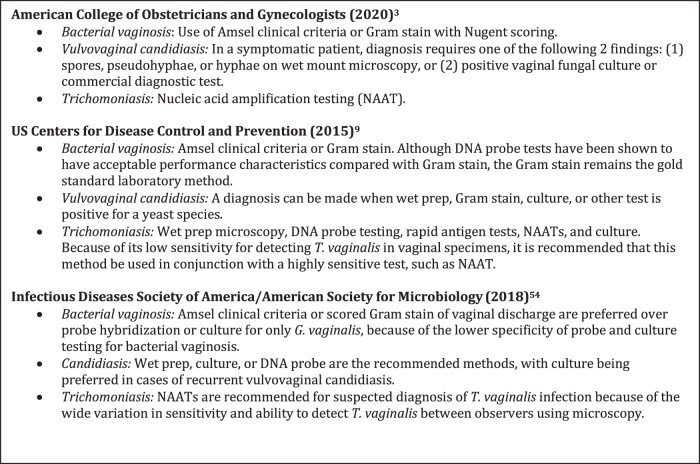
Vulvovaginitis is a frequent reason for women to see a health care provider and has been linked to adverse reproductive and psychosocial consequences. Accurate diagnosis is a cornerstone of effective treatment, yet misdiagnosis of this condition approaches 50%, raising the risk of recurrence. The past 3 decades have seen few improvements over the traditional means of diagnosing the 3 main causes of vaginitis: bacterial vaginosis, infections, and trichomoniasis. Newer molecular tests, which are both more sensitive and specific, have introduced the potential to transform the diagnosis of vaginitis-ensuring more accurate diagnoses and timely interventions, while reducing health care costs and enhancing patients' quality of life. Clinical approaches and professional guidelines should be updated to reflect advances in molecular testing and improve the diagnosis and management of acute and recurrent vulvovaginitis.
外阴阴道炎症是女性就医的常见原因,与不良生殖和心理社会后果相关。准确的诊断是有效治疗的基石,但这种疾病的误诊率接近 50%,增加了复发的风险。过去 30 年中,传统方法诊断外阴阴道炎的 3 种主要病因(细菌性阴道病、性传播感染和滴虫病)几乎没有任何改善。较新的分子检测方法在灵敏度和特异性方面都有所提高,有可能改变外阴阴道炎的诊断——确保更准确的诊断和及时干预,同时降低医疗成本并提高患者的生活质量。临床方法和专业指南应进行更新,以反映分子检测的进展,改善急性和复发性外阴阴道炎症的诊断和管理。