Department of Biology, Johns Hopkins University, Baltimore, MD.
J Cell Biol. 2020 Nov 2;219(11). doi: 10.1083/jcb.202006094.
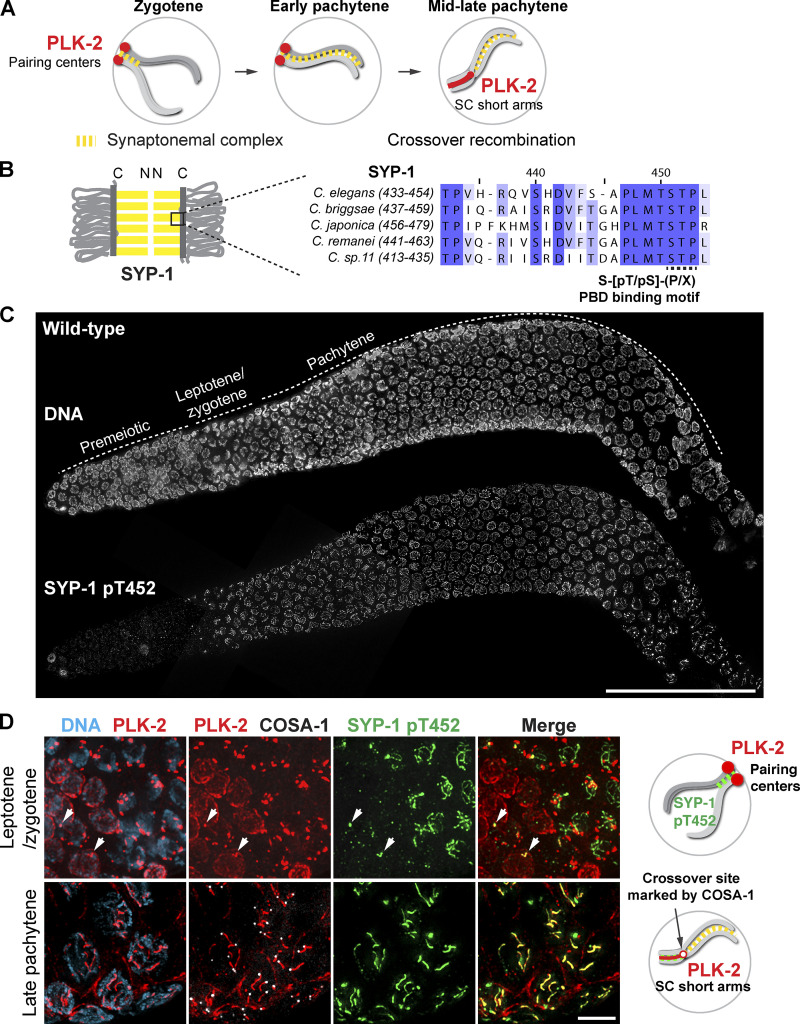
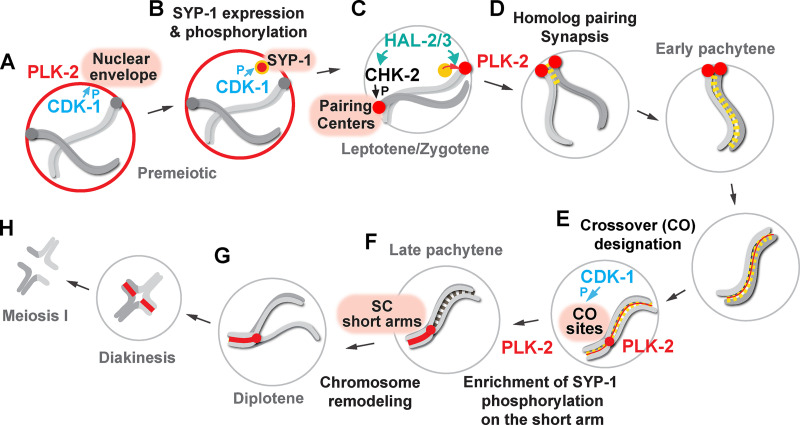
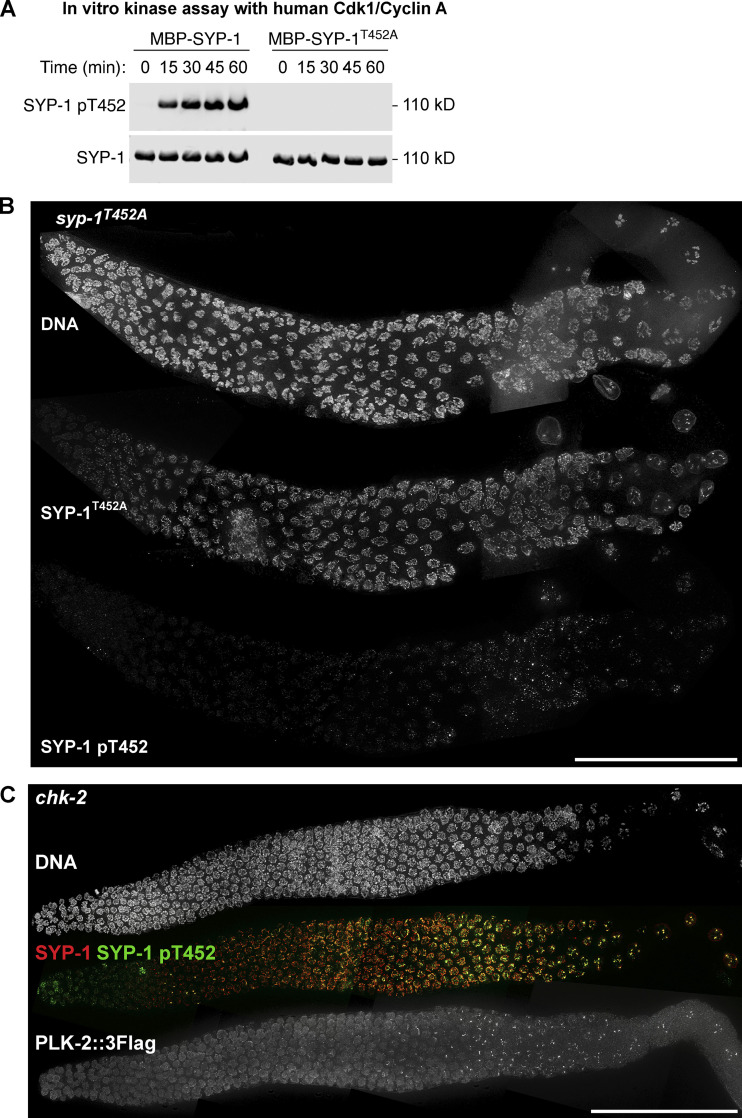
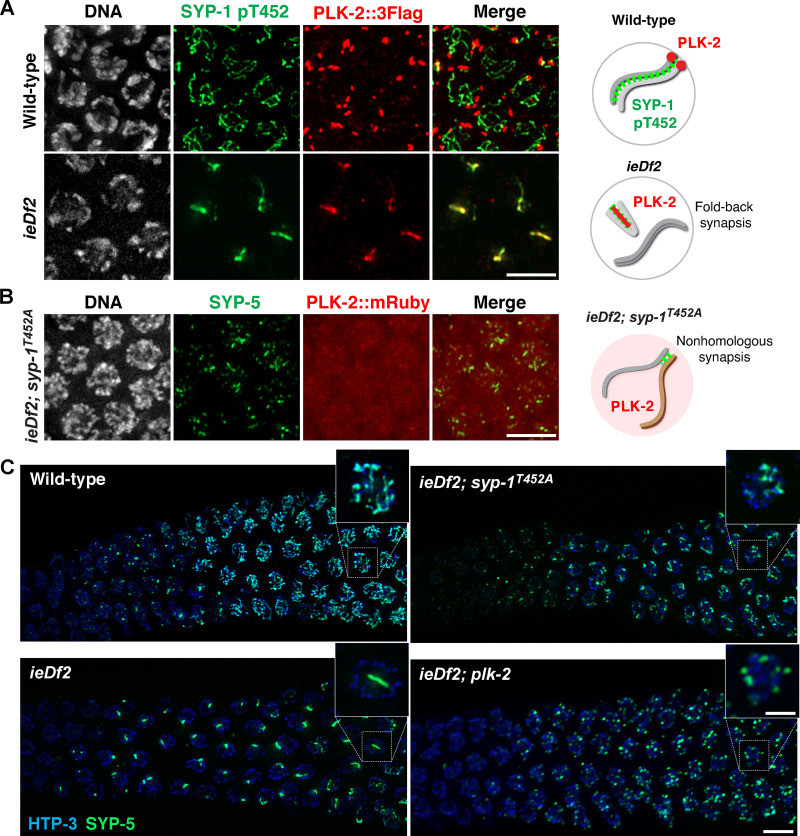
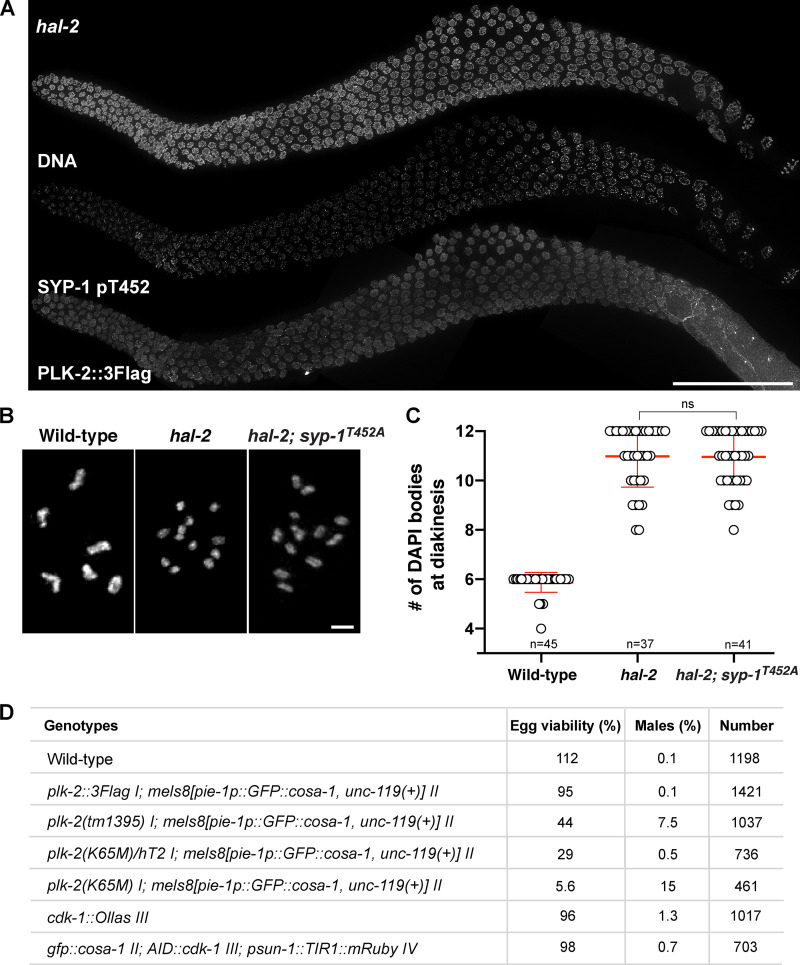
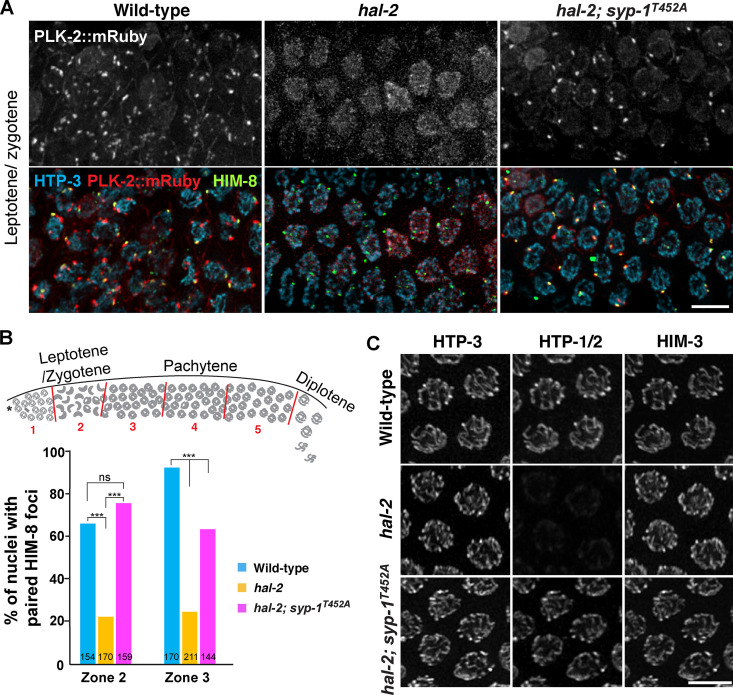
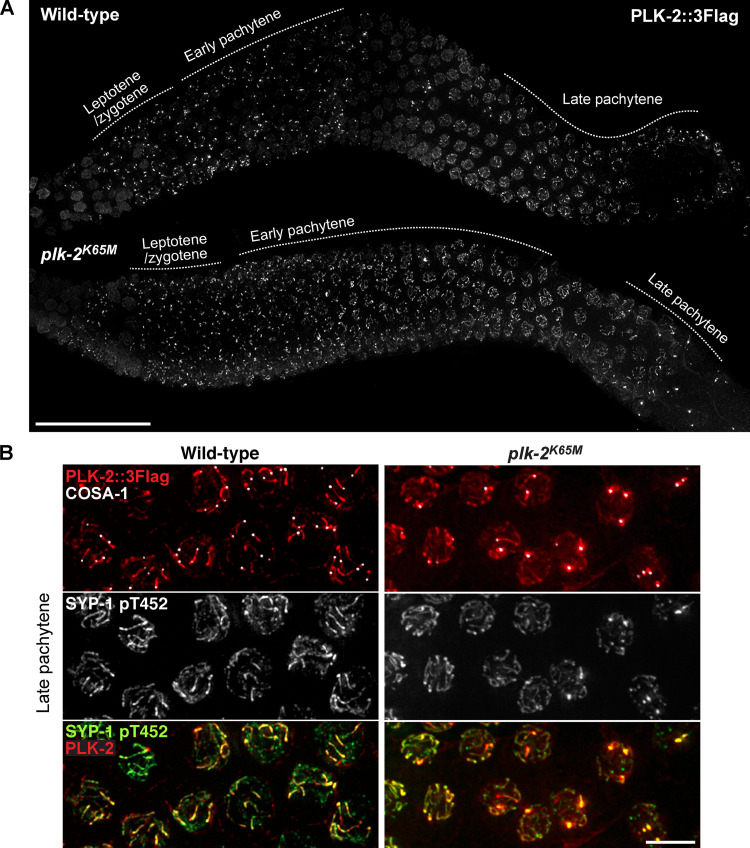
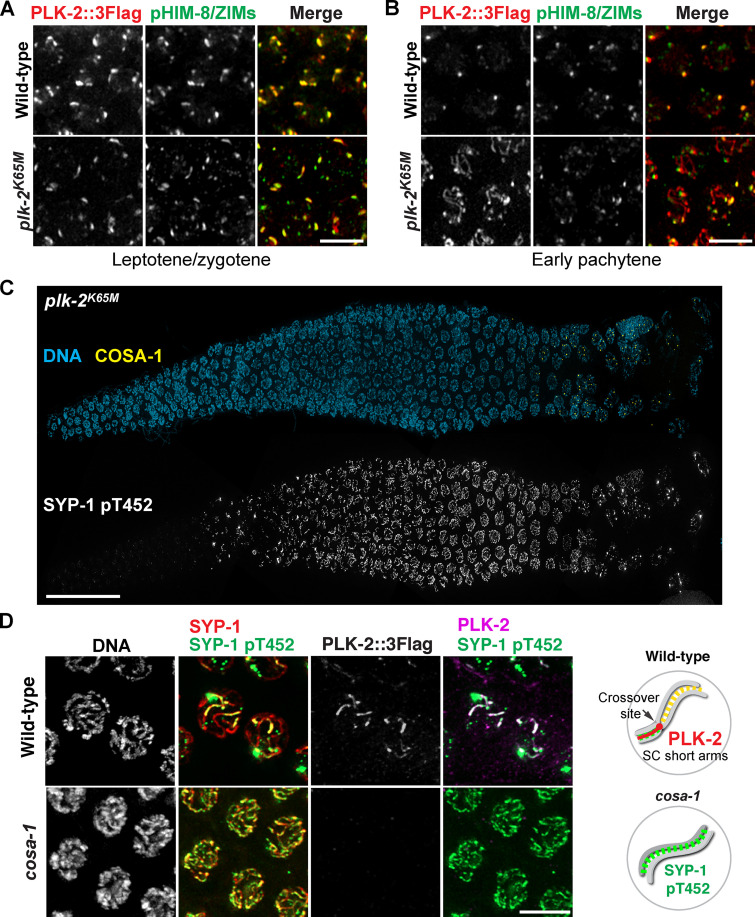
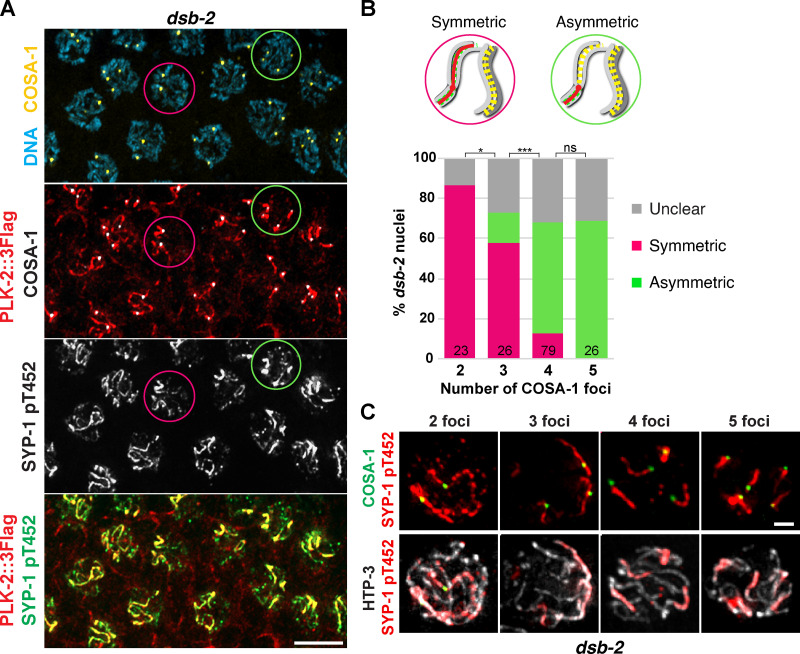
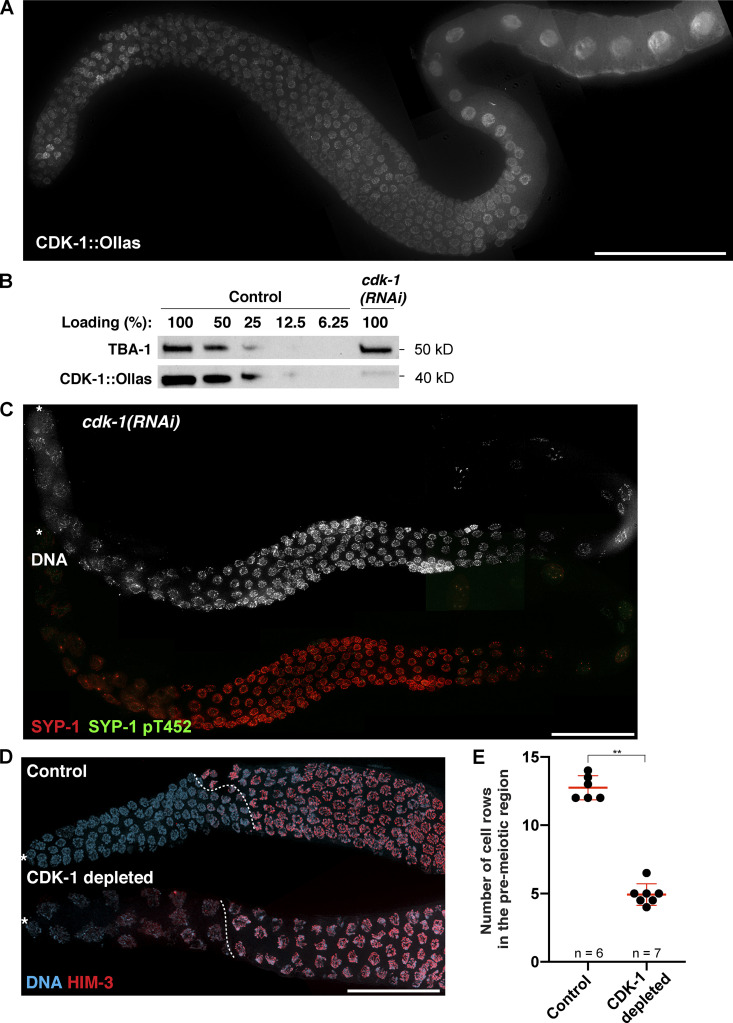
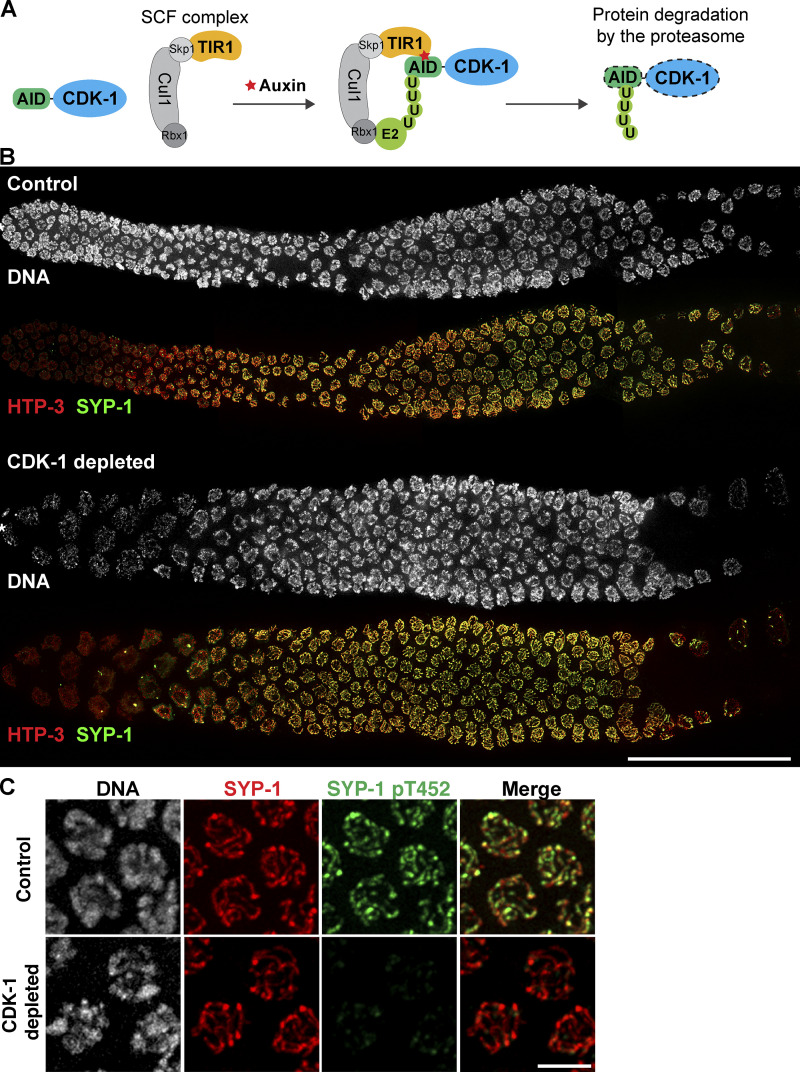
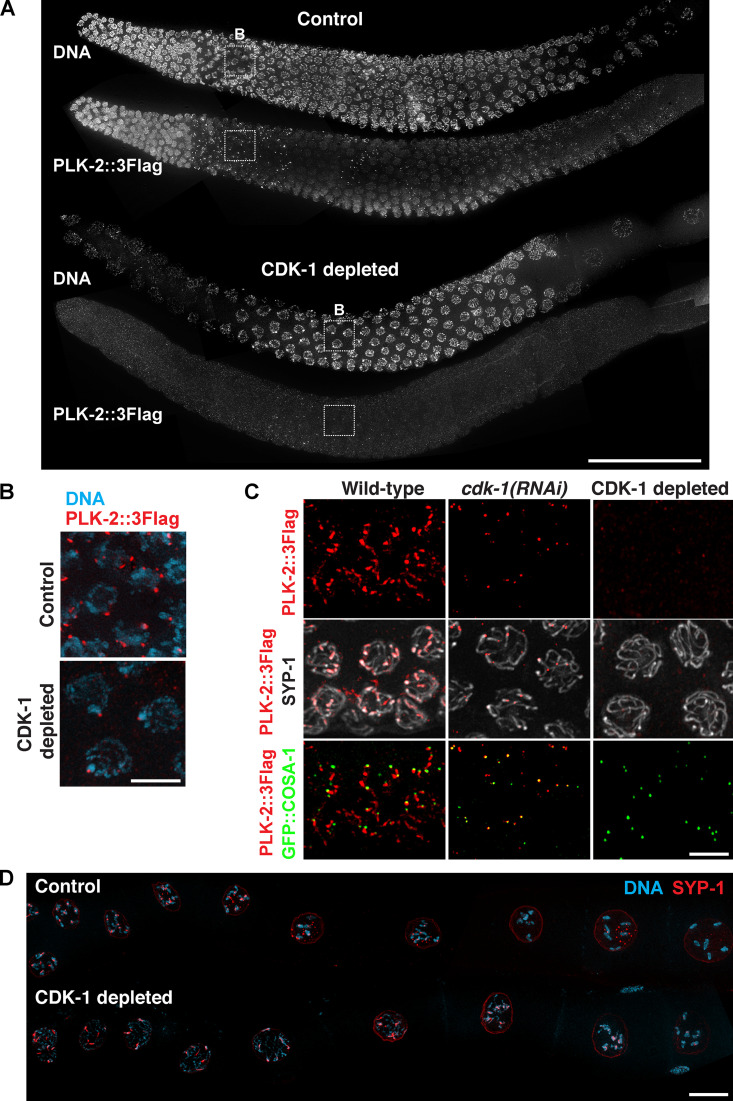
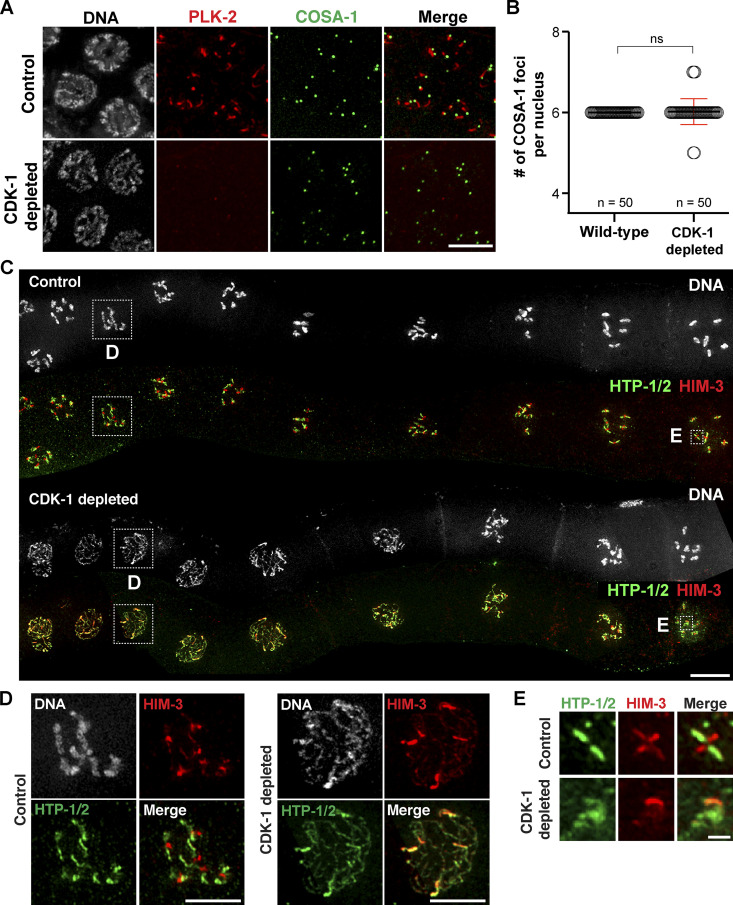
Polo-like kinases (PLKs) play widely conserved roles in orchestrating meiotic chromosome dynamics. However, how PLKs are targeted to distinct subcellular localizations during meiotic progression remains poorly understood. Here, we demonstrate that the cyclin-dependent kinase CDK-1 primes the recruitment of PLK-2 to the synaptonemal complex (SC) through phosphorylation of SYP-1 in C. elegans. SYP-1 phosphorylation by CDK-1 occurs just before meiotic onset. However, PLK-2 docking to the SC is prevented by the nucleoplasmic HAL-2/3 complex until crossover designation, which constrains PLK-2 to special chromosomal regions known as pairing centers to ensure proper homologue pairing and synapsis. PLK-2 is targeted to crossover sites primed by CDK-1 and spreads along the SC by reinforcing SYP-1 phosphorylation on one side of each crossover only when threshold levels of crossovers are generated. Thus, the integration of chromosome-autonomous signaling and a nucleus-wide crossover-counting mechanism partitions holocentric chromosomes relative to the crossover site, which ultimately defines the pattern of chromosome segregation during meiosis I.
类 Polo 激酶 (PLKs) 在协调减数分裂染色体动力学方面发挥着广泛保守的作用。然而,PLKs 如何在减数分裂过程中被靶向到不同的亚细胞定位仍然知之甚少。在这里,我们证明在秀丽隐杆线虫中,细胞周期蛋白依赖性激酶 CDK-1 通过磷酸化 SYP-1 来启动 PLK-2 向联会复合体 (SC) 的募集。CDK-1 对 SYP-1 的磷酸化发生在减数分裂开始之前。然而,直到交叉指定,核质 HAL-2/3 复合物才会阻止 PLK-2 与 SC 的对接,这将 PLK-2 限制在称为配对中心的特殊染色体区域,以确保同源物的正确配对和联会。PLK-2 被 CDK-1 引发的交叉点靶向,并通过仅在产生阈值水平的交叉点时加强每个交叉点一侧的 SYP-1 磷酸化,在 SC 上扩散。因此,染色体自主信号的整合和全核交叉计数机制相对于交叉点将着丝粒染色体分区,最终定义减数分裂 I 期间染色体分离的模式。