Laboratoire des Venins et Biomolécules Thérapeutiques, Institut Pasteur Tunis, Université Tunis El Manar, 13 Place Pasteur, BP-74, 1002 Tunis, Tunisie.
Dipartimento di Scienze Cliniche Applicate e Biotecnologiche, Università degli Studi dell'Aquila, Via Vetoio, I-67100 L'Aquila, Italy.
Molecules. 2020 Sep 28;25(19):4453. doi: 10.3390/molecules25194453.
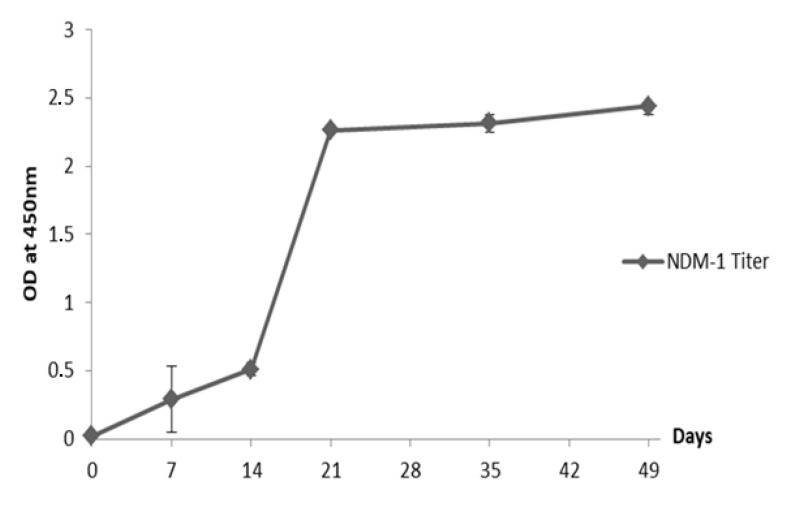
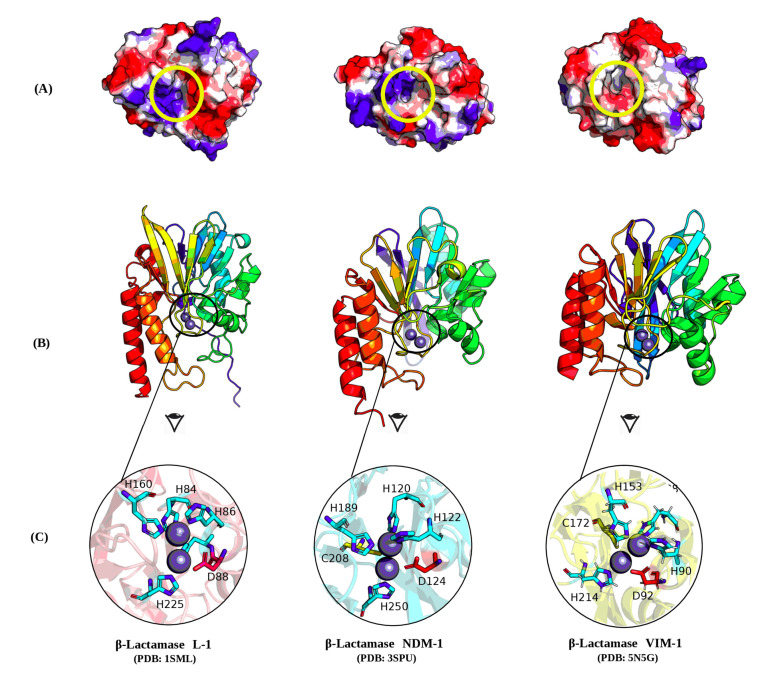
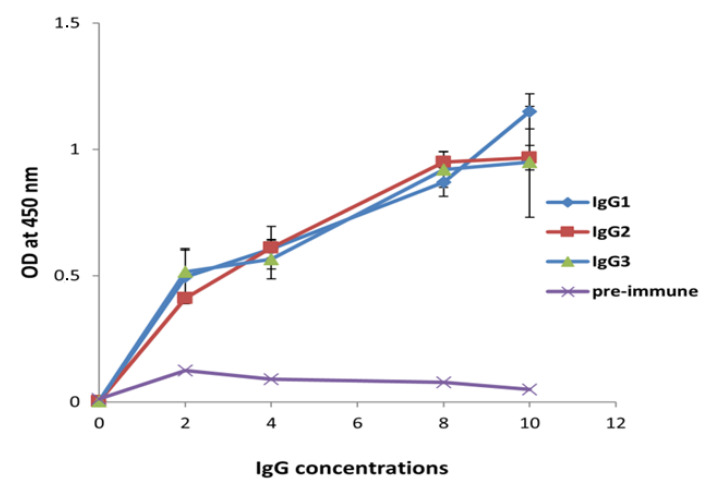
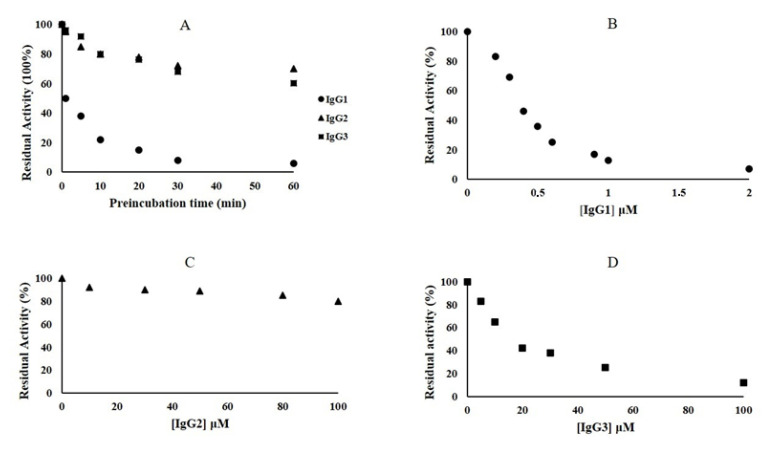
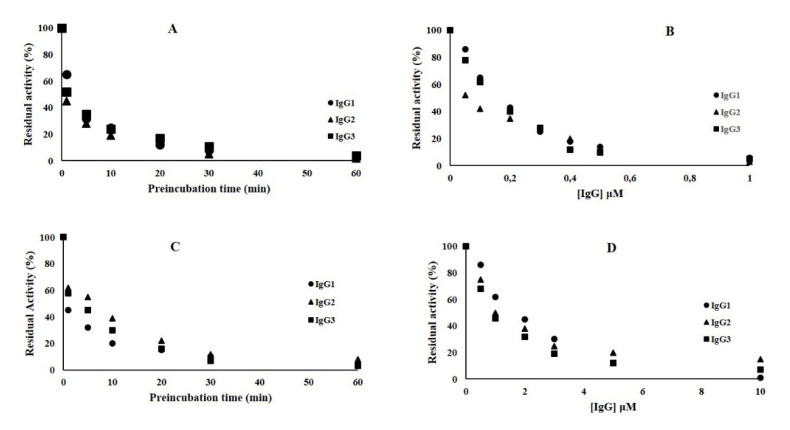
New Delhi Metallo-β-lactamase-1 (NDM-1) is the most prevalent type of metallo-β-lactamase, able to hydrolyze almost all antibiotics of the β-lactam group, leading to multidrug-resistant bacteria. To date, there are no clinically relevant inhibitors to fight NDM-1. The use of dromedary polyclonal antibody inhibitors against NDM-1 represents a promising new class of molecules with inhibitory activity. In the current study, immunoreactivities of dromedary Immunoglobulin G (IgG) isotypes containing heavy-chain and conventional antibodies were tested after successful immunization of dromedary using increasing amounts of the recombinant NDM-1 enzyme. Inhibition kinetic assays, performed using a spectrophotometric method with nitrocefin as a reporter substrate, demonstrated that IgG1, IgG2, and IgG3 were able to inhibit not only the hydrolytic activity of NDM-1 but also Verona integron-encoded metallo-β-lactamase (VIM-1) (subclass B1) and L1 metallo-β-lactamase (L1) (subclass B3) with inhibitory concentration (IC values ranging from 100 to 0.04 μM. Investigations on the ability of IgG subclasses to reduce the growth of recombinant BL21(DE3)/codon plus cells containing the recombinant plasmid expressing NDM-1, L1, or VIM-1 showed that the addition of IgGs (4 and 8 mg/L) to the cell culture was unable to restore the susceptibility of carbapenems. Interestingly, IgGs were able to interact with NDM-1, L1, and VIM-1 when tested on the periplasm extract of each cultured strain. The inhibitory concentration was in the micromolar range for all β-lactams tested. A visualization of the 3D structural basis using the three enzyme Protein Data Bank (PDB) files supports preliminarily the recorded inhibition of the three MBLs.
新德里金属-β-内酰胺酶-1(NDM-1)是最常见的金属-β-内酰胺酶类型,能够水解几乎所有β-内酰胺类抗生素,导致多药耐药菌。迄今为止,还没有针对 NDM-1 的临床相关抑制剂。使用来自骆驼的多克隆抗体抑制剂来对抗 NDM-1 代表了一类具有抑制活性的有前途的新型分子。在本研究中,在成功使用越来越多的重组 NDM-1 酶对骆驼进行免疫后,测试了含有重链和常规抗体的骆驼免疫球蛋白 G(IgG)同种型的免疫反应性。使用分光光度法,以硝替西啶作为报道底物进行抑制动力学测定,结果表明 IgG1、IgG2 和 IgG3 不仅能够抑制 NDM-1 的水解活性,还能够抑制 Verona 整合子编码的金属-β-内酰胺酶(VIM-1)(B1 亚类)和 L1 金属-β-内酰胺酶(L1)(B3 亚类),抑制浓度(IC 值范围为 100 至 0.04 μM。研究 IgG 亚类减少含有表达 NDM-1、L1 或 VIM-1 的重组质粒的 BL21(DE3)/codon plus 细胞生长的能力表明,向细胞培养物中添加 IgG(4 和 8 mg/L)不能恢复碳青霉烯类的敏感性。有趣的是,当在每种培养菌株的周质提取物上进行测试时,IgG 能够与 NDM-1、L1 和 VIM-1 相互作用。所有测试的β-内酰胺的抑制浓度均在微摩尔范围内。使用三个酶的蛋白质数据库(PDB)文件可视化 3D 结构基础初步支持对三种 MBLs 的记录抑制。