Museum of Zoology, Senckenberg Natural History Collections Dresden, E01109, Dresden, Germany.
Department of Life Sciences, Natural History Museum, London, SW75BD, UK.
Sci Rep. 2020 Sep 30;10(1):16081. doi: 10.1038/s41598-020-73129-6.
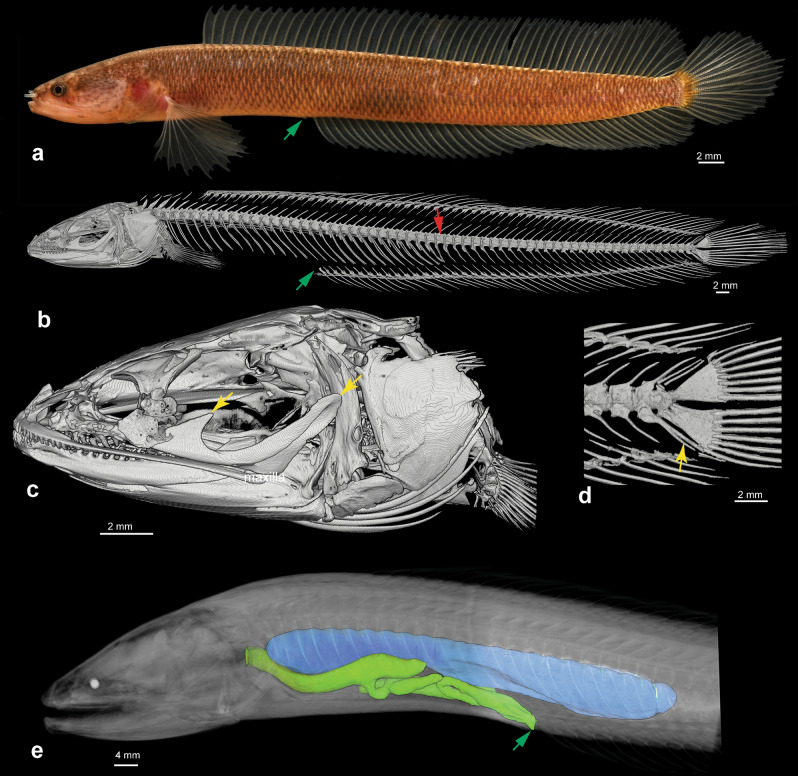
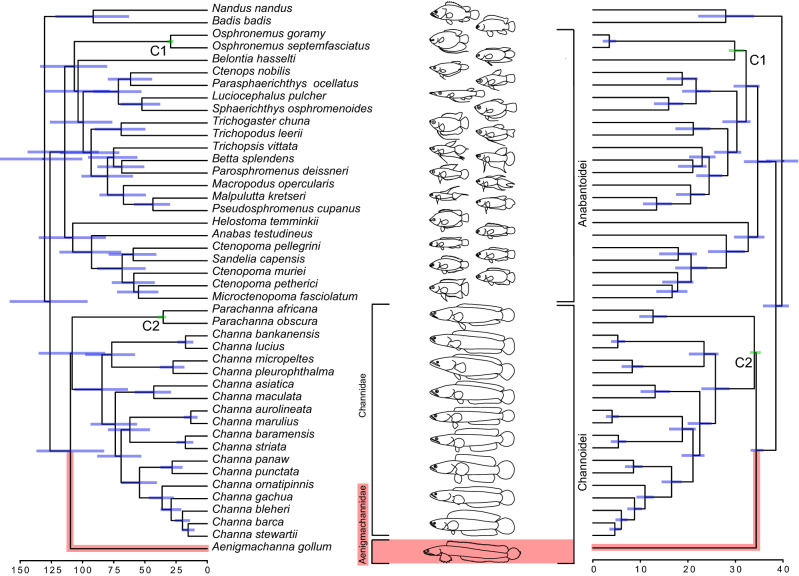
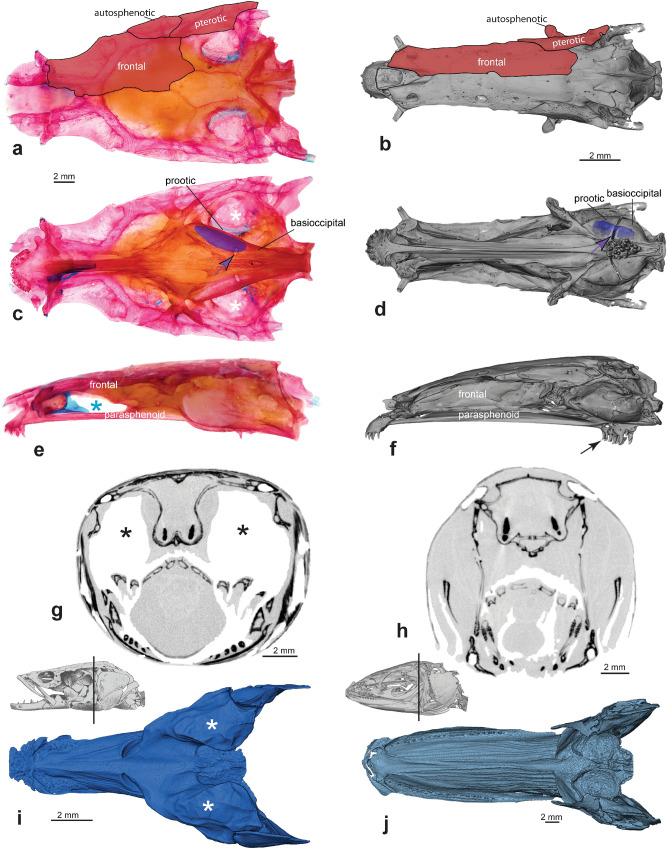
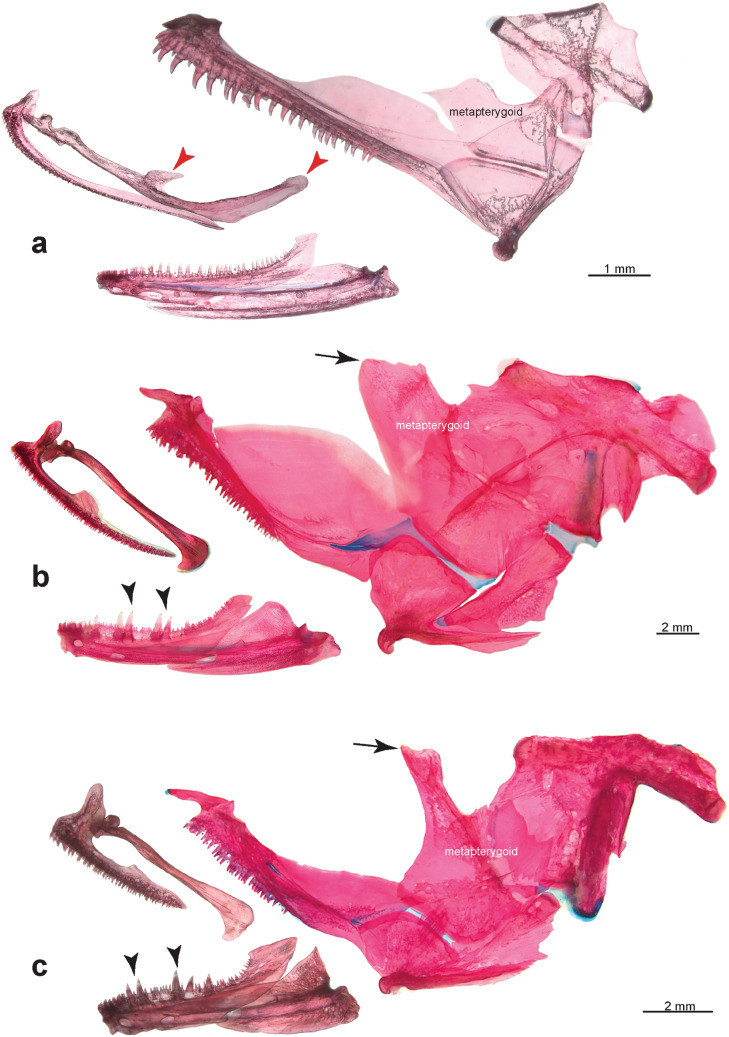
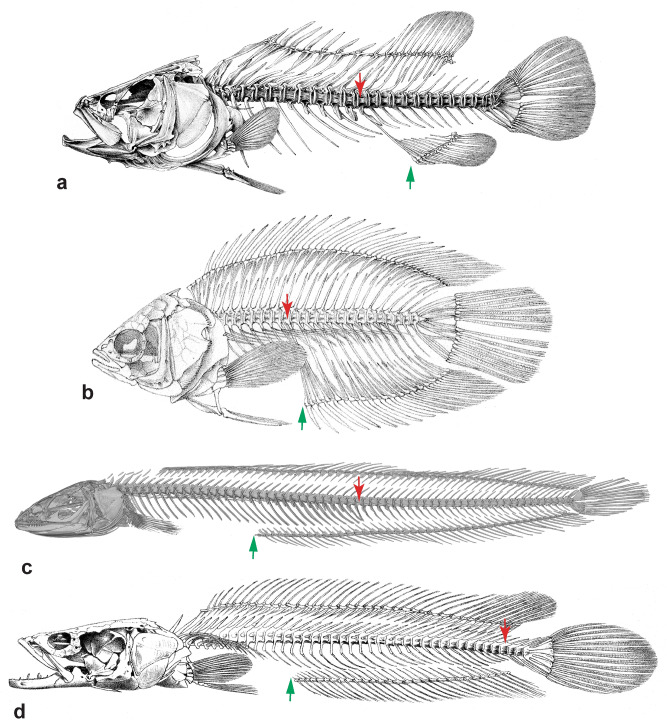
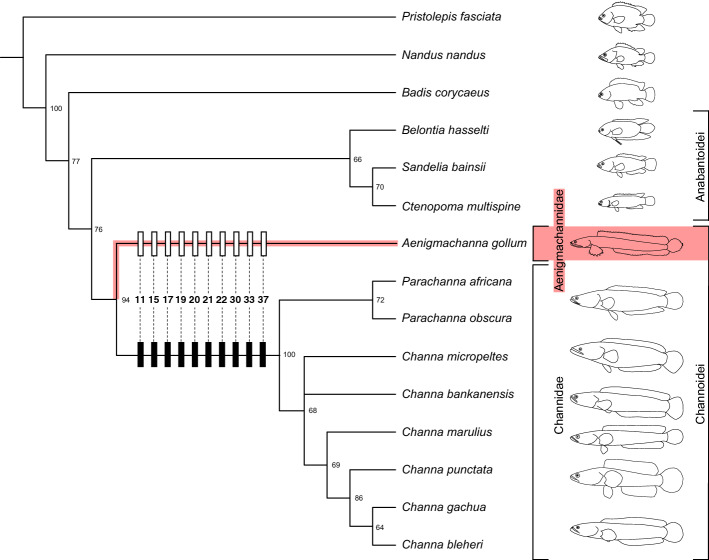
Pronounced organism-wide morphological stasis in evolution has resulted in taxa with unusually high numbers of primitive characters. These 'living fossils' hold a prominent role for our understanding of the diversification of the group in question. Here we provide the first detailed osteological analysis of Aenigmachanna gollum based on high-resolution nano-CT scans and one cleared and stained specimen of this recently described snakehead fish from subterranean waters of Kerala in South India. In addition to a number of derived and unique features, Aenigmachanna has several characters that exhibit putatively primitive conditions not encountered in the family Channidae. Our morphological analysis provides evidence for the phylogenetic position of Aenigmachanna as the sister group to Channidae. Molecular analyses further emphasize the uniqueness of Aenigmachanna and indicate that it is a separate lineage of snakeheads, estimated to have split from its sister group at least 34 or 109 million years ago depending on the fossil calibration employed. This may indicate that Aenigmachanna is a Gondwanan lineage, which has survived break-up of the supercontinent, with India separating from Africa at around 120 mya. The surprising morphological disparity of Aenigmachanna from members of the Channidae lead us to erect a new family of snakehead fishes, Aenigmachannidae, sister group to Channidae, to accommodate these unique snakehead fishes.
进化过程中明显的生物体形态停滞导致了具有异常高数量原始特征的分类群。这些“活化石”在我们理解所研究的群体的多样化方面起着重要作用。在这里,我们根据高分辨率的纳米 CT 扫描和来自印度南部喀拉拉邦地下水域的一个刚描述过的这种蛇头鱼的一个透明和染色标本,首次提供了对 Aenigmachanna gollum 的详细骨骼分析。除了一些衍生和独特的特征外,Aenigmachanna 还有一些表现出假定原始条件的特征,这些特征在 Channidae 家族中没有遇到过。我们的形态分析为 Aenigmachanna 作为 Channidae 姐妹群的系统发育位置提供了证据。分子分析进一步强调了 Aenigmachanna 的独特性,并表明它是蛇头鱼的一个独立谱系,根据所使用的化石校准,估计它与姐妹群在至少 3400 万或 1.09 亿年前就已经分开了。这可能表明 Aenigmachanna 是冈瓦纳谱系,它在超大陆分裂后幸存下来,印度大约在 1.2 亿年前与非洲分离。Aenigmachanna 与 Channidae 成员之间令人惊讶的形态差异促使我们建立了一个新的蛇头鱼科,Aenigmachannidae,作为 Channidae 的姐妹群,以容纳这些独特的蛇头鱼。