Department of Antibody Drug Development, Tohoku University Graduate School of Medicine, Aoba‑ku, Sendai, Miyagi 980‑8575, Japan.
Institute of Microbial Chemistry (BIKAKEN), Numazu, Microbial Chemistry Research Foundation, Numazu‑shi, Shizuoka 410‑0301, Japan.
Oncol Rep. 2020 Nov;44(5):1949-1960. doi: 10.3892/or.2020.7735. Epub 2020 Aug 14.
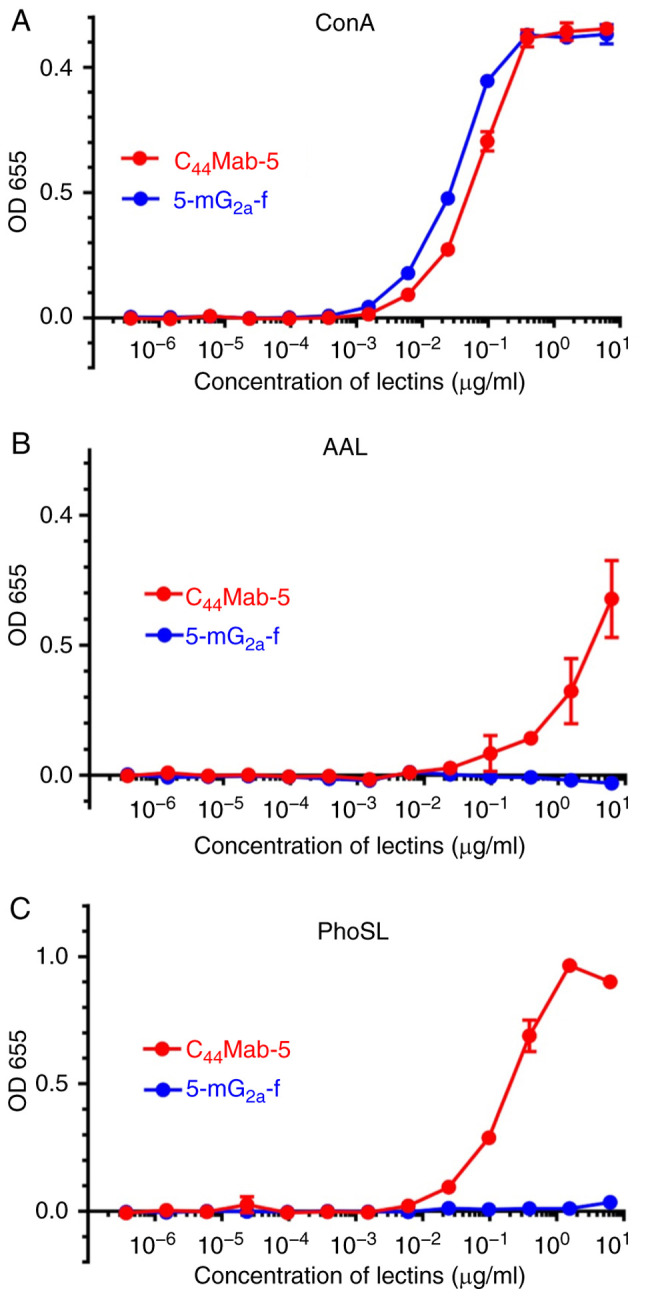
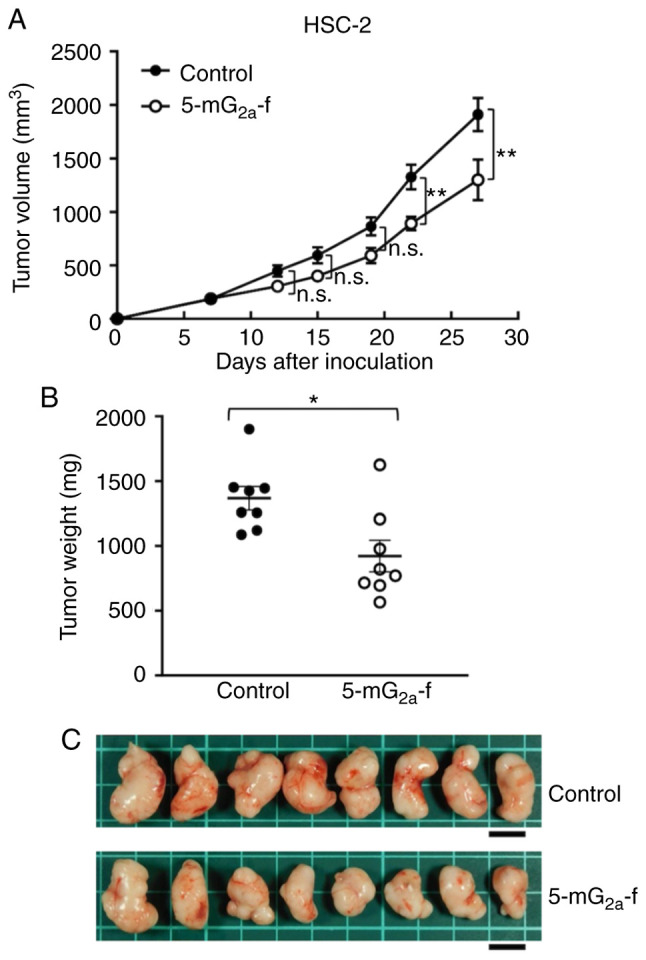
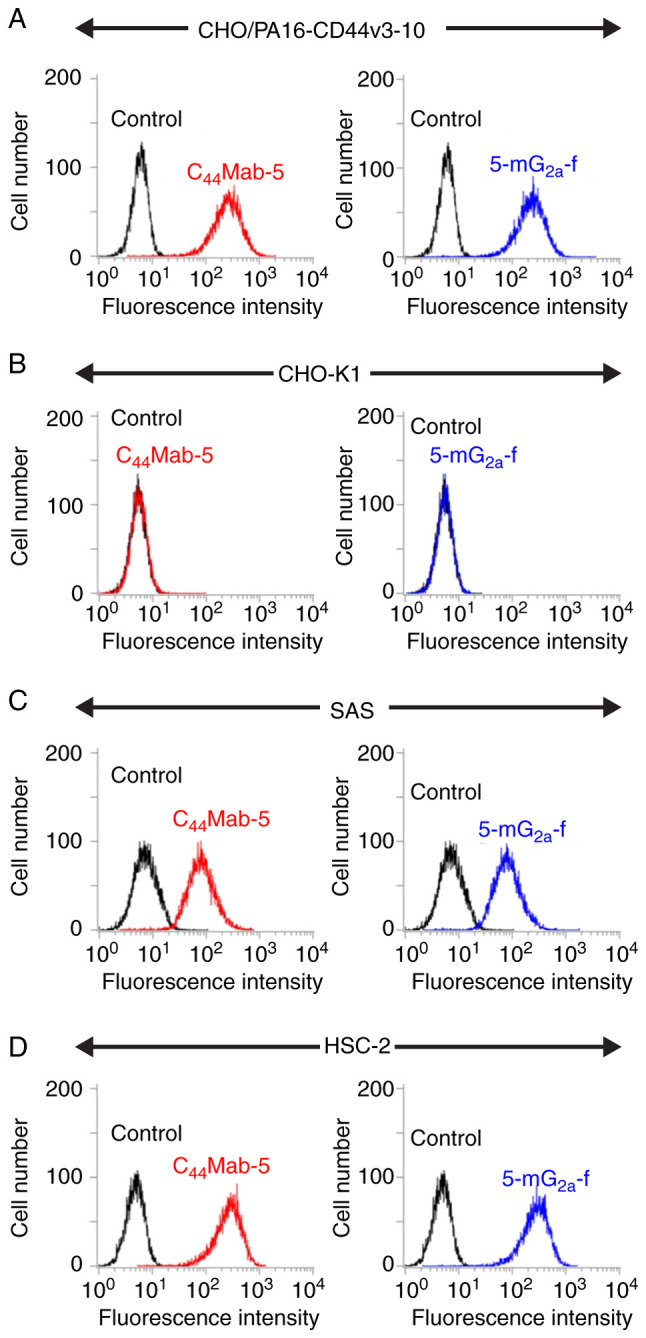
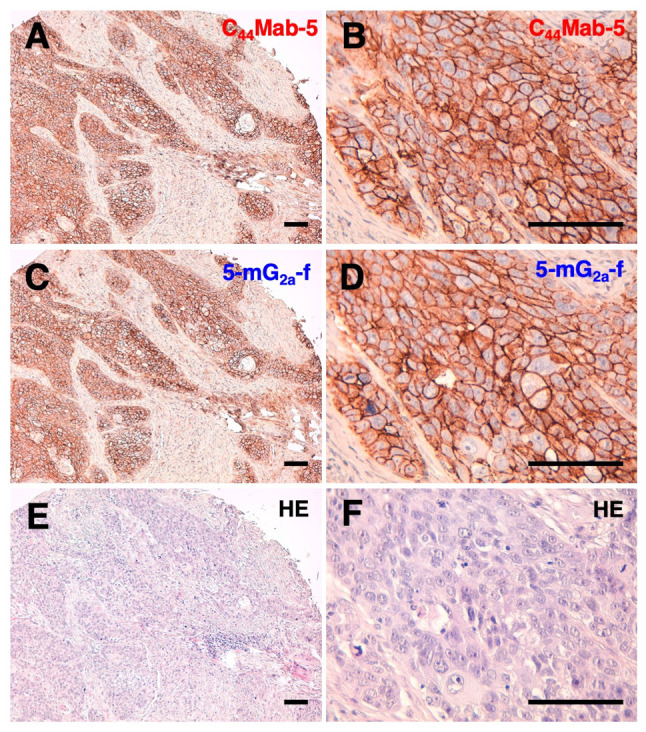
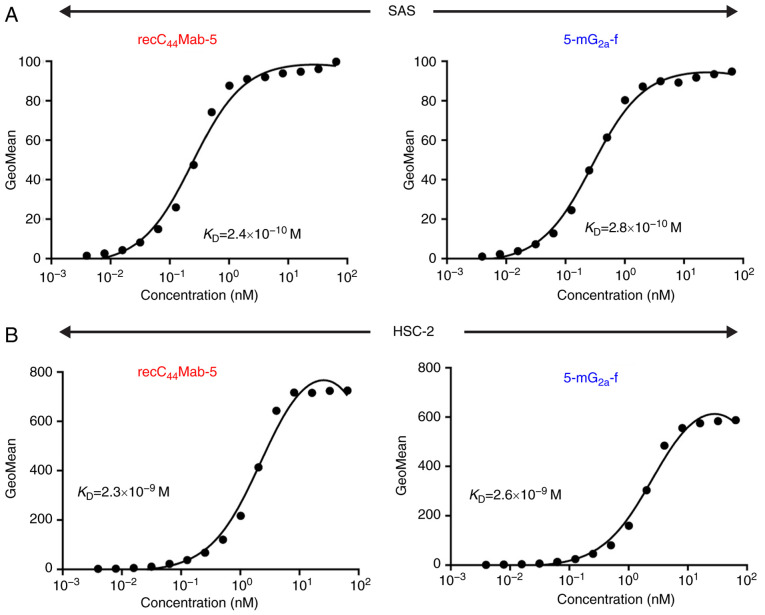
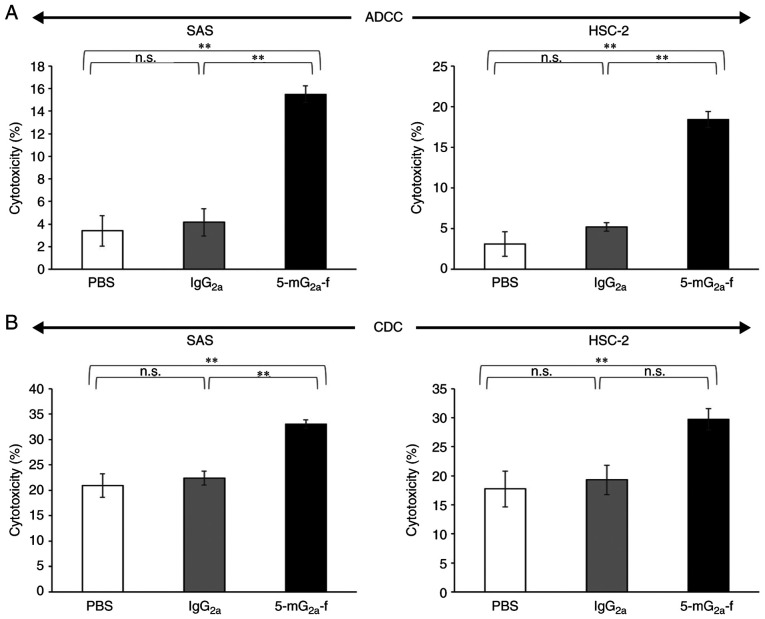
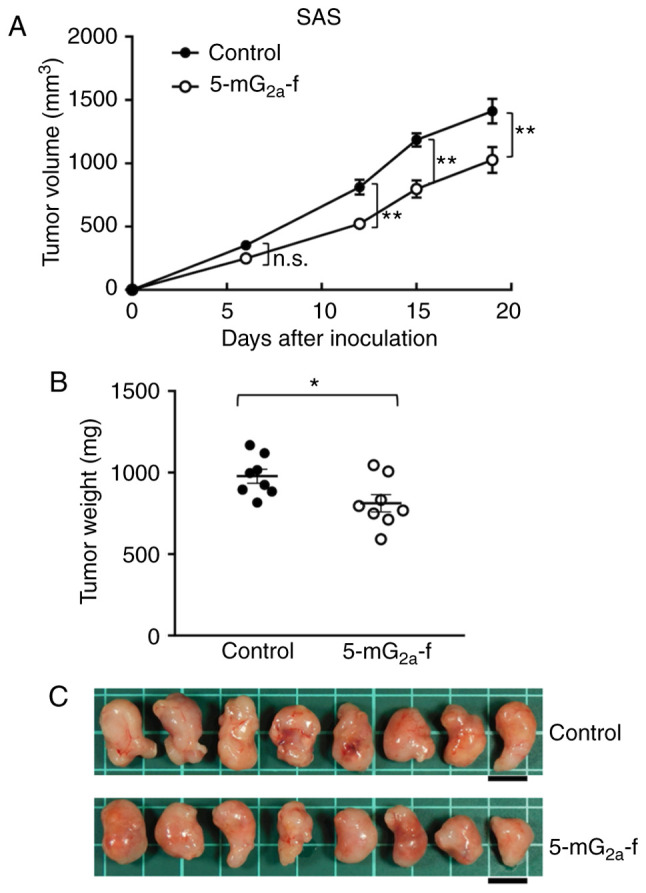
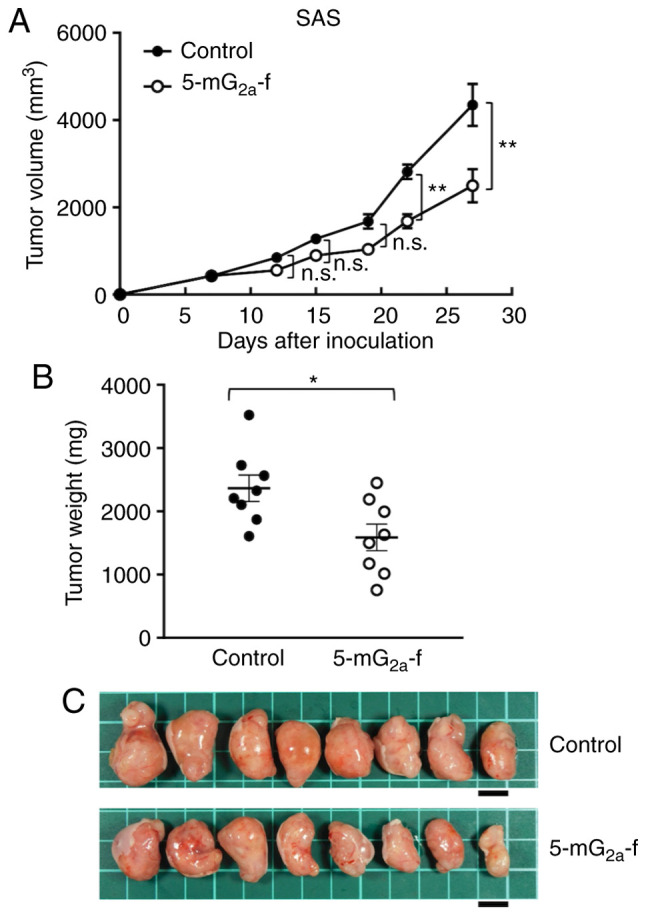
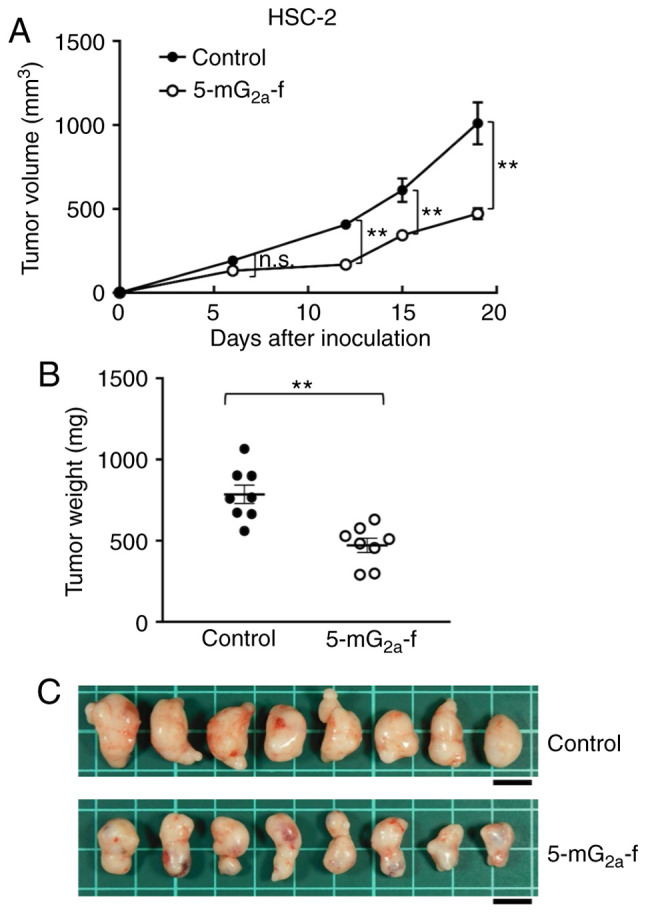
CD44 is widely expressed on the surface of most tissues and all hematopoietic cells, and regulates many genes associated with cell adhesion, migration, proliferation, differentiation, and survival. CD44 has also been studied as a therapeutic target in several cancers. Previously, an anti‑CD44 monoclonal antibody (mAb), C44Mab‑5 (IgG1, kappa) was established by immunizing mice with CD44‑overexpressing Chinese hamster ovary (CHO)-K1 cells. C44Mab‑5 recognized all CD44 isoforms, and showed high sensitivity for flow cytometry and immunohistochemical analysis in oral cancers. However, as the IgG1 subclass of C44Mab‑5 lacks antibody‑dependent cellular cytotoxicity (ADCC) and complement‑dependent cytotoxicity (CDC), the antitumor activity of C44Mab‑5 could not be determined. In the present study, we converted the mouse IgG1 subclass antibody C44Mab‑5 into an IgG2a subclass antibody, 5‑mG2a, and further produced a defucosylated version, 5‑mG2a‑f, using FUT8‑deficient ExpiCHO‑S (BINDS‑09) cells. Defucosylation of 5‑mG2a‑f was confirmed using fucose‑binding lectins, such as AAL and PhoSL. The dissociation constants (KD) for 5‑mG2a‑f against SAS and HSC‑2 oral cancer cells were determined through flow cytometry to be 2.8x10‑10 M and 2.6x10‑9 M, respectively, indicating that 5‑mG2a‑f possesses extremely high binding affinity. Furthermore, immunohistochemical staining using 5‑mG2a‑f specifically stained the membranes of oral cancer cells. In vitro analysis demonstrated that 5‑mG2a‑f showed moderate ADCC and CDC activities against SAS and HSC‑2 oral cancer cells. In vivo analysis revealed that 5‑mG2a‑f significantly reduced tumor development in SAS and HSC‑2 xenografts in comparison to control mouse IgG, even after injection seven days post‑tumor inoculation. Collectively, these results suggest that treatment with 5‑mG2a‑f may represent a useful therapy for patients with CD44‑expressing oral cancers.
CD44 广泛表达于大多数组织和所有造血细胞的表面,调节与细胞黏附、迁移、增殖、分化和存活相关的许多基因。CD44 也已被研究作为几种癌症的治疗靶点。此前,通过用 CD44 过表达的中国仓鼠卵巢 (CHO)-K1 细胞免疫小鼠,建立了抗 CD44 单克隆抗体 (mAb) C44Mab-5(IgG1,kappa)。C44Mab-5 识别所有 CD44 同工型,并且在口腔癌的流式细胞术和免疫组织化学分析中具有高灵敏度。然而,由于 IgG1 亚类的 C44Mab-5 缺乏抗体依赖性细胞毒性 (ADCC) 和补体依赖性细胞毒性 (CDC),因此无法确定 C44Mab-5 的抗肿瘤活性。在本研究中,我们将小鼠 IgG1 亚类抗体 C44Mab-5 转化为 IgG2a 亚类抗体 5-mG2a,并进一步使用 FUT8 缺陷型 ExpiCHO-S (BINDS-09) 细胞生产去岩藻糖基化的版本 5-mG2a-f。使用 AAL 和 PhoSL 等岩藻糖结合凝集素来确认 5-mG2a-f 的去岩藻糖基化。通过流式细胞术确定 5-mG2a-f 与 SAS 和 HSC-2 口腔癌细胞的解离常数 (KD) 分别为 2.8x10⁻¹⁰ M 和 2.6x10⁻⁹ M,表明 5-mG2a-f 具有极高的结合亲和力。此外,使用 5-mG2a-f 进行的免疫组织化学染色特异性染色了口腔癌细胞的膜。体外分析表明,5-mG2a-f 对 SAS 和 HSC-2 口腔癌细胞具有中等的 ADCC 和 CDC 活性。体内分析表明,与对照小鼠 IgG 相比,5-mG2a-f 在 SAS 和 HSC-2 异种移植瘤中显著降低了肿瘤的发展,即使在肿瘤接种后 7 天注射后也是如此。总之,这些结果表明,用 5-mG2a-f 治疗可能代表了表达 CD44 的口腔癌患者的一种有用的治疗方法。