Department of Molecular Pharmacology, Tohoku University Graduate School of Medicine, Sendai, Miyagi 980‑8575, Japan.
Institute of Microbial Chemistry (BIKAKEN), Microbial Chemistry Research Foundation, Numazu, Shizuoka 410‑0301, Japan.
Int J Mol Med. 2023 Feb;51(2). doi: 10.3892/ijmm.2023.5221. Epub 2023 Jan 20.
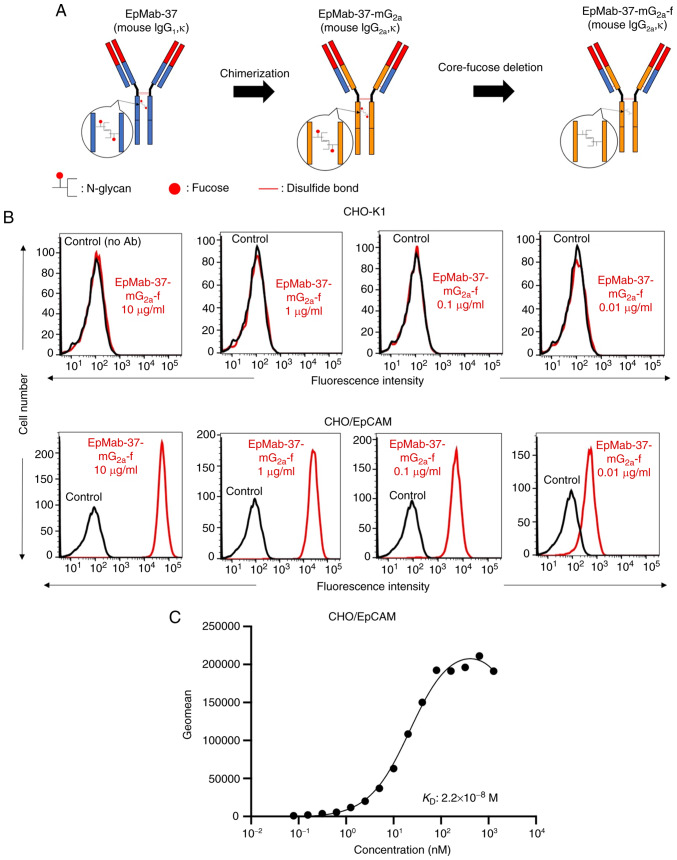
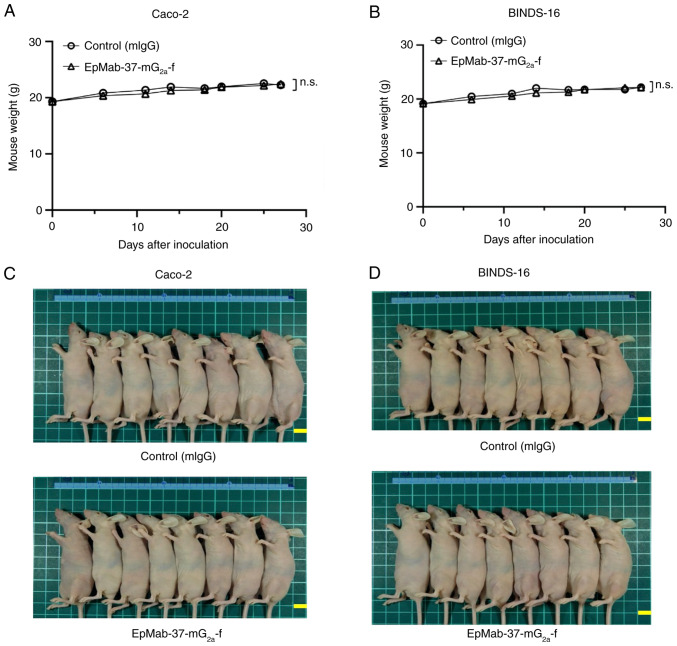
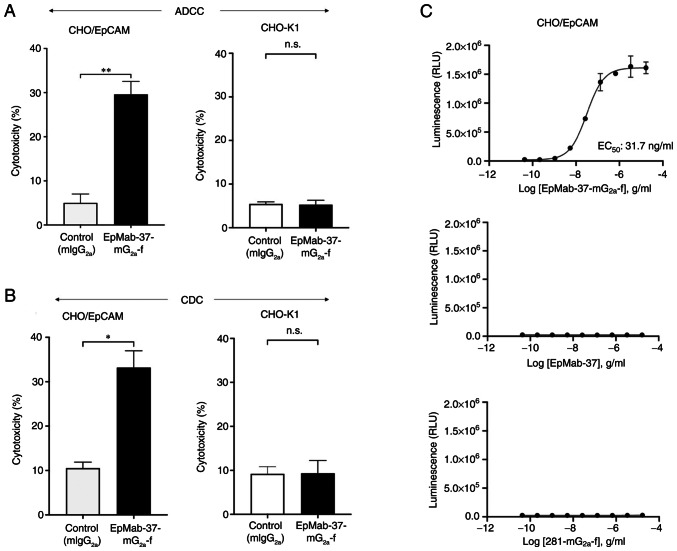
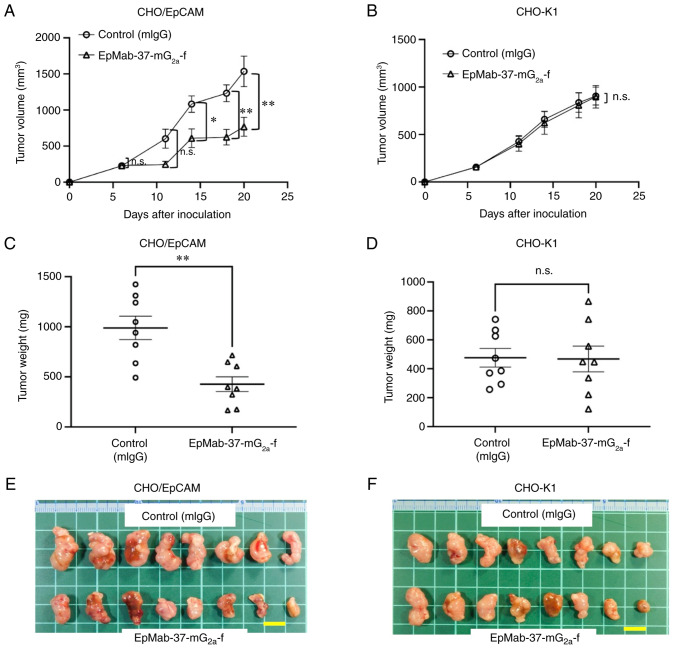
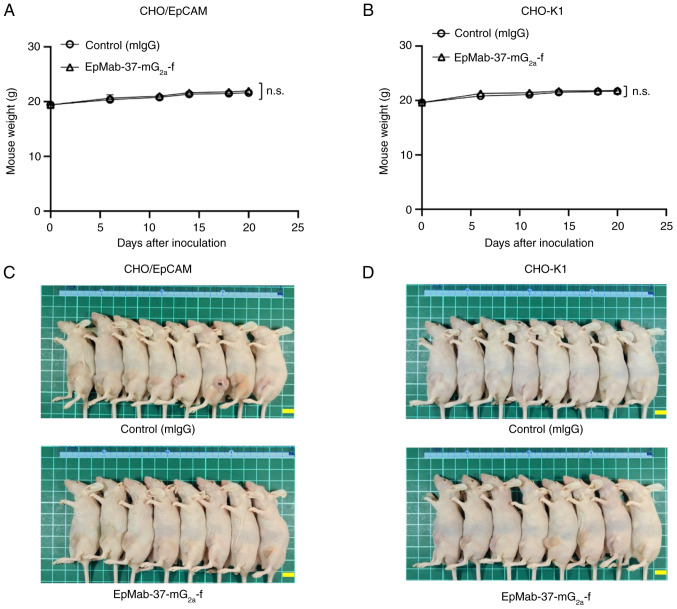
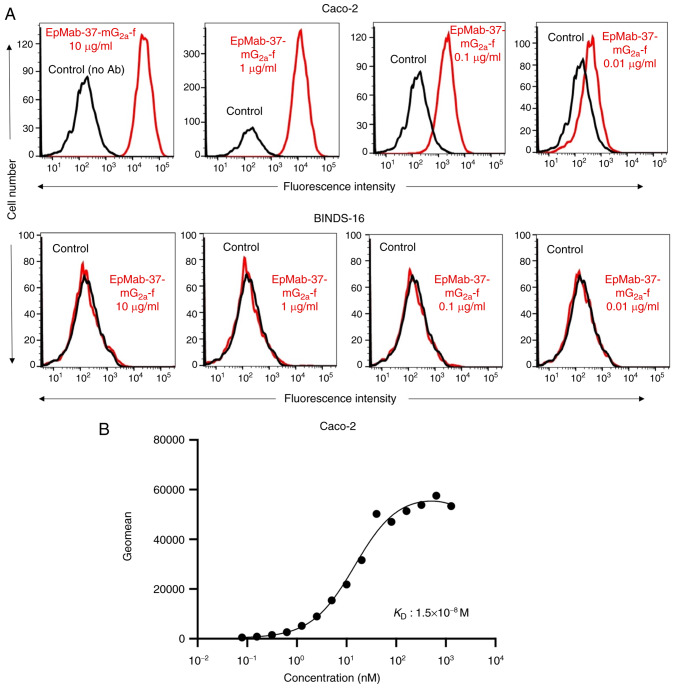
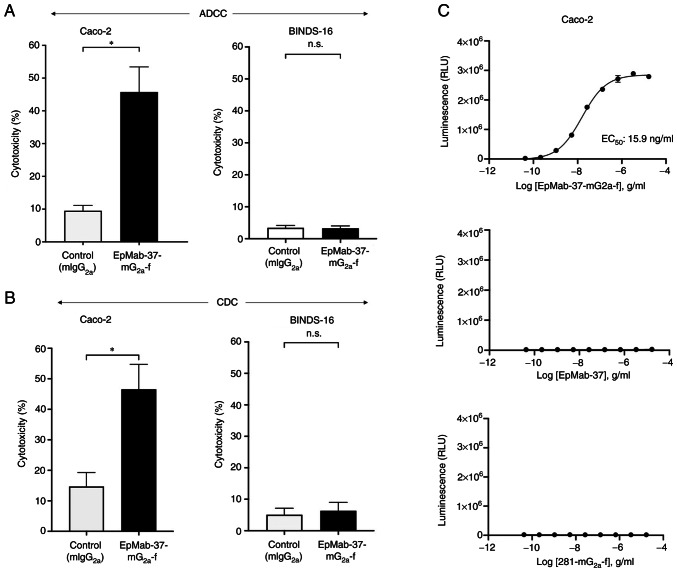
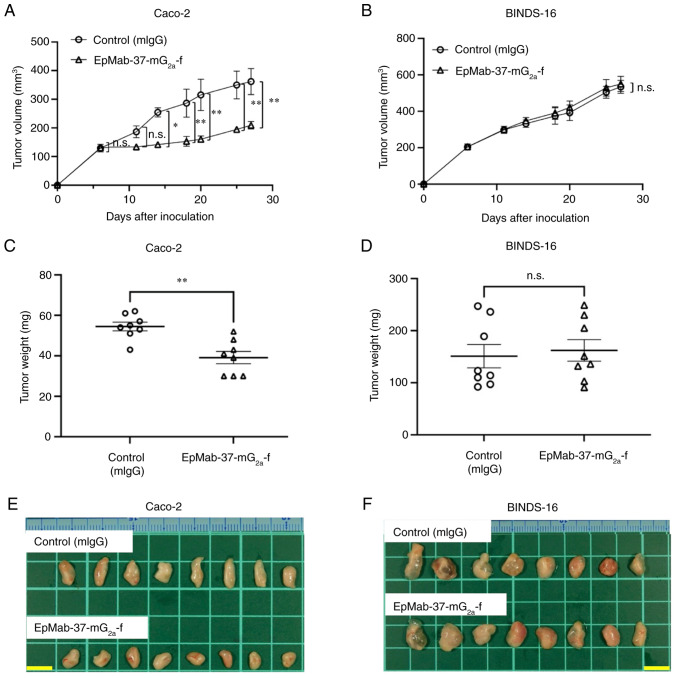
Epithelial cell adhesion molecule (EpCAM) is a type I transmembrane glycoprotein, which is highly expressed on tumor cells. As EpCAM plays a crucial role in cell adhesion, survival, proliferation, stemness, and tumorigenesis, it has been considered as a promising target for tumor diagnosis and therapy. Anti‑EpCAM monoclonal antibodies (mAbs) have been developed and have previously demonstrated promising outcomes in several clinical trials. An anti‑EpCAM mAb, EpMab‑37 (mouse IgG, kappa) was previously developed by the authors, using the cell‑based immunization and screening method. In the present study, a defucosylated version of anti‑EpCAM mAb (EpMab‑37‑mG2a‑f) was generated to evaluate the antitumor activity against EpCAM‑positive cells. EpMab‑37‑mG‑f recognized EpCAM‑overexpressing CHO‑K1 (CHO/EpCAM) cells with a moderate binding‑affinity [dissociation constant ()=2.2x10 M] using flow cytometry. EpMab‑37‑mG‑f exhibited potent antibody‑dependent cellular cytotoxicity (ADCC) and complement‑dependent cytotoxicity (CDC) for CHO/EpCAM cells by murine splenocytes and complements, respectively. Furthermore, the administration of EpMab‑37‑mG‑f significantly suppressed CHO/EpCAM xenograft tumor development compared with the control mouse IgG. EpMab‑37‑mG‑f also exhibited a moderate binding‑affinity (=1.5x10 M) and high ADCC and CDC activities for a colorectal cancer cell line (Caco‑2 cells). The administration of EpMab‑37‑mG‑f to Caco‑2 tumor‑bearing mice significantly suppressed tumor development compared with the control. By contrast, EpMab‑37‑mG‑f never suppressed the xenograft tumor growth of Caco‑2 cells in which EpCAM was knocked out. On the whole, these results indicate that EpMab‑37‑mG‑f may exert antitumor activities against EpCAM‑positive cancers and may thus be a promising therapeutic regimen for colorectal cancer.
上皮细胞黏附分子(EpCAM)是一种 I 型跨膜糖蛋白,在肿瘤细胞中高度表达。由于 EpCAM 在细胞黏附、存活、增殖、干细胞特性和肿瘤发生中发挥着关键作用,因此它被认为是肿瘤诊断和治疗的一个有前途的靶点。已经开发出了抗 EpCAM 单克隆抗体(mAbs),并且在之前的几项临床试验中已经证明了这些 mAbs 有很好的效果。作者之前使用基于细胞的免疫接种和筛选方法开发了一种抗 EpCAM mAb,即 EpMab-37(鼠 IgG,kappa)。在本研究中,生成了抗 EpCAM mAb 的去岩藻糖基化版本(EpMab-37-mG2a-f),以评估其对 EpCAM 阳性细胞的抗肿瘤活性。EpMab-37-mG-f 通过流式细胞术识别 EpCAM 过表达的 CHO-K1(CHO/EpCAM)细胞,具有中等的结合亲和力(解离常数()=2.2x10 M)。EpMab-37-mG-f 通过小鼠脾细胞和补体分别对 CHO/EpCAM 细胞表现出强大的抗体依赖性细胞毒性(ADCC)和补体依赖性细胞毒性(CDC)。此外,与对照鼠 IgG 相比,EpMab-37-mG-f 显著抑制了 CHO/EpCAM 异种移植肿瘤的发展。EpMab-37-mG-f 对结直肠癌细胞系(Caco-2 细胞)也表现出中等的结合亲和力(=1.5x10 M)和高 ADCC 和 CDC 活性。与对照相比,EpMab-37-mG-f 给药可显著抑制 Caco-2 荷瘤小鼠的肿瘤发展。相比之下,EpMab-37-mG-f 从未抑制 EpCAM 敲除的 Caco-2 细胞的异种移植肿瘤生长。总的来说,这些结果表明,EpMab-37-mG-f 可能对 EpCAM 阳性癌症发挥抗肿瘤活性,因此可能是结直肠癌有前途的治疗方案。