Department of Internal Medicine I, Regensburg University Hospital, 93053 Regensburg, Germany.
Biochemistry Center Regensburg (BZR), Laboratory for RNA Biology, University of Regensburg, 93042 Regensburg, Germany.
Int J Mol Sci. 2020 Sep 29;21(19):7205. doi: 10.3390/ijms21197205.
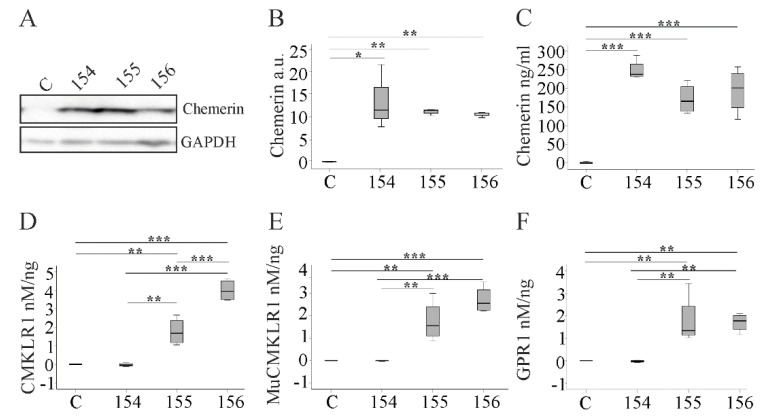
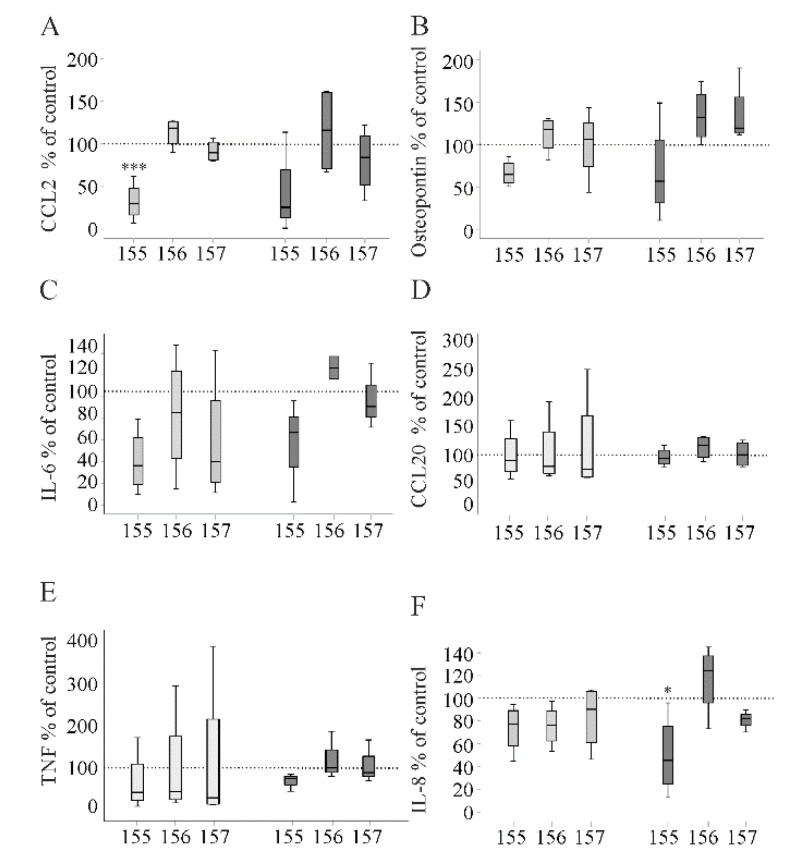
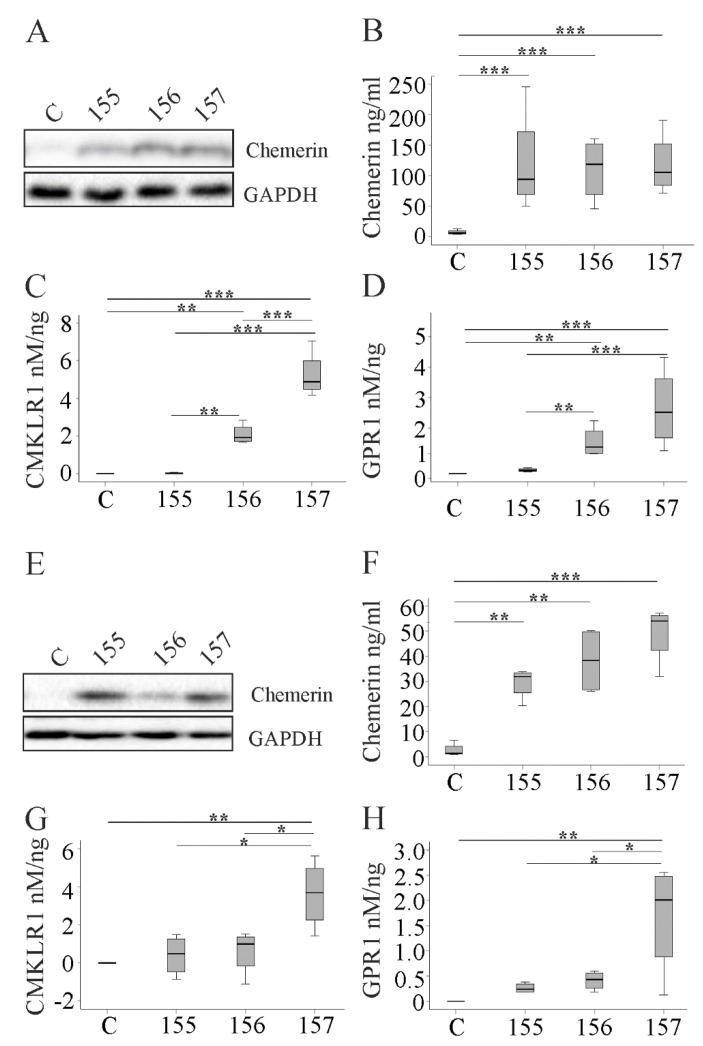
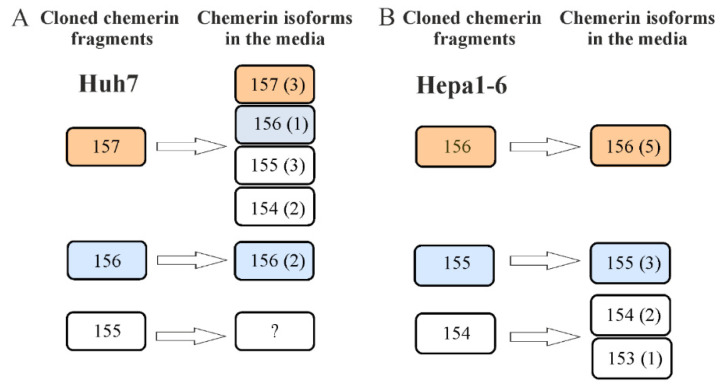
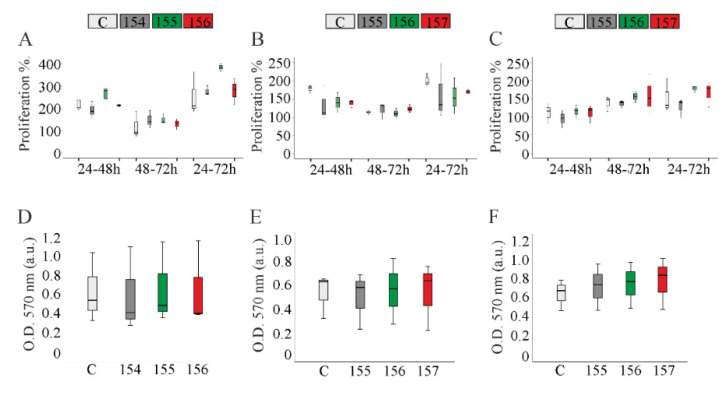
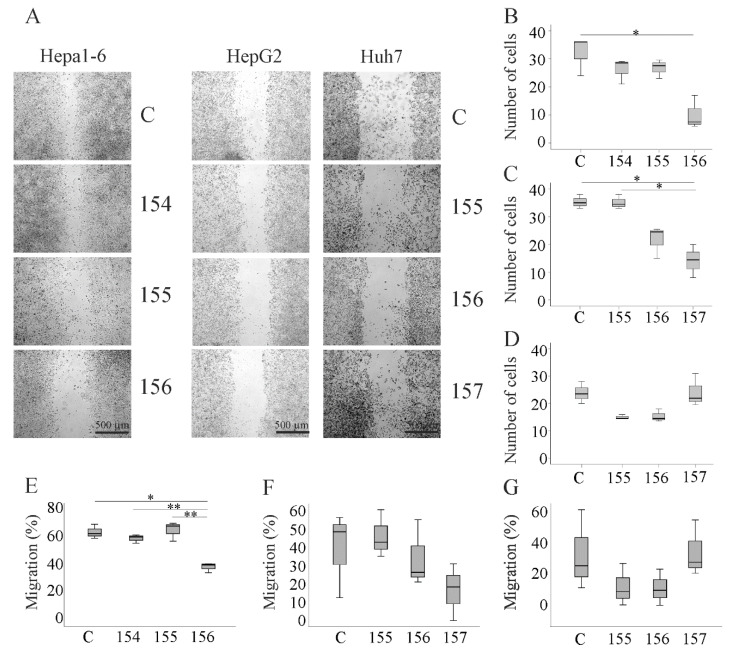
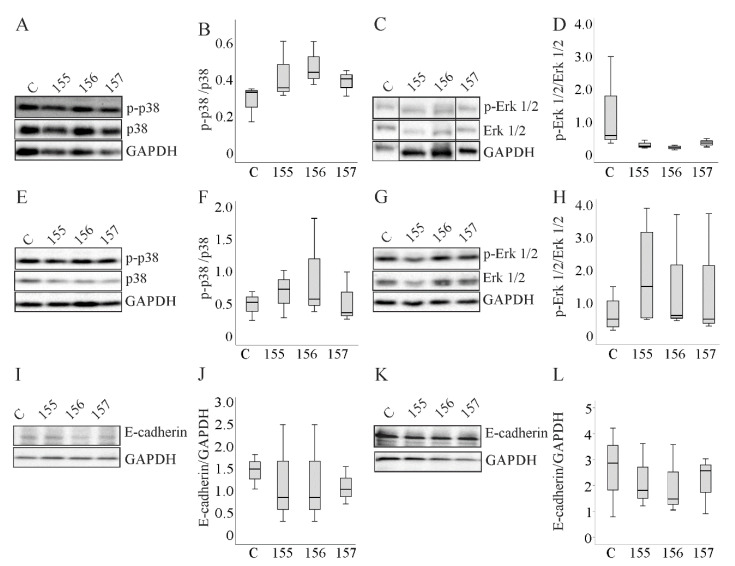
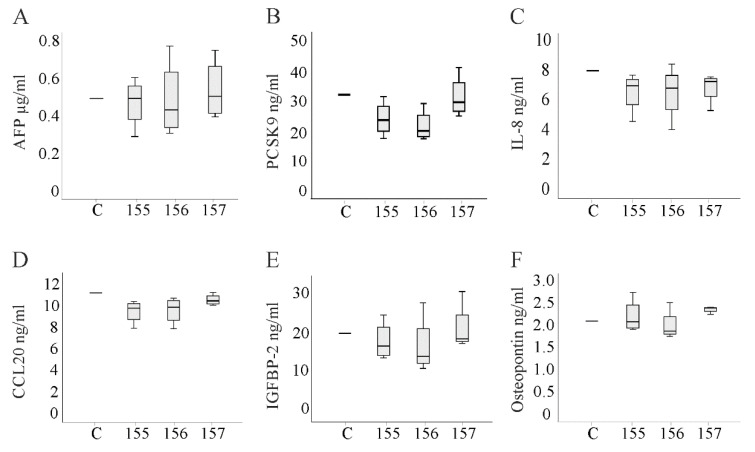
Murine chemerin is C-terminally processed to the bioactive isoforms, muChem-156 and muChem-155, among which the longer variant protects from hepatocellular carcinoma (HCC). However, the role of muChem-155 is mostly unknown. Here, we aimed to compare the effects of these isoforms on the proliferation, migration and the secretome of the human hepatocyte cell lines HepG2 and Huh7 and the murine Hepa1-6 cell line. Therefore, huChem-157 and -156 were overexpressed in the human cells, and the respective murine variants, muChem-156 and -155, in the murine hepatocytes. Both chemerin isoforms produced by HepG2 and Hepa1-6 cells activated the chemerin receptors chemokine-like receptor 1 (CMKLR1) and G protein-coupled receptor 1 (GPR1). HuChem-157 was the active isoform in the Huh7 cell culture medium. The potencies of muChem-155 and muChem-156 to activate human GPR1 and mouse CMKLR1 were equivalent. Human CMKLR1 was most responsive to muChem-156. Chemerin variants showed no effect on cell viability and proliferation. Activation of the mitogen-activated protein kinases Erk1/2 and p38, and protein levels of the epithelial-mesenchymal transition marker, E-cadherin, were not regulated by the chemerin variants. Migration was reduced in HepG2 and Hepa1-6 cells by the longer isoform. Protective effects of chemerin in HCC include the modulation of cytokines but huChem-156 and huChem-157 overexpression did not change IL-8, CCL20 or osteopontin in the hepatocytes. The conditioned medium of the transfected hepatocytes failed to alter these soluble factors in the cell culture medium of peripheral blood mononuclear cells (PBMCs). Interestingly, the cell culture medium of Huh7 cells producing the inactive variant huChem-155 reduced CCL2 and IL-8 in PBMCs. To sum up, huChem-157 and muChem-156 inhibited hepatocyte migration and may protect from HCC metastasis. HuChem-155 was the only human isoform exerting anti-inflammatory effects on immune cells.
鼠类趋化素被 C 端加工成生物活性的同种型,muChem-156 和 muChem-155,其中较长的变体可预防肝细胞癌(HCC)。然而,muChem-155 的作用大多未知。在这里,我们旨在比较这些同种型对人肝癌细胞系 HepG2 和 Huh7 以及鼠类 Hepa1-6 细胞系增殖、迁移和分泌谱的影响。因此,huChem-157 和 -156 在人细胞中过表达,而相应的鼠类变体 muChem-156 和 -155 在鼠类肝细胞中过表达。Hepa1-6 细胞和 HepG2 细胞产生的两种趋化素同种型均激活趋化素受体趋化素样受体 1(CMKLR1)和 G 蛋白偶联受体 1(GPR1)。huChem-157 是 Huh7 细胞培养物中具有活性的同种型。muChem-155 和 muChem-156 激活人 GPR1 和鼠类 CMKLR1 的效力相当。人 CMKLR1 对 muChem-156 最敏感。趋化素变体对细胞活力和增殖没有影响。趋化素变体未调节丝裂原活化蛋白激酶 Erk1/2 和 p38 的激活以及上皮-间充质转化标志物 E-钙粘蛋白的蛋白水平。较长的同种型可减少 HepG2 和 Hepa1-6 细胞的迁移。趋化素在 HCC 中的保护作用包括细胞因子的调节,但 huChem-156 和 huChem-157 的过表达并未改变肝细胞中的 IL-8、CCL20 或骨桥蛋白。转染肝细胞的条件培养基未能改变外周血单核细胞(PBMC)培养物中这些可溶性因子。有趣的是,产生无活性变体 huChem-155 的 Huh7 细胞的细胞培养基降低了 PBMC 中的 CCL2 和 IL-8。总之,huChem-157 和 muChem-156 抑制肝细胞迁移,可能预防 HCC 转移。huChem-155 是唯一对免疫细胞具有抗炎作用的人类同种型。