CIRAD, UMR PVBMT, Saint-Pierre, Reunion Island, France.
Unit for Tropical Pests and Diseases, Plant Health Laboratory (LSV), French Agency for Food, Environmental and Occupational Health & Safety (ANSES), Saint-Pierre, Reunion Island, France.
BMC Microbiol. 2020 Oct 1;20(1):296. doi: 10.1186/s12866-020-01972-8.
Asiatic Citrus Canker, caused by Xanthomonas citri pv. citri, severely impacts citrus production worldwide and hampers international trade. Considerable regulatory procedures have been implemented to prevent the introduction and establishment of X. citri pv. citri into areas where it is not present. The effectiveness of this surveillance largely relies on the availability of specific and sensitive detection protocols. Although several PCR- or real-time PCR-based methods are available, most of them showed analytical specificity issues. Therefore, we developed new conventional and real-time quantitative PCR assays, which target a region identified by comparative genomic analyses, and compared them to existing protocols.
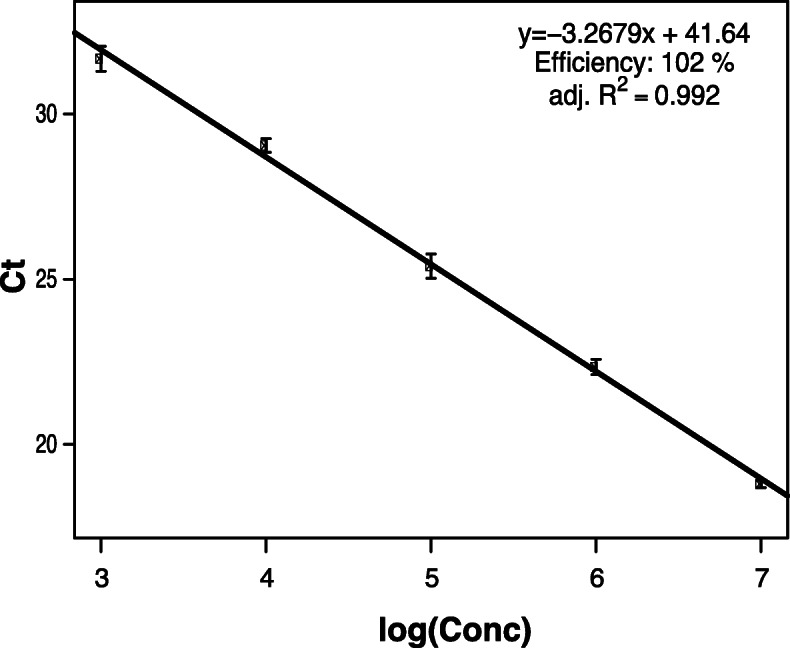
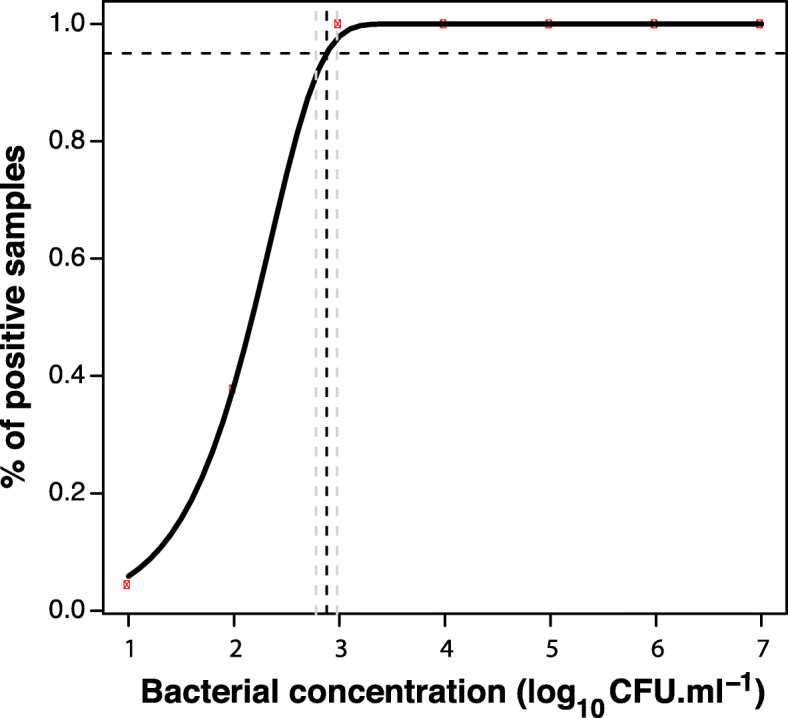
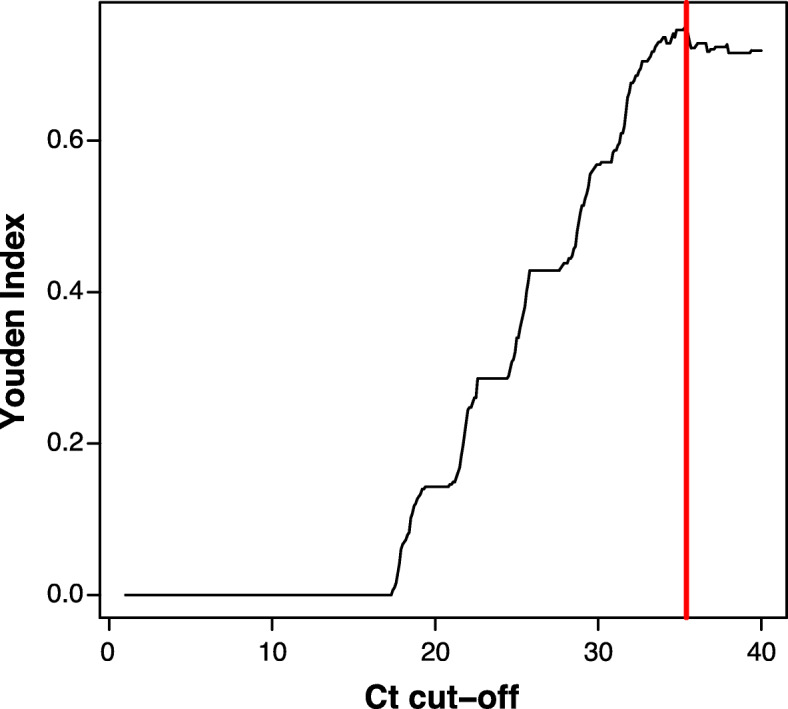
Our assays target the X. citri pv. citri XAC1051 gene that encodes for a putative transmembrane protein. The real-time PCR assay includes an internal plant control (5.8S rDNA) for validating the assay in the absence of target amplification. A receiver-operating characteristic approach was used in order to determine a reliable cycle cut-off for providing accurate qualitative results. Repeatability, reproducibility and transferability between real-time devices were demonstrated for this duplex qPCR assay (XAC1051-2qPCR). When challenged with an extensive collection of target and non-target strains, both assays displayed a high analytical sensitivity and specificity performance: LOD = 754 CFU ml (15 cells per reaction), 100% inclusivity, 97.2% exclusivity for XAC1051-2qPCR; LOD = 5234 CFU ml (105 cells per reaction), 100% exclusivity and inclusivity for the conventional PCR. Both assays can detect the target from naturally infected citrus fruit. Interestingly, XAC1051-2qPCR detected X. citri pv. citri from herbarium citrus samples. The new PCR-based assays displayed enhanced analytical sensitivity and specificity when compared with previously published PCR and real-time qPCR assays.
We developed new valuable detection assays useful for routine diagnostics and surveillance of X. citri pv. citri in citrus material. Their reliability was evidenced through numerous trials on a wide range of bacterial strains and plant samples. Successful detection of the pathogen was achieved from both artificially and naturally infected plants, as well as from citrus herbarium samples, suggesting that these assays will have positive impact both for future applied and academic research on this bacterium.
由柑橘溃疡病菌(Xanthomonas citri pv. citri)引起的亚洲柑橘溃疡病严重影响了全球柑橘产业的发展,并阻碍了国际贸易。为了防止柑橘溃疡病菌传入和定殖于未发生地区,已经实施了相当多的监管程序。这种监测的有效性在很大程度上依赖于可用的特定和敏感的检测方案。虽然已经有一些基于 PCR 或实时 PCR 的方法,但其中大多数方法都存在分析特异性问题。因此,我们开发了新的常规和实时定量 PCR 检测方法,这些方法针对比较基因组分析确定的一个区域,并将其与现有方案进行了比较。
我们的检测方法针对柑橘溃疡病菌 XAC1051 基因,该基因编码一种假定的跨膜蛋白。实时 PCR 检测方法包括一个内部植物对照(5.8S rDNA),用于在没有目标扩增的情况下验证检测方法的有效性。采用接受者操作特征方法来确定可靠的循环截止值,以提供准确的定性结果。对该双靶实时定量 PCR 检测方法(XAC1051-2qPCR)进行了重复性、重现性和实时设备间的可转移性验证。当用广泛的目标和非目标菌株进行检测时,两种检测方法都表现出了高的分析灵敏度和特异性:XAC1051-2qPCR 的检测限(LOD)为 754 CFU/ml(每个反应 15 个细胞),100%包容性,97.2%排他性;常规 PCR 的 LOD 为 5234 CFU/ml(每个反应 105 个细胞),100%排他性和包容性。两种检测方法均能从自然感染的柑橘果实中检测到目标。有趣的是,XAC1051-2qPCR 从柑橘标本库的柑橘样本中检测到了柑橘溃疡病菌。与之前发表的 PCR 和实时 qPCR 检测方法相比,新的基于 PCR 的检测方法显示出了更高的分析灵敏度和特异性。
我们开发了新的有价值的检测方法,可用于柑橘材料中柑橘溃疡病菌的常规诊断和监测。通过对多种细菌菌株和植物样本的大量试验,证明了它们的可靠性。从人工和自然感染的植物以及柑橘标本库样本中都成功地检测到了病原体,这表明这些检测方法将对未来针对该细菌的应用和学术研究产生积极影响。