Neurosurgical Clinic, Medical Faculty, Heinrich-Heine University Duesseldorf, Moorenstrasse 5, 40225, Dusseldorf, Germany.
Skin Cancer Unit of the Dermatology Department, Medical Faculty, West German Cancer Center, University Duisburg-Essen, 45147, Essen, Germany.
Sci Rep. 2020 Oct 1;10(1):16218. doi: 10.1038/s41598-020-72480-y.
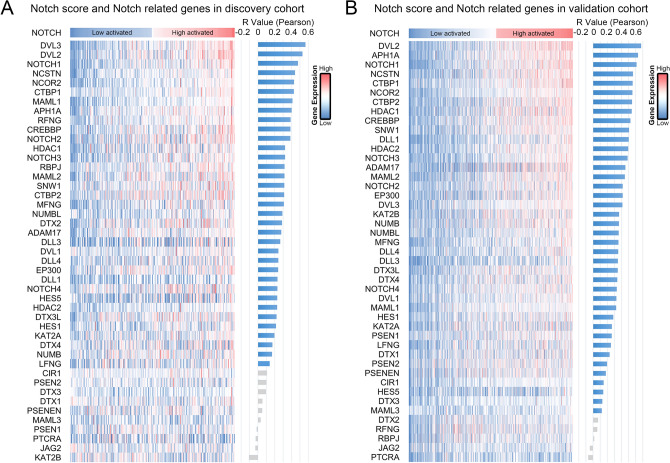
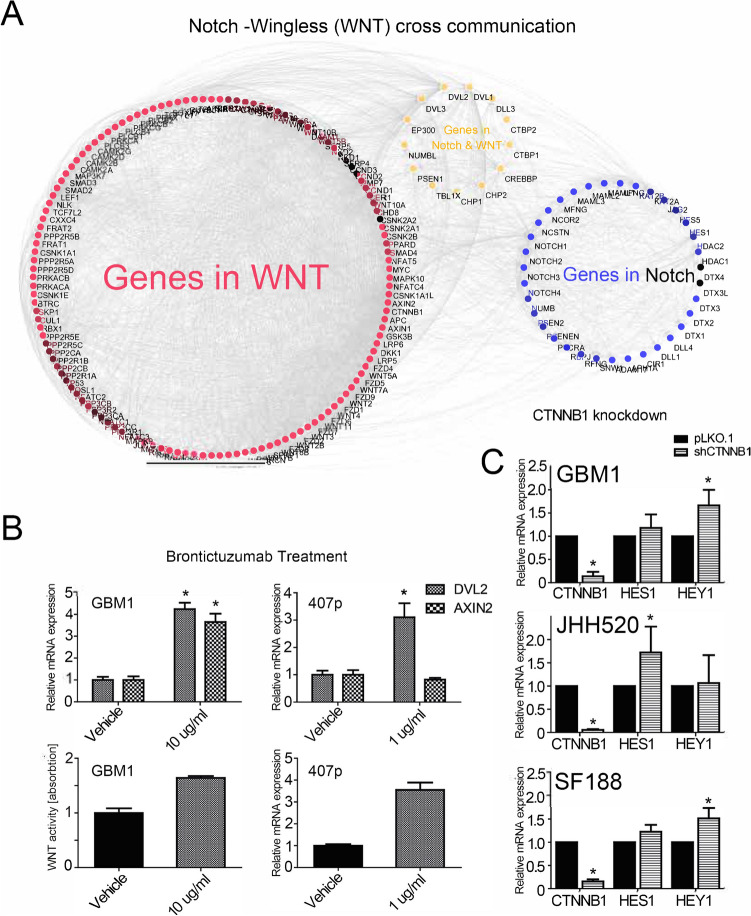
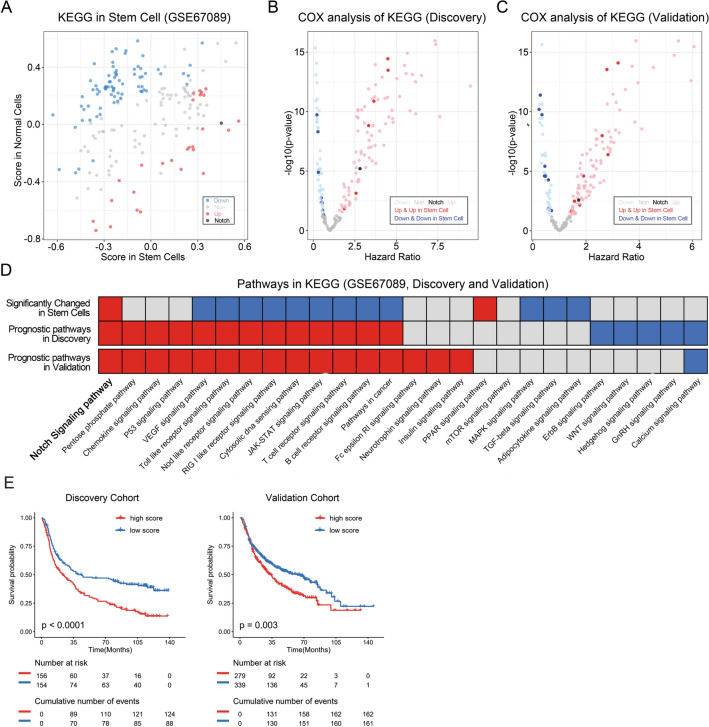
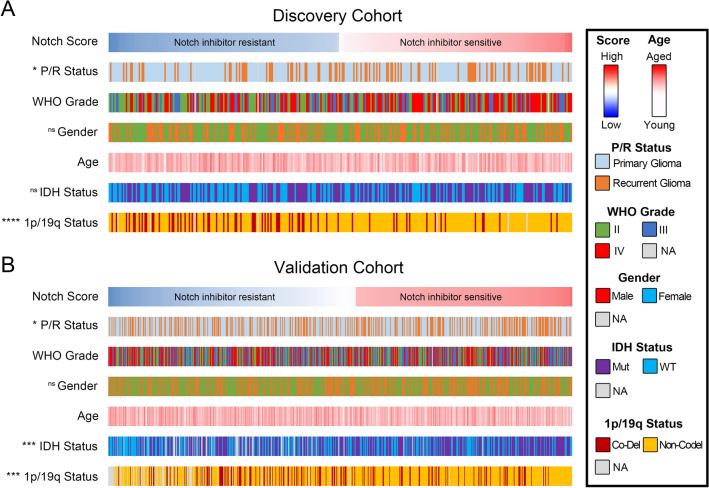
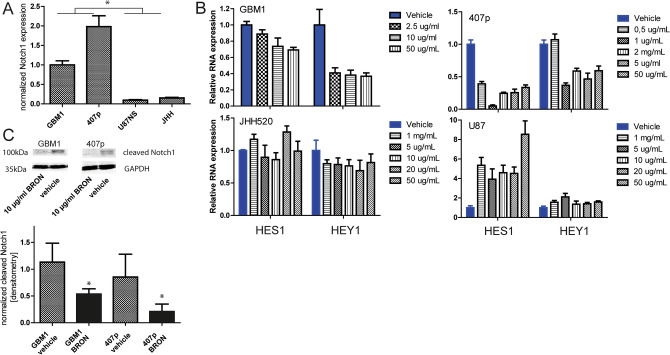
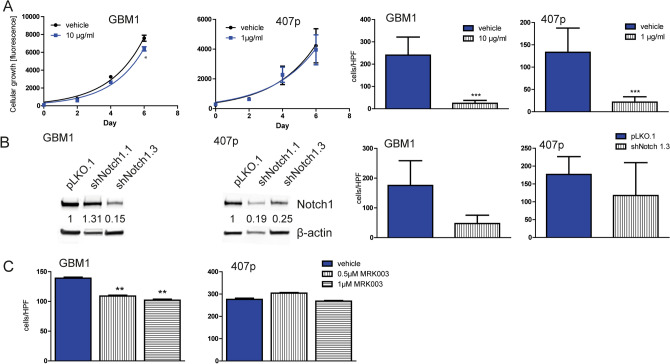
The Notch signaling network determines stemness in various tissues and targeting signaling activity in malignant brain cancers by gamma-secretase inhibitors (GSI) has shown promising preclinical success. However, the clinical translation remains challenging due to severe toxicity side effects and emergence of therapy resistance. Better anti-Notch directed therapies, specifically directed against the tumor promoting Notch receptor 1 signaling framework, and biomarkers predicting response to such therapy are of highest clinical need. We assessed multiple patient datasets to probe the clinical relevance Notch1 activation and possible differential distribution amongst molecular subtypes in brain cancers. We functionally assessed the biological effects of the first-in-human tested blocking antibody against Notch1 receptor (brontictuzumab, BRON) in a collection of glioma stem-like cell (GSC) models and compared its effects to genetic Notch1 inhibition as well as classical pharmacological Notch inhibitor treatment using gamma-secretase inhibitor MRK003. We also assess effects on Wingless (WNT) stem cell signaling activation, which includes the interrogation of genetic WNT inhibition models. Our computed transcriptional Notch pathway activation score is upregulated in neural stem cells, as compared to astrocytes; as well as in GSCs, as compared to differentiated glioblastoma cells. Moreover, the Notch signature is clinical predictive in our glioblastoma patient discovery and validation cohort. Notch signature is significantly increased in tumors with mutant IDH1 genome and tumors without 1p and 19q co-deletion. In GSCs with elevated Notch1 expression, BRON treatment blocks transcription of Notch pathway target genes Hes1/Hey1, significantly reduced the amount of cleaved Notch1 receptor protein and caused significantly impairment of cellular invasion. Benchmarking this phenotype to those observed with genetic Notch1 inhibition in corresponding cell models did result in higher reduction of cell invasion under chemotherapy. BRON treatment caused signs of upregulation of Wingless (WNT) stem cell signaling activity, and vice versa, blockage of WNT signaling caused induction of Notch target gene expression in our models. We extend the list of evidences that elevated Notch signal expression is a biomarker signature declaring stem cell prevalence and useful for predicting negative clinical course in glioblastoma. By using functional assays, we validated a first in man tested Notch1 receptor specific antibody as a promising drug candidate in the context of neuro oncology and propose biomarker panel to predict resistance and therapy success of this treatment option. We note that the observed phenotype seems only in part due to Notch1 blockage and the drug candidate leads to activation of off target signals. Further studies addressing a possible emergence of therapy resistance due to WNT activation need to be conducted. We further validated our 3D disease modeling technology to be of benefit for drug development projects.
Notch 信号通路在各种组织中决定干细胞特性,通过 γ-分泌酶抑制剂 (GSI) 靶向信号活性已显示出有希望的临床前成功。然而,由于严重的毒性副作用和治疗耐药性的出现,临床转化仍然具有挑战性。更好的抗 Notch 靶向治疗方法,特别是针对肿瘤促进 Notch 受体 1 信号框架的治疗方法,以及预测对这种治疗反应的生物标志物是最需要的临床需求。我们评估了多个患者数据集,以探讨 Notch1 激活的临床相关性及其在脑癌中不同分子亚型中的可能差异分布。我们在一系列神经胶质瘤干细胞 (GSC) 模型中功能评估了针对 Notch1 受体的首个人体测试阻断抗体 (brontictuzumab,BRON) 的生物学效应,并将其与基因 Notch1 抑制以及使用 γ-分泌酶抑制剂 MRK003 的经典药理学 Notch 抑制剂治疗进行了比较。我们还评估了对 Wingless (WNT) 干细胞信号激活的影响,包括对基因 WNT 抑制模型的询问。我们计算的转录 Notch 通路激活评分在神经干细胞中上调,与星形胶质细胞相比;以及在 GSCs 中,与分化的胶质母细胞瘤细胞相比。此外,Notch 特征在我们的胶质母细胞瘤患者发现和验证队列中具有临床预测性。在具有突变 IDH1 基因组的肿瘤中和没有 1p 和 19q 共缺失的肿瘤中,Notch 特征明显增加。在 Notch1 表达升高的 GSCs 中,BRON 治疗阻断 Notch 通路靶基因 Hes1/Hey1 的转录,显著减少裂解 Notch1 受体蛋白的量,并导致细胞侵袭显著受损。将这种表型与相应细胞模型中观察到的基因 Notch1 抑制进行基准测试导致在化疗下细胞侵袭的降低幅度更高。BRON 治疗引起 Wingless (WNT) 干细胞信号活性上调的迹象,反之亦然,在我们的模型中,WNT 信号阻断导致 Notch 靶基因表达的诱导。我们扩展了证据列表,证明升高的 Notch 信号表达是宣告干细胞普遍性的生物标志物特征,并可用于预测胶质母细胞瘤的负面临床过程。通过使用功能测定,我们验证了针对 Notch1 受体的首个人体测试特异性抗体作为神经肿瘤学背景下有前途的候选药物,并提出了预测该治疗选择的耐药性和治疗成功的生物标志物组。我们注意到,观察到的表型似乎仅部分归因于 Notch1 阻断,并且候选药物导致靶外信号的激活。需要进行进一步的研究,以解决由于 WNT 激活而出现治疗耐药性的可能性。我们进一步验证了我们的 3D 疾病建模技术对于药物开发项目的益处。