Maternal and Fetal Health Research Centre, Division of Developmental Biology and Medicine, School of Medical Sciences, Faculty of Biology, Medicine and Health, The University of Manchester, Manchester, UK.
Manchester Academic Health Science Centre, St. Mary's Hospital, Manchester University NHS Foundation Trust, Manchester, UK.
Sci Rep. 2020 Oct 1;10(1):16197. doi: 10.1038/s41598-020-72930-7.
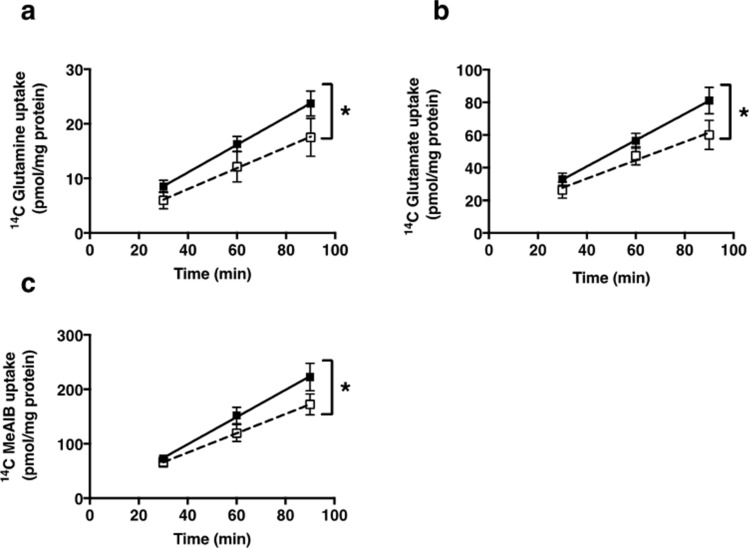
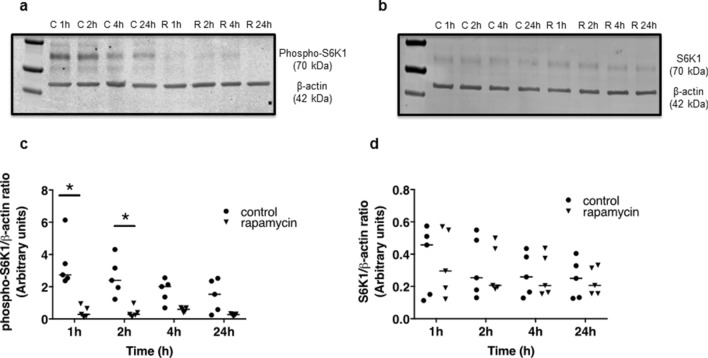
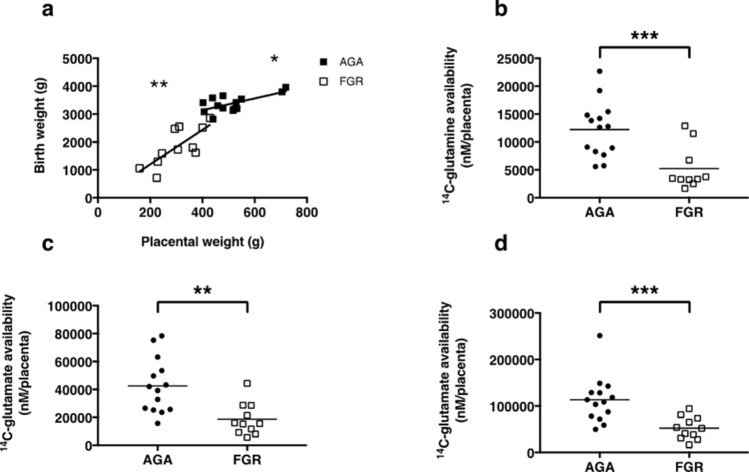
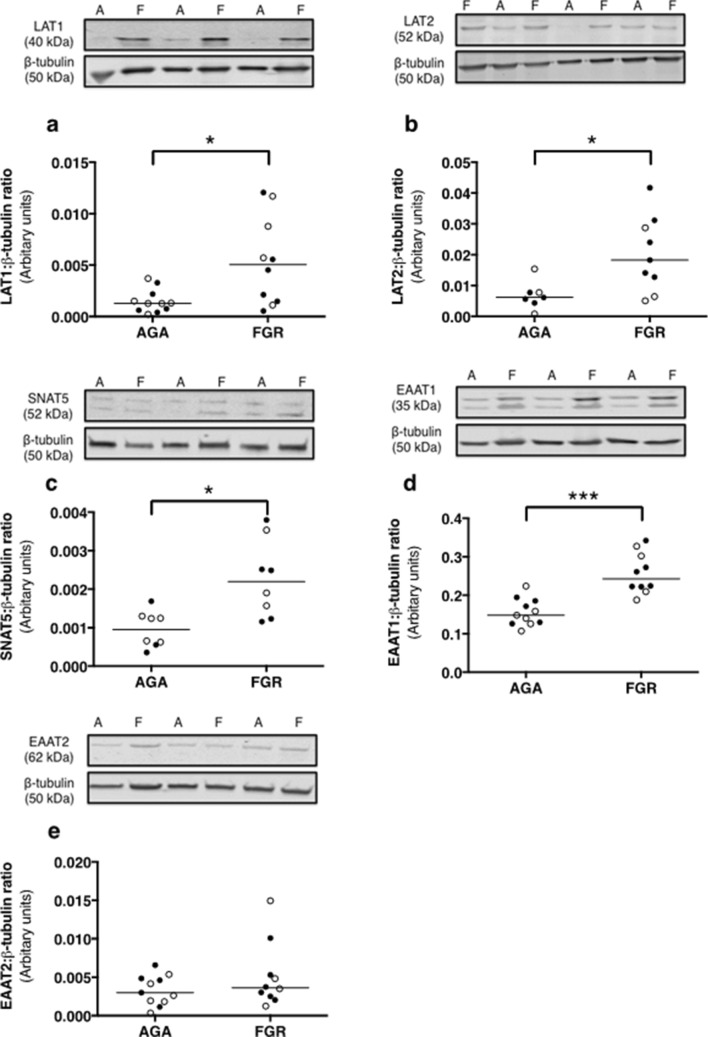
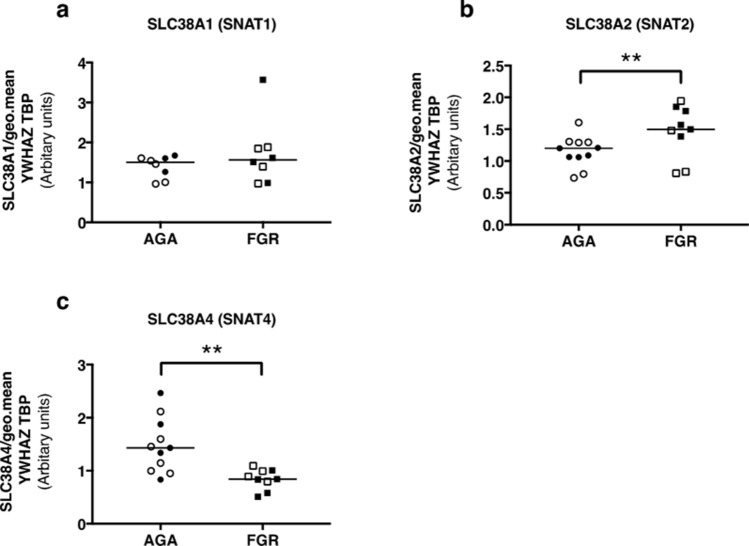
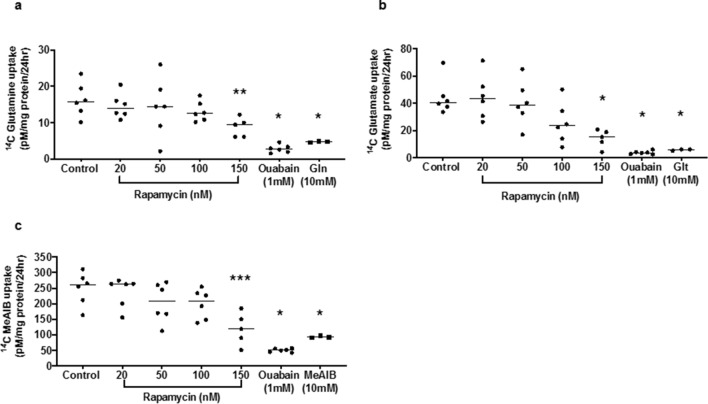
Fetal growth restriction (FGR) is a significant risk factor for stillbirth, neonatal complications and adulthood morbidity. Compared with those of appropriate weight for gestational age (AGA), FGR babies have smaller placentas with reduced activity of amino acid transporter systems A and L, thought to contribute to poor fetal growth. The amino acids glutamine and glutamate are essential for normal placental function and fetal development; whether transport of these is altered in FGR is unknown. We hypothesised that FGR is associated with reduced placental glutamine and glutamate transporter activity and expression, and propose the mammalian target of rapamycin (mTOR) signaling pathway as a candidate mechanism. FGR infants [individualised birth weight ratio (IBR) < 5th centile] had lighter placentas, reduced initial rate uptake of C-glutamine and C-glutamate (per mg placental protein) but higher expression of key transporter proteins (glutamine: LAT1, LAT2, SNAT5, glutamate: EAAT1) versus AGA [IBR 20th-80th]. In further experiments, in vitro exposure to rapamycin inhibited placental glutamine and glutamate uptake (24 h, uncomplicated pregnancies) indicating a role of mTOR in regulating placental transport of these amino acids. These data support our hypothesis and suggest that abnormal glutamine and glutamate transporter activity is part of the spectrum of placental dysfunction in FGR.
胎儿生长受限(FGR)是导致死产、新生儿并发症和成年期发病率的重要危险因素。与适于胎龄(AGA)的婴儿相比,FGR 婴儿的胎盘较小,氨基酸转运系统 A 和 L 的活性降低,这被认为导致胎儿生长不良。谷氨酰胺和谷氨酸是正常胎盘功能和胎儿发育所必需的氨基酸;这些氨基酸的转运在 FGR 中是否发生改变尚不清楚。我们假设 FGR 与胎盘谷氨酰胺和谷氨酸转运体活性和表达降低有关,并提出哺乳动物雷帕霉素靶蛋白(mTOR)信号通路作为候选机制。FGR 婴儿(个体化出生体重比(IBR)<第 5 百分位数)的胎盘较轻,C-谷氨酰胺和 C-谷氨酸的初始摄取率(每毫克胎盘蛋白)降低,但关键转运蛋白的表达(谷氨酰胺:LAT1、LAT2、SNAT5、谷氨酸:EAAT1)高于 AGA(IBR 第 20-80 百分位数)。在进一步的实验中,体外暴露于雷帕霉素抑制胎盘谷氨酰胺和谷氨酸摄取(24 小时,无并发症妊娠),表明 mTOR 在调节这些氨基酸的胎盘转运中起作用。这些数据支持我们的假设,并表明异常的谷氨酰胺和谷氨酸转运体活性是 FGR 中胎盘功能障碍谱的一部分。