Policy Research Unit in Maternal Health and Care, National Perinatal Epidemiology Unit, Nuffield Department of Population Health, University of Oxford, Oxford, UK.
Maternal and Fetal Health Research Centre, Faculty of Biology, Medicine and Health, University of Manchester, Manchester, UK.
BJOG. 2018 Jan;125(2):108-117. doi: 10.1111/1471-0528.14972. Epub 2017 Dec 14.
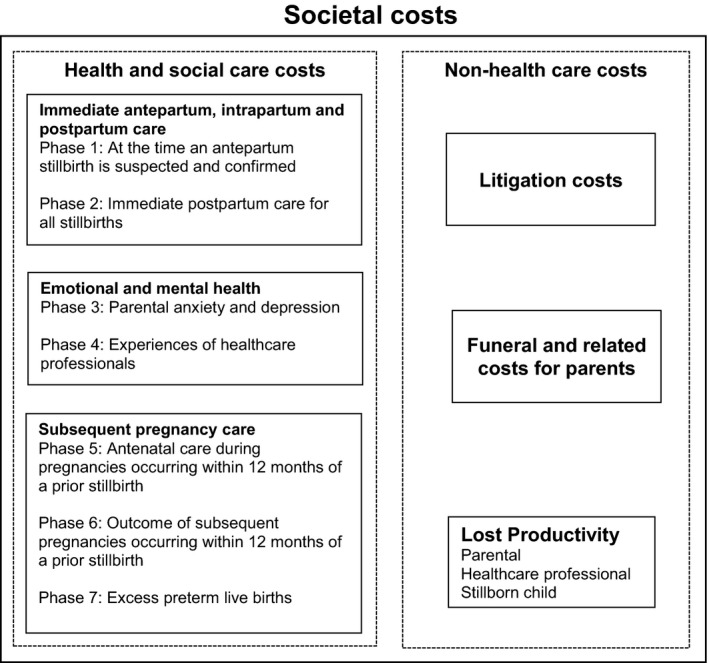
To extend previous work and estimate health and social care costs, litigation costs, funeral-related costs, and productivity losses associated with stillbirth in the UK.
A population-based cost-of-illness study using a synthesis of secondary data.
The National Health Service (NHS) and wider society in the UK.
Stillbirths occurring within a 12-month period and subsequent events occurring over the following 2 years.
Costs were estimated using published data on events, resource use, and unit costs.
Mean health and social care costs, litigation costs, funeral-related costs, and productivity costs for 2 years, reported for a single stillbirth and at a national level.
Mean health and social care costs per stillbirth were £4191. Additionally, funeral-related costs were £559, and workplace absence (parents and healthcare professionals) was estimated to cost £3829 per stillbirth. For the UK, the annual health and social care costs were estimated at £13.6 million, and total productivity losses amounted to £706.1 million (98% of this cost was attributable to the loss of the life of the baby). The figures for total productivity losses were sensitive to the perspective adopted about the loss of life of the baby.
This work expands the current intelligence on the costs of stillbirth beyond the health service to costs for parents and society, and yet these additional findings must still be regarded as conservative estimates of the true economic costs.
The costs of stillbirth are significant, affecting the health service, parents, professionals, and society.
Why and how was the study carried out? The personal, social, and emotional consequences of stillbirth are profound. Placing a monetary value on such consequences is emotive, yet necessary, when deciding how best to invest limited healthcare resources. We estimated the average costs associated with a single stillbirth and the costs for all stillbirths occurring in the UK over a 1-year period. What were the main findings? The average cost to the National Health Service (NHS) of care related to the stillbirth and a first subsequent pregnancy was £4191 for each stillbirth. For the UK, this cost was £13.6 million annually. Clinical negligence payments to bereaved parents were estimated at £2.5 million per year. Parents were estimated to spend £1.8 million per year on funerals. The cost of workplace absence as parents cope with the effects of grief was estimated at £2476 per stillbirth. For the UK, this cost was £8.1 million annually. The loss of a baby is also the loss of an individual with the potential to become a valued and productive member of society. The expected value of an adult's lifetime working hours was taken as an estimate of this productivity loss, and was £213,304 for each stillbirth. The annual cost for all stillbirths was £694 million. We know from parents that the birth of a subsequent child in no way replaces a stillborn baby. We found that 52% of women fall pregnant within 12 months of a stillbirth. From a purely economic perspective concerned only with the number of individuals in society, babies born during this period could potentially replace the productivity losses of the stillborn baby. Adopting this approach, which we understand is controversial and difficult for bereaved parents, the expected productivity losses would be lower, at £333 million. What are the limitations of the work? For some categories, existing data were unavailable and we used clinical opinion to estimate costs. Furthermore, we were unable to quantify some indirect consequences, for example the psychological distress experienced by wider family members. What is the implication for parents? Placing a monetary value on what is for parents a profound personal tragedy may seem unkind. It is, however, unavoidable if we are to provide policy makers with vital information on the wide-ranging consequences that could be prevented through future investments in initiatives to reduce stillbirth.
扩展先前的工作,估算英国死产相关的健康和社会保健成本、诉讼成本、丧葬费相关成本和生产力损失。
一项基于二次数据综合的基于人群的疾病成本研究。
英国国民保健服务(NHS)和更广泛的社会。
在 12 个月内发生的死产和随后在接下来的 2 年内发生的事件。
使用事件、资源使用和单位成本的已发表数据估算成本。
单个死产和国家层面的 2 年健康和社会保健成本、诉讼成本、丧葬费相关成本和生产力成本的平均值。
每个死产的健康和社会保健费用平均为 4191 英镑。此外,丧葬费为 559 英镑,父母和医疗保健专业人员的工作场所缺勤估计每个死产损失 3829 英镑。对于英国,每年的健康和社会保健费用估计为 1360 万英镑,总生产力损失达 7061 万英镑(这一成本的 98%归因于婴儿生命的丧失)。总生产力损失的数字对婴儿生命丧失的观点很敏感。
这项工作将死产的成本从医疗服务扩展到父母和社会的成本,超出了当前的情报范围,但这些额外的发现仍必须被视为真实经济成本的保守估计。
死产的成本很高,影响着卫生服务、父母、专业人员和社会。
为什么以及如何进行这项研究?死产的个人、社会和情感后果是深远的。当决定如何最好地投资有限的医疗保健资源时,对这些后果进行货币化评估是必要的,尽管这很情绪化。我们估计了与单个死产和英国一年内所有死产相关的平均成本。主要发现是什么?与死产和随后的第一次怀孕相关的国家医疗服务(NHS)的平均成本为每个死产 4191 英镑。对于英国,这一成本为每年 1360 万英镑。预计每年向失去孩子的父母支付 250 万英镑的临床疏忽赔偿。父母每年估计要花费 180 万英镑用于葬礼。父母应对悲伤影响的工作场所缺勤成本估计为每个死产 2476 英镑。对于英国,这一成本为每年 810 万英镑。婴儿的死亡也是一个潜在的有价值和有生产力的社会成员的损失。一个成年人一生工作时间的预期价值被视为这种生产力损失的估计,每个死产为 213304 英镑。所有死产的年度成本为 6940 万英镑。我们从父母那里得知,随后出生的孩子并不能取代死产的婴儿。我们发现,52%的女性在死产后 12 个月内再次怀孕。从纯粹的经济角度来看,只关注社会中的人数,在此期间出生的婴儿可能会取代死产婴儿的生产力损失。采用这种方法,我们理解这是有争议的,对失去孩子的父母来说是困难的,预期的生产力损失将更低,为 3330 万英镑。这项工作有哪些局限性?对于某些类别,现有的数据不可用,我们使用临床意见来估算成本。此外,我们无法量化一些间接后果,例如更广泛的家庭成员所经历的心理困扰。这对父母有什么影响?对父母来说,将个人悲剧进行货币化评估似乎是不友善的。然而,如果我们要为政策制定者提供有关通过未来投资于减少死产的举措来预防广泛后果的重要信息,这是不可避免的。
