Hassan Walid Hamdy, Ibrahim Ahmed Mohamed Kamel, Shany Salama Abohamra Sayed, Salam Hala Sayed Hassan
Department of Bacteriology, Mycology and Immunology, Faculty of Veterinary Medicine, Beni-Suef University, Beni-Suef, Egypt.
Beni-Suef University Hostel, Beni-Suef University, Beni-Suef, Egypt.
J Adv Vet Anim Res. 2020 Aug 5;7(3):452-463. doi: 10.5455/javar.2020.g441. eCollection 2020 Sep.
This study was performed to probe the antimicrobial resistance and virulence genes profiling in recovered from the cases of pericarditis in broiler chickens.
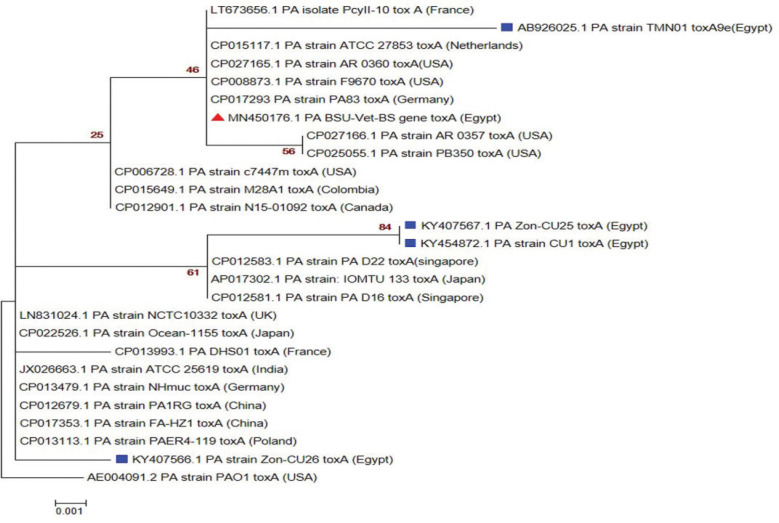
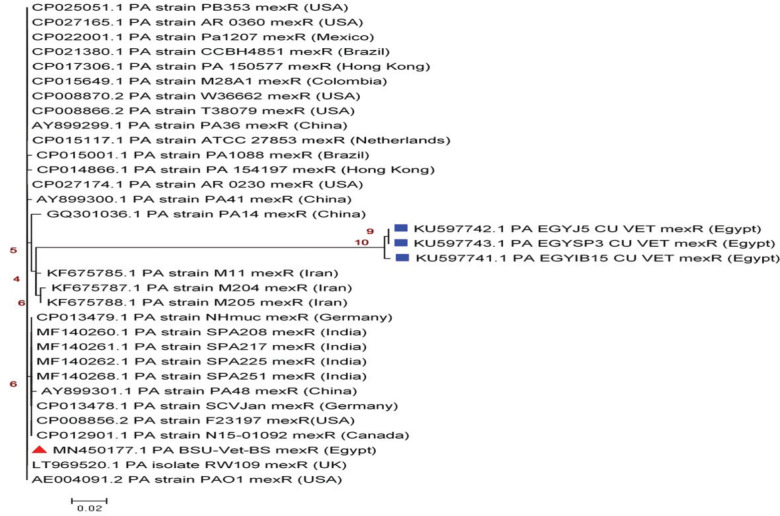
The samples ( = 250) collected from the cases of pericarditis in broiler chickens were bacteriologically examined. Antimicrobial susceptibility was tested by disc diffusion technique. The isolates were genotypically studied for the presence of antimicrobial resistance and virulence gene traits. Finally, the nucleotide sequence of representative resistance gene ( gene) and virulence genes (A and I genes) was analyzed.
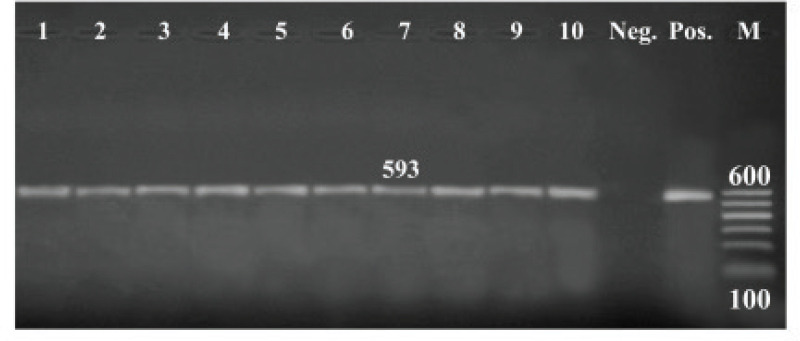
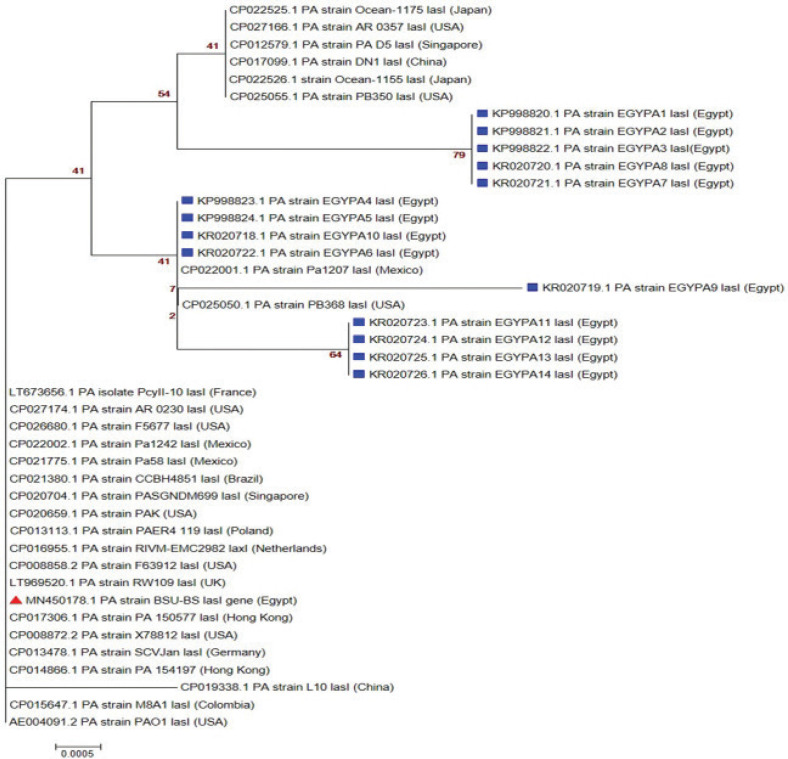
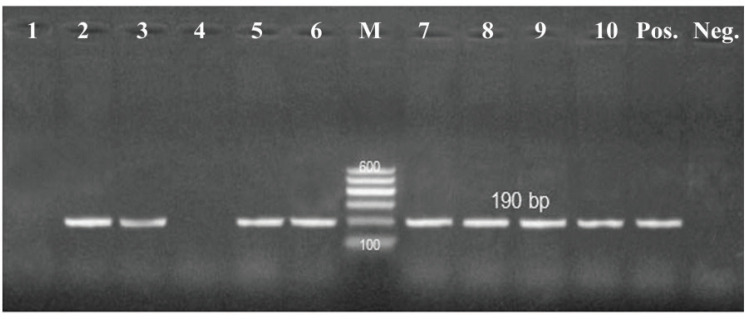
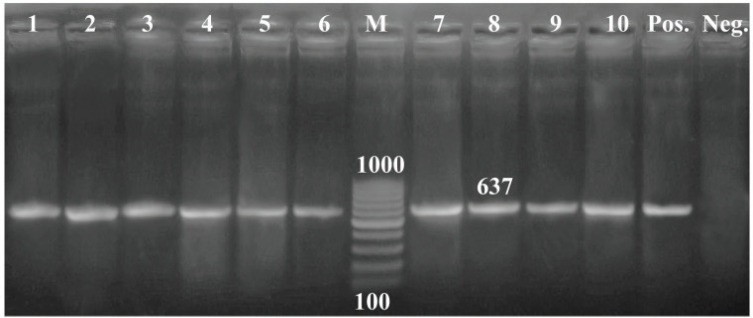
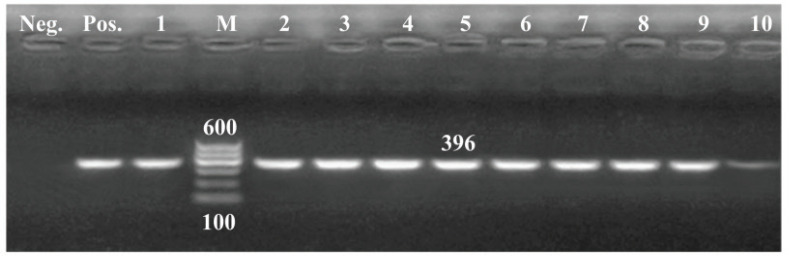
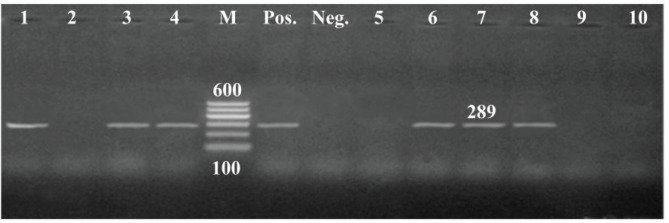
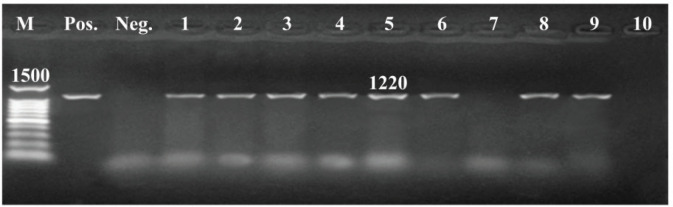
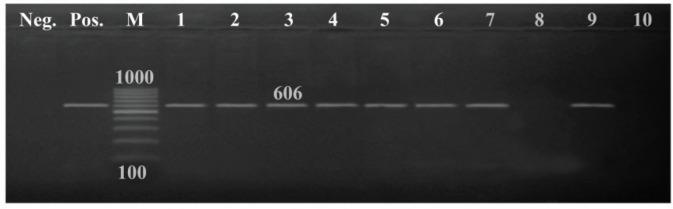
was isolated from 45 samples (18%). Antimicrobial susceptibility testing revealed multidrug resistance in most of the recovered P. aeruginosa isolates, whereas colistin and imipenem were the furthermost in vitro-sensitive antibiotics. Antimicrobial resistance genes, such as , , and R, were prevalent in 100%, 80%, and 100% of the isolates, respectively. PCR confirmed virulence genes such as A, Y, B, and I in 100%, 60%, 80%, and 80% of the isolates, respectively. Nucleotide sequence analysis of representative resistance gene (R gene) and virulence genes (A and I genes) revealed a high correlation between recovered from pericarditis in broiler chickens in the present study with PAO1 (reference strain) and with other sequences published on the GenBank representing different localities worldwide.
It could be concluded that recovered from pericarditis in broiler chickens in the current study is highly virulent bacteria, resisting most of the therapeutic agents which not only bear hazards for poultry industry but also represent a public health concern.
本研究旨在探究从肉鸡心包炎病例中分离出的[细菌名称未给出]的抗菌耐药性和毒力基因谱。
对从肉鸡心包炎病例中采集的250份样本进行细菌学检查。采用纸片扩散法检测抗菌药物敏感性。对分离株进行基因分型研究,以确定抗菌耐药性和毒力基因特征的存在情况。最后,分析代表性耐药基因([基因名称未给出]基因)和毒力基因(A和I基因)的核苷酸序列。
从45份样本(18%)中分离出[细菌名称未给出]。抗菌药物敏感性测试显示,大多数分离出的铜绿假单胞菌菌株具有多重耐药性,而黏菌素和亚胺培南是体外最敏感的抗生素。抗菌耐药基因,如[基因名称未给出]、[基因名称未给出]和R,分别在100%、80%和100%的分离株中普遍存在。PCR证实毒力基因,如A、Y、B和I,分别在100%、60%、80%和80%的分离株中存在。代表性耐药基因(R基因)和毒力基因(A和I基因)的核苷酸序列分析显示,本研究中从肉鸡心包炎中分离出的[细菌名称未给出]与PAO1(参考菌株)以及GenBank上发表的代表全球不同地区的其他序列之间具有高度相关性。
可以得出结论,本研究中从肉鸡心包炎中分离出的[细菌名称未给出]是高毒力细菌,对大多数治疗药物具有耐药性,这不仅对家禽业构成危害,也引起了公共卫生关注。