Department of Surgery, Leiden University Medical Center, Albinusdreef 2, 2333 ZA, Leiden, The Netherlands.
Department of Medical Oncology, Leiden University Medical Center, Leiden, The Netherlands.
Mol Biol Rep. 2020 Oct;47(10):8169-8177. doi: 10.1007/s11033-020-05853-1. Epub 2020 Oct 1.
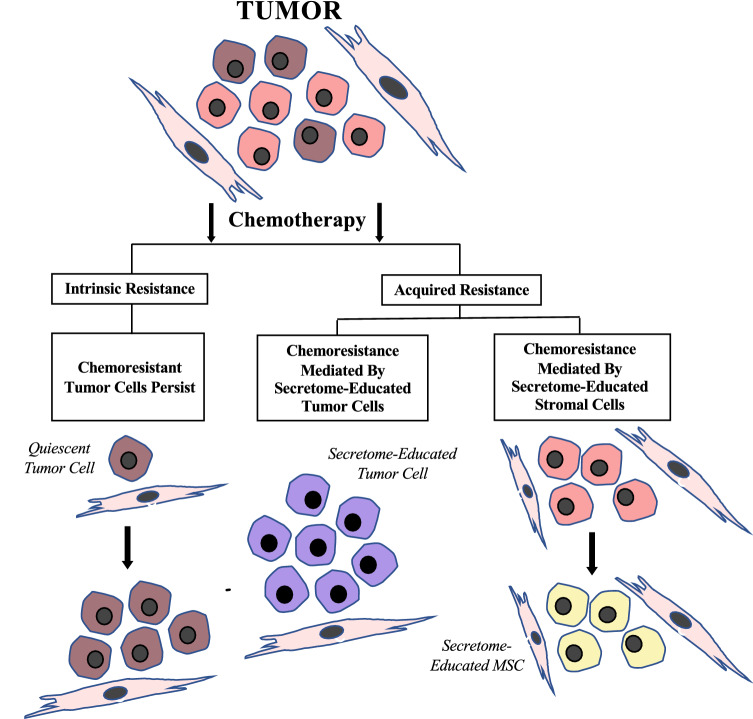
Therapy resistance is a known problem in breast cancer and is associated with a variety of mechanisms. The role of the tumor microenvironment in cancer development and resistance mechanisms is becoming increasingly understood. Tumor-stroma is the main component of the tumor microenvironment. Stromal cells like cancer-associated fibroblasts (CAFs) are believed to contribute to chemotherapy resistance via the production of several secreted factors like cytokines and chemokines. CAFs are found to influence disease progression; patients with primary tumors with a high amount of tumor-stroma have a significantly worse outcome. Therefore the role of CAFs resistance mechanisms makes them a promising target in anti-cancer therapy. An overview of recent advances in strategies to target breast cancer stroma is given and the current literature regarding these stromal targets is discussed. CAF-specific proteins as well as secreted molecules involved in tumor-stroma interactions provide possibilities for stroma-specific therapy. The development of stroma-specific therapy is still in its infancy and the available literature is limited. Within the scope of personalized treatment, biomarkers based on the tumor-stroma have future potential for the improvement of treatment via image-guided surgery (IGS) and PET scanning.
治疗抵抗是乳腺癌的一个已知问题,与多种机制有关。肿瘤微环境在癌症发展和耐药机制中的作用越来越被理解。肿瘤基质是肿瘤微环境的主要组成部分。肿瘤相关成纤维细胞(CAF)等基质细胞被认为通过产生细胞因子和趋化因子等几种分泌因子来促进化疗耐药。CAF 被发现影响疾病进展;原发肿瘤中含有大量肿瘤基质的患者预后明显较差。因此,CAF 耐药机制的作用使其成为抗癌治疗的一个有前途的靶点。本文概述了靶向乳腺癌基质的最新进展,并讨论了目前关于这些基质靶点的文献。CAF 特异性蛋白以及参与肿瘤基质相互作用的分泌分子为基质特异性治疗提供了可能。基质特异性治疗仍处于起步阶段,现有文献有限。在个性化治疗的范围内,基于肿瘤基质的生物标志物具有通过图像引导手术(IGS)和 PET 扫描改善治疗的未来潜力。