Department of Sport and Informatics, Section of Physical Education and Sport, Pablo de Olavide University, Sevilla, Spain.
Performance Department, FC Basel, Basel, Switzerland.
PLoS One. 2020 Oct 2;15(10):e0239977. doi: 10.1371/journal.pone.0239977. eCollection 2020.
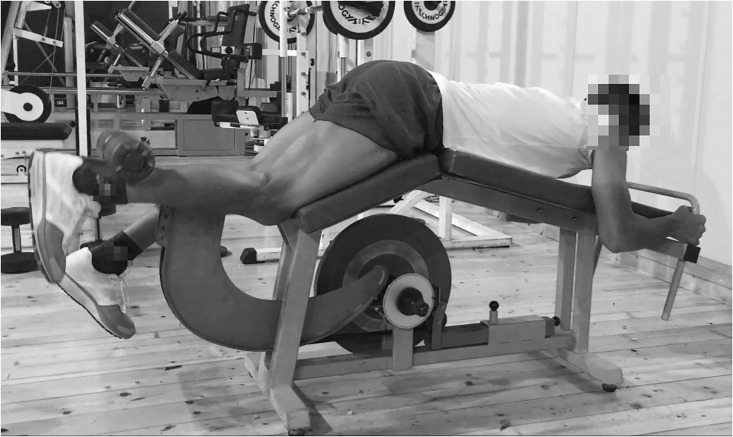
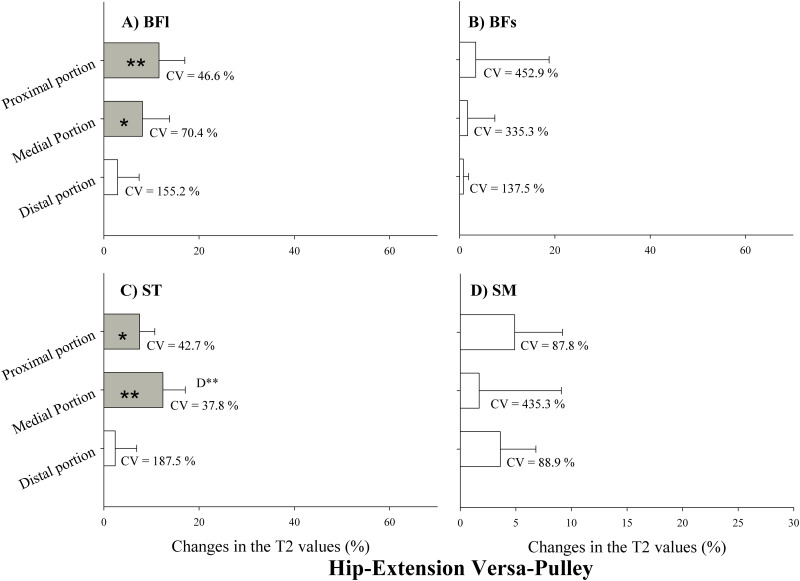
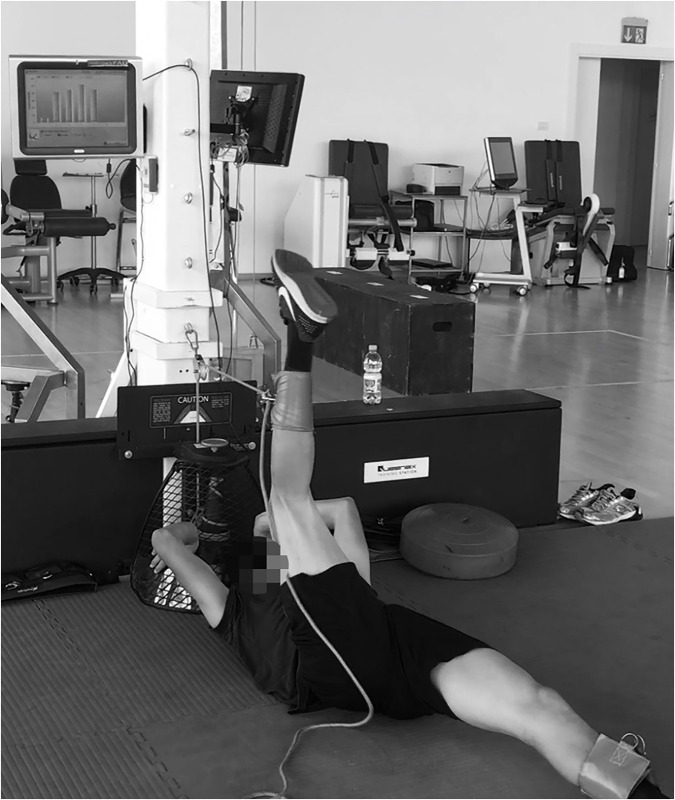
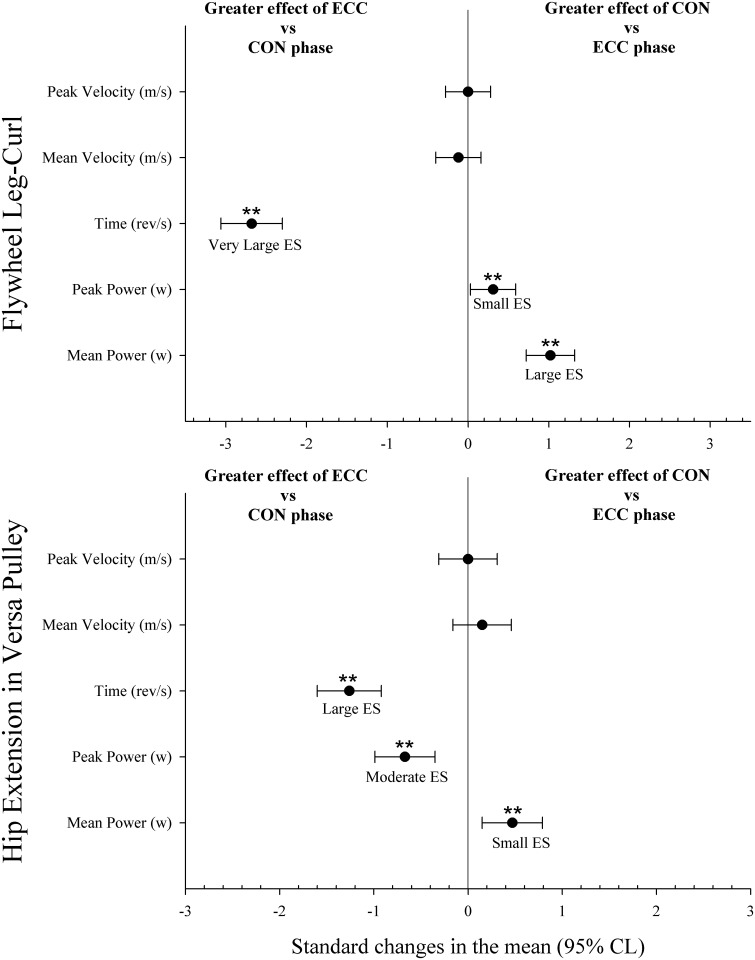
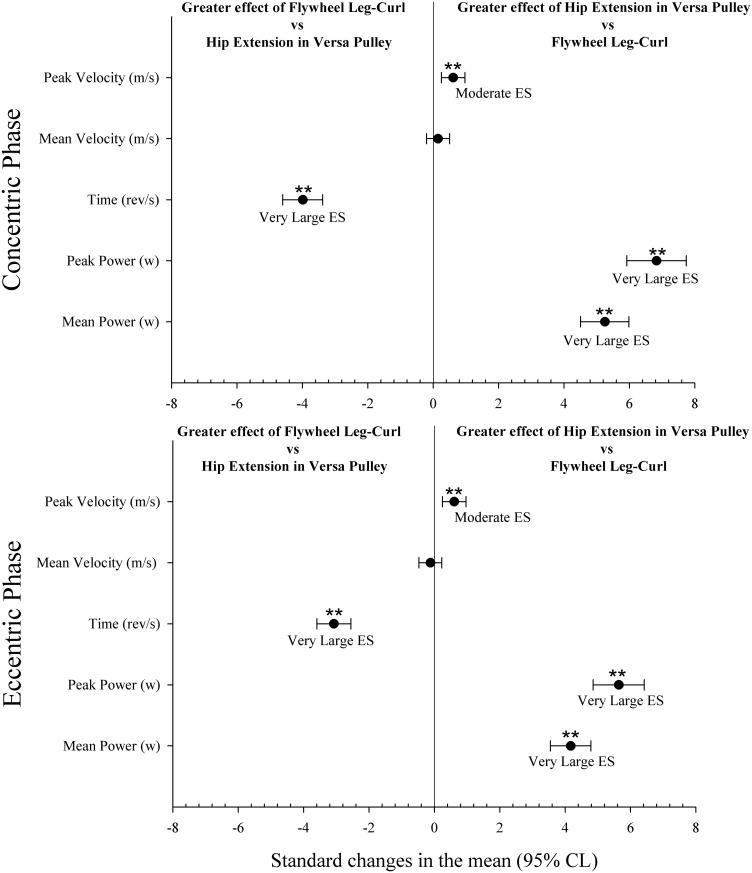
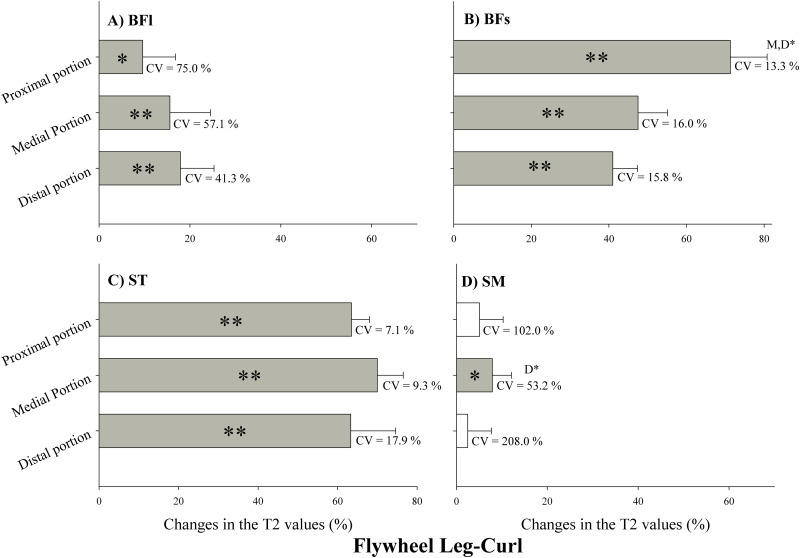
The primary aim of the present study was to analyze mechanical responses during inertial knee- and hip-dominant hamstring strengthening exercises (flywheel leg-curl and hip-extension in conic-pulley), and the secondary aim was to measure and compare regional muscle use using functional magnetic resonance imaging. Mean power, peak power, mean velocity, peak velocity and time in the concentric (CON) and eccentric (ECC) phases were measured. The transverse relaxation time (T2) shift from pre- to post-exercise were calculated for the biceps femoris long (BFl) and short (BFs) heads, semitendinosus (ST) and semimembranosus (SM) muscles at proximal, middle and distal areas of the muscle length. Peak and mean power in flywheel leg-curl were higher during the CON than the ECC phase (p<0.01). ECC peak power was higher than CON phase (p<0.01) in conic-pulley hip-extension exercise, while mean power was higher during the CON than ECC phase (p<0.01). Flywheel leg-curl showed a higher T2 values in ST and BFs and BFl (p<0.05), while the conic-pulley hip-extension had a higher T2 values in the proximal region of the ST and BFl (p<0.05). In conclusion, ECC overload was only observed in peak power during the conic-pulley hip-extension exercise. Flywheel leg-curl involved a greater overall use of the 4 muscle bellies, more specifically in the ST and BFs, with a selective augmented activity (compared with the conic-pulley) in the 3 regions of the BFs, while conic-pulley hip-extension exercise selectively targeted the proximal and medial regions of the BFl. Physiotherapists and strength and conditioning coaches should consider this when optimizing the training and recovery process for hamstring muscles, especially after injury.
本研究的主要目的是分析惯性膝关节和髋关节主导的腘绳肌强化训练(飞轮腿弯举和锥形滑轮伸髋)中的力学反应,次要目的是使用功能磁共振成像测量和比较局部肌肉使用情况。测量等长(CON)和离心(ECC)阶段的平均功率、峰值功率、平均速度、峰值速度和时间。计算 biceps femoris long(BFl)和 short(BFs)head、semitendinosus(ST)和 semimembranosus(SM)肌肉在肌肉长度的近端、中部和远端区域的横向弛豫时间(T2)从运动前到运动后的移位。飞轮腿弯举的 CON 阶段峰值和平均功率高于 ECC 阶段(p<0.01)。锥形滑轮伸髋运动中,ECC 峰值功率高于 CON 阶段(p<0.01),而平均功率高于 CON 阶段(p<0.01)。飞轮腿弯举中 ST 和 BFs 和 BFl 的 T2 值较高(p<0.05),而锥形滑轮伸髋中 ST 和 BFl 的近端区域 T2 值较高(p<0.05)。总之,仅在锥形滑轮伸髋运动的峰值功率中观察到 ECC 过载。飞轮腿弯举涉及到 4 个肌肉腹部的更大总体使用,更具体地说,在 ST 和 BFs 中,与锥形滑轮相比,在 BFs 的 3 个区域具有选择性增强的活动(与锥形滑轮相比),而锥形滑轮伸髋运动则选择性地针对 BFl 的近端和内侧区域。物理治疗师和力量与体能教练在优化腘绳肌的训练和恢复过程时应该考虑到这一点,尤其是在受伤后。