Department of Pathology and Laboratory Medicine, Nationwide Children's Hospital, Columbus, Ohio.
Department of Pathology and Laboratory Medicine, Nationwide Children's Hospital, Columbus, Ohio.
J Allergy Clin Immunol. 2021 Feb;147(2):532-544.e1. doi: 10.1016/j.jaci.2020.09.020. Epub 2020 Sep 30.
Severe acute respiratory syndrome coronavirus 2 (SARS-CoV-2) is a novel coronavirus that emerged recently and has created a global pandemic. Symptomatic SARS-CoV-2 infection, termed coronavirus disease 2019 (COVID-19), has been associated with a host of symptoms affecting numerous organ systems, including the lungs, cardiovascular system, kidney, central nervous system, gastrointestinal tract, and skin, among others.
Although several risk factors have been identified as related to complications from and severity of COVID-19, much about the virus remains unknown. The host immune response appears to affect the outcome of disease. It is not surprising that patients with intrinsic or secondary immune compromise might be particularly susceptible to complications from SARS-CoV-2 infection. Pathogenic loss-of-function or gain-of-function heterozygous variants in nuclear factor-κB2 have been reported to be associated with either a combined immunodeficiency or common variable immunodeficiency phenotype.
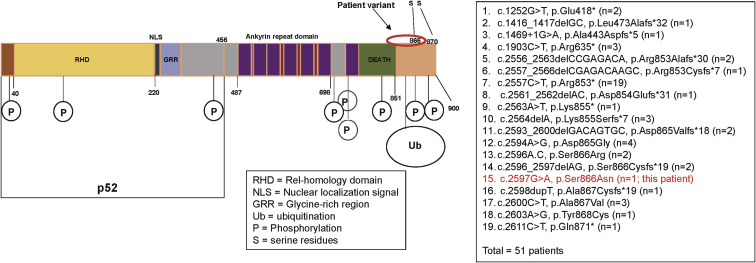
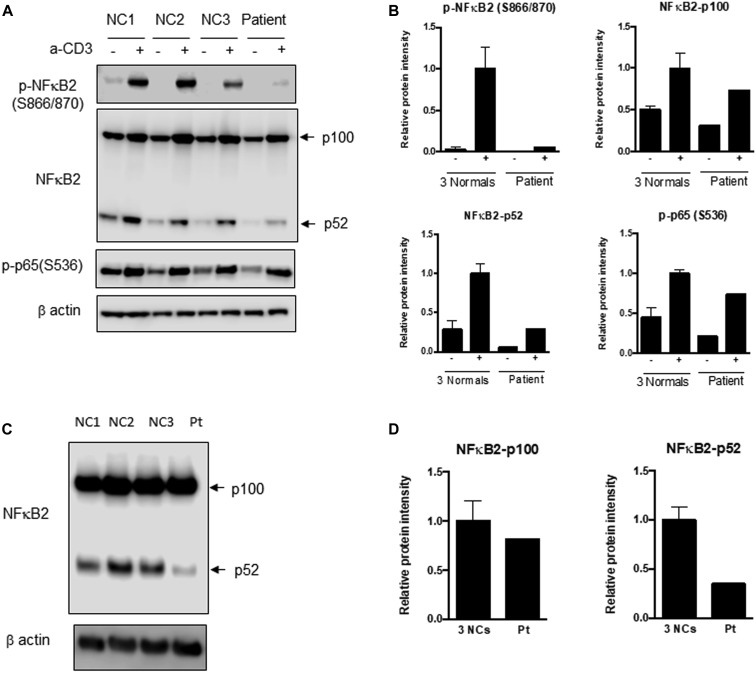
We evaluated the functional consequence and immunologic phenotype of a novel NFKB2 loss of function variant in a 17-year-old male patient and describe the clinical management of SARS-CoV-2 infection in this context.
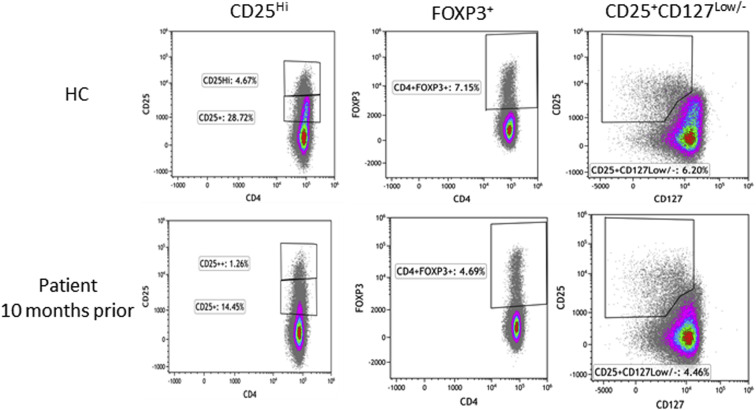
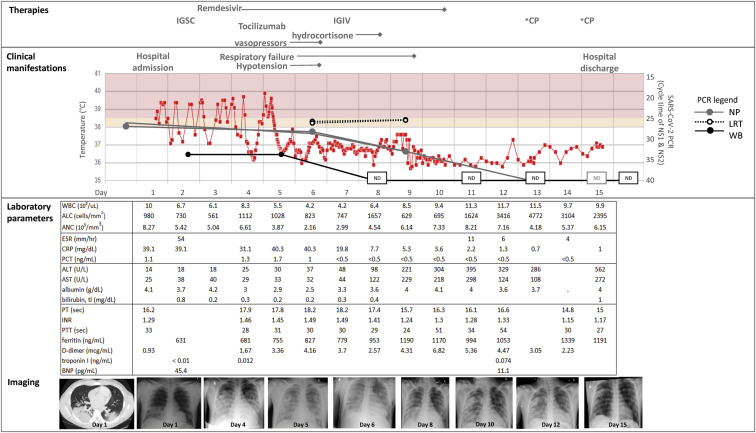
This patient required a 2-week hospitalization for SARS-CoV-2 infection, including 7 days of mechanical ventilation. We used biologic therapies to avert potentially fatal acute respiratory distress syndrome and treat hyperinflammatory responses. The patient had an immunologic phenotype of B-cell dysregulation with decreased switched memory B cells. Despite the underlying immune dysfunction, he recovered from the infection with intense management.
This clinical case exemplifies some of the practical challenges in management of patients with SARS-CoV-2 infection, especially in the context of underlying immune dysregulation.
严重急性呼吸综合征冠状病毒 2(SARS-CoV-2)是一种新型冠状病毒,最近出现并引发了全球大流行。有症状的 SARS-CoV-2 感染,称为 2019 年冠状病毒病(COVID-19),与许多影响多个器官系统的症状有关,包括肺、心血管系统、肾脏、中枢神经系统、胃肠道和皮肤等。
尽管已经确定了一些与 COVID-19 的并发症和严重程度相关的危险因素,但关于该病毒仍有许多未知之处。宿主免疫反应似乎影响疾病的结局。患有固有或继发性免疫缺陷的患者可能特别容易受到 SARS-CoV-2 感染的并发症影响,这并不奇怪。已经报道核因子-κB2 的致病性失活或获得性功能杂合变体与联合免疫缺陷或常见可变免疫缺陷表型有关。
我们评估了一名 17 岁男性患者中新型 NFKB2 功能丧失变体的功能后果和免疫表型,并描述了在此背景下对 SARS-CoV-2 感染的临床管理。
该患者因 SARS-CoV-2 感染需要住院治疗 2 周,包括机械通气 7 天。我们使用生物疗法避免潜在致命性的急性呼吸窘迫综合征并治疗过度炎症反应。该患者具有 B 细胞失调的免疫表型,表现为记忆 B 细胞减少。尽管存在潜在的免疫功能障碍,他在接受强化管理后从感染中康复。
这个临床病例说明了在管理 SARS-CoV-2 感染患者方面存在一些实际挑战,尤其是在存在潜在免疫失调的情况下。