School of Public Health, University of Haifa, Haifa 31905, Israel.
Joint Translational Institute of Science and Technology, East China Normal University, Shanghai 200062, China.
Int J Environ Res Public Health. 2020 Sep 30;17(19):7170. doi: 10.3390/ijerph17197170.
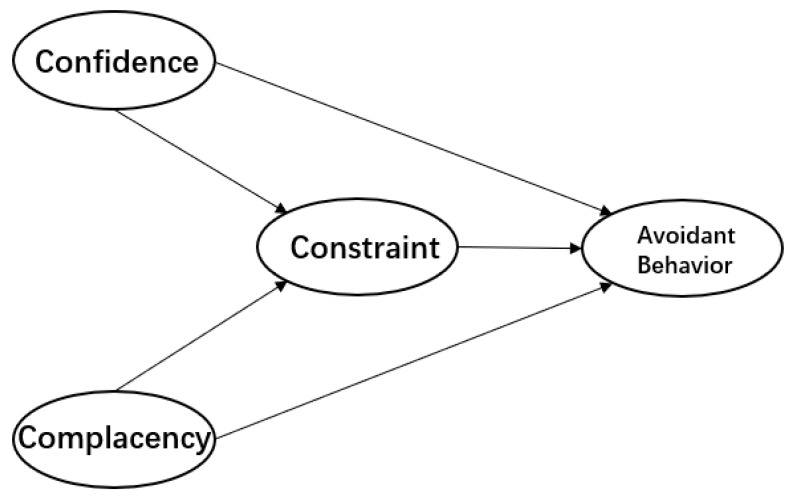
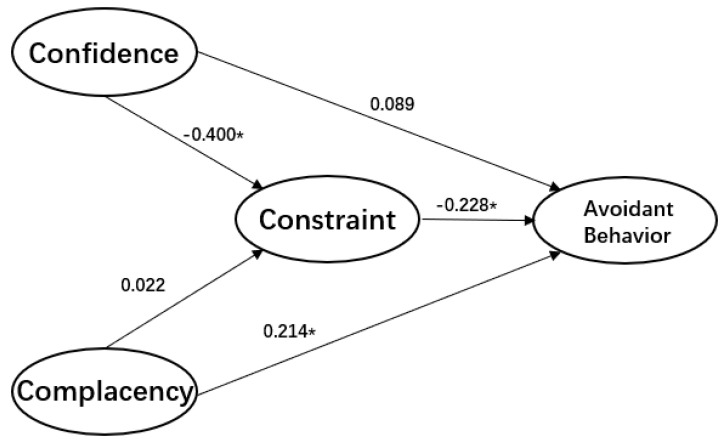
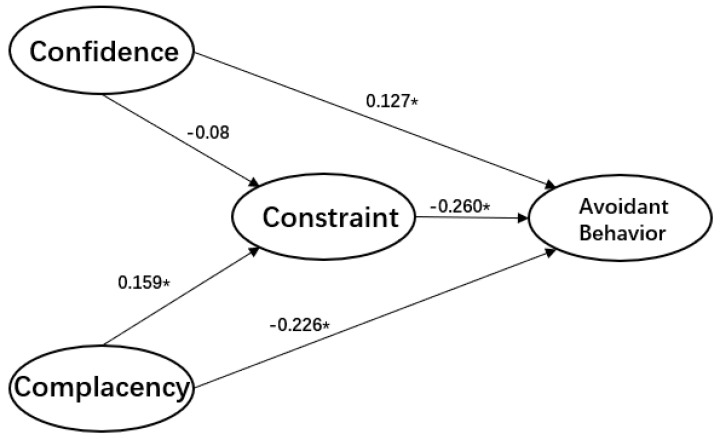
The COVID-19 pandemic represents a massive global health crisis. The rapid transmission rate of the virus, as well as the lack of effective medications and vaccines, has posed serious challenges to controlling the spread of the disease. Dealing with this public health crisis has required major changes in people's behavior, including the adoption of social distancing measures such as avoiding meeting with family members and friends, crowded places, and public transportation. The purpose of this study is to investigate the factors associated with the adoption of these behaviors in China and Israel. We relied on the 3Cs model that has been used to predict the adoption of a specific preventive behavior (vaccinations) with the goal of testing its applicability to other preventive behaviors such as in response to the COVID-19 pandemic. The model indicates that confidence in social institutions, complacency (fear of and assessments about the risk of becoming ill) and constraints (levels of self-efficacy and confidence in being able to engage in the behaviors) are predictors of adopting preventive behaviors. Data were collected in China and Israel through an online survey of the population ( = 1406). We used latent variables and structural equation modeling to test the hypotheses derived from the 3Cs model. The findings indicate that there are some differences in the types of preventive behaviors adopted in the two countries. In Israel, higher levels of confidence predicted the adoption of avoidant behaviors and more constraints predicted engaging in fewer avoidant behaviors. In China, more constraints also contributed to the adoption of fewer avoidant behaviors, but people's level of confidence fully mediated this result. The multi-group analysis indicated that the conceptualized model fits the Chinese and Israeli data reasonably well. The findings suggest that the 3Cs model can be generalized from getting vaccinated to adopting avoidant behaviors and that the model can be used across cultures and countries.
新冠疫情代表了一场全球性的重大卫生危机。该病毒的快速传播率,以及缺乏有效的药物和疫苗,给控制疾病传播带来了严峻挑战。应对这场公共卫生危机需要人们的行为发生重大变化,包括采取社交疏离措施,如避免与家人和朋友见面、前往拥挤场所和乘坐公共交通工具。本研究旨在探讨中国和以色列与这些行为采用相关的因素。我们依据的是 3Cs 模型,该模型曾被用于预测对特定预防行为(疫苗接种)的采用,目的是检验其对其他预防行为(如应对新冠疫情)的适用性。该模型表明,对社会机构的信心、自满(对患病风险的恐惧和评估)以及约束(自我效能感和对能够采取行为的信心水平)是采用预防行为的预测因素。通过对中国和以色列人群的在线调查收集数据(n = 1406)。我们使用潜在变量和结构方程模型来检验源自 3Cs 模型的假设。研究结果表明,在这两个国家,所采用的预防行为类型存在一些差异。在以色列,较高的信心水平预测了回避行为的采用,而较多的约束则预测了较少的回避行为的采用。在中国,较多的约束也有助于较少采用回避行为,但人们的信心水平完全中介了这一结果。多组分析表明,所概念化的模型较好地适用于中国和以色列的数据。研究结果表明,3Cs 模型可以从接种疫苗推广到采用回避行为,并且可以在不同文化和国家中使用。