Department of Biomedicine, University Hospital Basel, University of Basel, 4031 Basel, Switzerland.
Department of Surgery, University Hospital Basel, University of Basel, 4031 Basel, Switzerland.
Int J Mol Sci. 2020 Sep 30;21(19):7233. doi: 10.3390/ijms21197233.
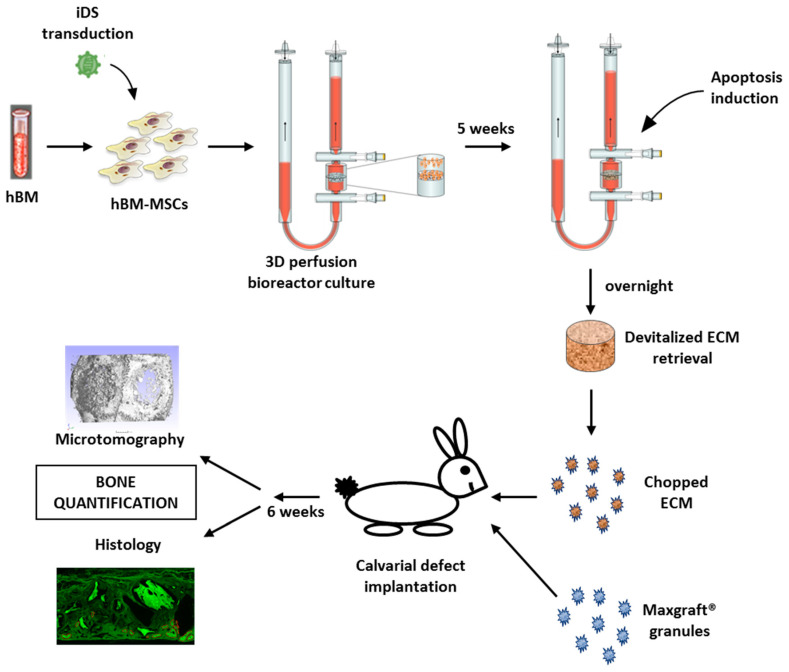
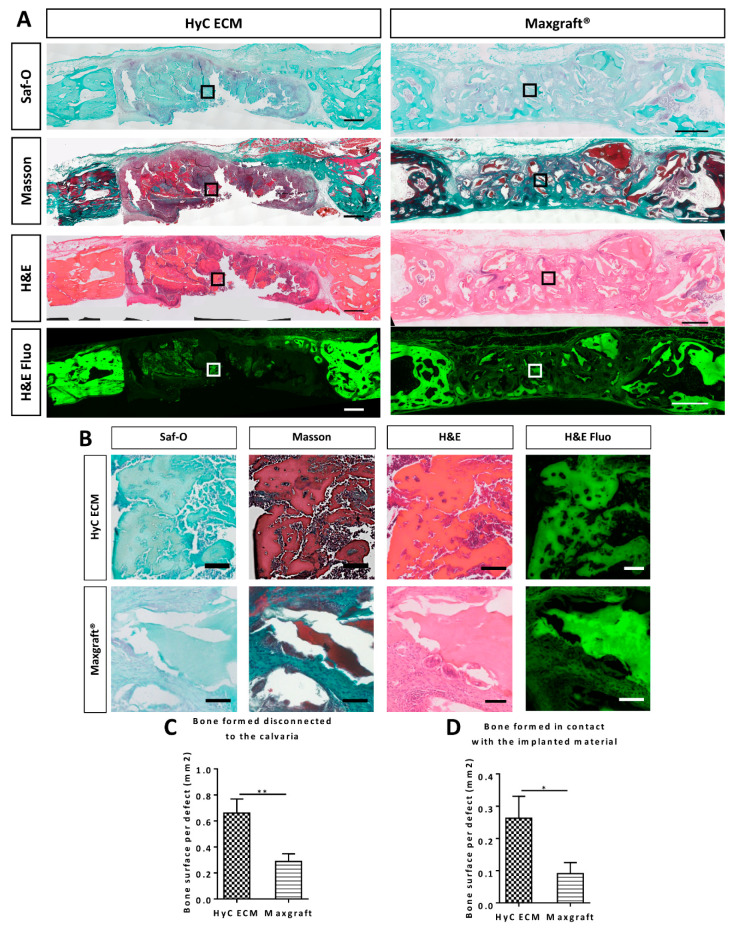
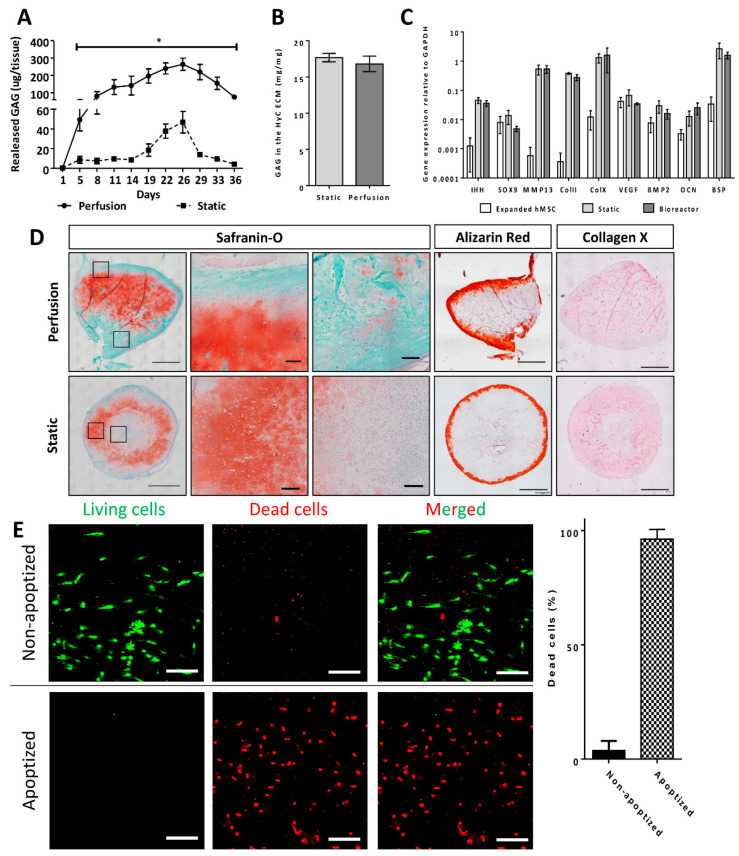
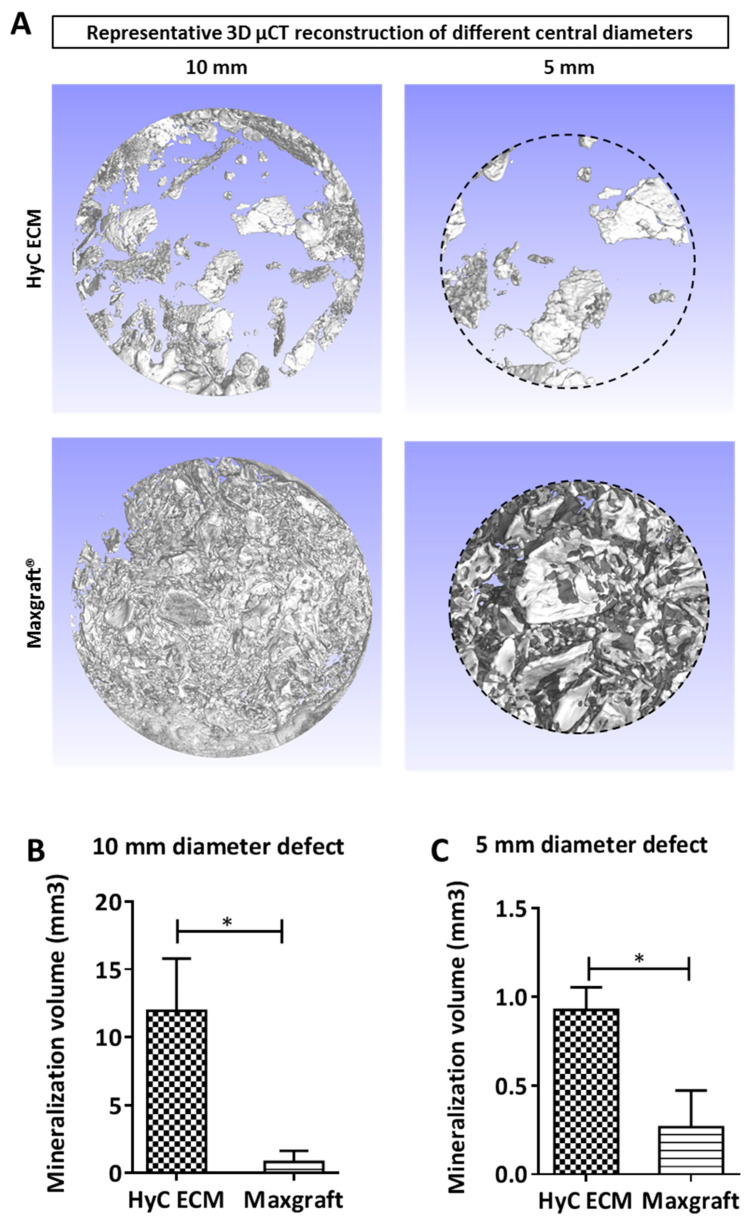
Most bones of the human body form and heal through endochondral ossification, whereby hypertrophic cartilage (HyC) is formed and subsequently remodeled into bone. We previously demonstrated that HyC can be engineered from human mesenchymal stromal cells (hMSC), and subsequently devitalized by apoptosis induction. The resulting extracellular matrix (ECM) tissue retained osteoinductive properties, leading to ectopic bone formation. In this study, we aimed at engineering and devitalizing upscaled quantities of HyC ECM within a perfusion bioreactor, followed by in vivo assessment in an orthotopic bone repair model. We hypothesized that the devitalized HyC ECM would outperform a clinical product currently used for bone reconstructive surgery. Human MSC were genetically engineered with a gene cassette enabling apoptosis induction upon addition of an adjuvant. Engineered hMSC were seeded, differentiated, and devitalized within a perfusion bioreactor. The resulting HyC ECM was subsequently implanted in a 10-mm rabbit calvarial defect model, with processed human bone (Maxgraft) as control. Human MSC cultured in the perfusion bioreactor generated a homogenous HyC ECM and were efficiently induced towards apoptosis. Following six weeks of in vivo implantation, microcomputed tomography and histological analyses of the defects revealed an increased bone formation in the defects filled with HyC ECM as compared to Maxgraft. This work demonstrates the suitability of engineered devitalized HyC ECM as a bone substitute material, with a performance superior to a state-of-the-art commercial graft. Streamlined generation of the devitalized tissue transplant within a perfusion bioreactor is relevant towards standardized and automated manufacturing of a clinical product.
人体的大多数骨骼通过软骨内骨化形成和愈合,在此过程中形成肥大软骨(HyC),随后重塑为骨骼。我们之前证明可以从人间质基质细胞(hMSC)工程化HyC,随后通过凋亡诱导使其失活。由此产生的细胞外基质(ECM)组织保留了成骨诱导特性,导致异位骨形成。在这项研究中,我们旨在通过灌注生物反应器工程化和失活规模化数量的 HyC ECM,随后在同种异位骨修复模型中进行体内评估。我们假设失活的 HyC ECM 将优于目前用于骨重建手术的临床产品。通过添加佐剂来诱导凋亡的基因盒对人 MSC 进行基因工程改造。将工程化的 hMSC 播种、分化并在灌注生物反应器中失活。随后将产生的 HyC ECM 植入 10mm 兔颅骨缺损模型中,以处理过的人骨(Maxgraft)作为对照。在灌注生物反应器中培养的人 MSC 生成了均质的 HyC ECM,并能有效诱导凋亡。在体内植入 6 周后,对缺陷进行的微计算机断层扫描和组织学分析显示,用 HyC ECM 填充的缺陷中的骨形成增加,优于 Maxgraft。这项工作证明了工程化失活的 HyC ECM 作为骨替代材料的适用性,其性能优于最先进的商业移植物。在灌注生物反应器中对失活组织移植物的简化生成对于临床产品的标准化和自动化制造具有重要意义。