Division of Nephrology and Hypertension, Mayo Clinic, Rochester, MN; Department of Nephrology, The First Affiliated Hospital of Guangzhou University of Traditional Chinese Medicine, Guangzhou, Guangdong, PR China.
Division of Nephrology and Hypertension, Mayo Clinic, Rochester, MN.
Mayo Clin Proc. 2020 Oct;95(10):2189-2203. doi: 10.1016/j.mayocp.2020.07.024. Epub 2020 Aug 4.
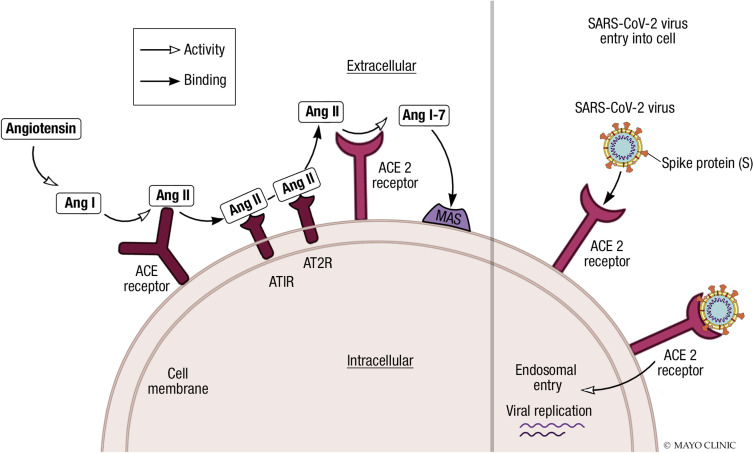
Men are consistently overrepresented in severe acute respiratory syndrome coronavirus 2 (SARS-CoV-2) infection, and coronavirus disease 2019 (COVID-19) severe outcomes, including higher fatality rates. These differences are likely due to gender-specific behaviors, genetic and hormonal factors, and sex differences in biological pathways related to SARS-CoV-2 infection. Several social, behavioral, and comorbid factors are implicated in the generally worse outcomes in men compared with women. Underlying biological sex differences and their effects on COVID-19 outcomes, however, have received less attention. The present review summarizes the available literature regarding proposed molecular and cellular markers of COVID-19 infection, their associations with health outcomes, and any reported modification by sex. Biological sex differences characterized by such biomarkers exist within healthy populations and also differ with age- and sex-specific conditions, such as pregnancy and menopause. In the context of COVID-19, descriptive biomarker levels are often reported by sex, but data pertaining to the effect of patient sex on the relationship between biomarkers and COVID-19 disease severity/outcomes are scarce. Such biomarkers may offer plausible explanations for the worse COVID-19 outcomes seen in men. There is the need for larger studies with sex-specific reporting and robust analyses to elucidate how sex modifies cellular and molecular pathways associated with SARS-CoV-2. This will improve interpretation of biomarkers and clinical management of COVID-19 patients by facilitating a personalized medical approach to risk stratification, prevention, and treatment.
男性在严重急性呼吸综合征冠状病毒 2(SARS-CoV-2)感染和 2019 冠状病毒病(COVID-19)严重结局中一直占比过高,包括更高的死亡率。这些差异可能归因于性别特异性行为、遗传和激素因素,以及与 SARS-CoV-2 感染相关的生物学途径中的性别差异。一些社会、行为和合并症因素与男性相比,女性的预后通常更差。然而,潜在的生物学性别差异及其对 COVID-19 结局的影响,尚未得到足够的重视。本综述总结了有关 COVID-19 感染的已发表文献,这些文献涉及提出的分子和细胞标志物及其与健康结局的关联,以及任何已报道的性别修饰作用。这些标志物所代表的生物学性别差异存在于健康人群中,并且在特定的年龄和性别条件下也有所不同,如怀孕和更年期。在 COVID-19 背景下,通常按性别报告描述性生物标志物水平,但关于患者性别对标志物与 COVID-19 疾病严重程度/结局之间关系的影响的数据却很少。这些标志物可能为男性 COVID-19 结局更差提供了合理的解释。需要进行更多具有性别特异性报告和稳健分析的研究,以阐明性别如何修饰与 SARS-CoV-2 相关的细胞和分子途径。这将通过促进风险分层、预防和治疗的个体化医疗方法,改善对生物标志物的解释和 COVID-19 患者的临床管理。