Sun Qi, Liu Yang, Wei Wei, Wu Dan, Lin Ren, Wen Deliang, Jia Lihong
Department of Child and Adolescent Health, School of Public Health, China Medical University, Shenyang, China.
Institute of Health Science, China Medical University, Shenyang, China.
Front Neurosci. 2020 Sep 8;14:909. doi: 10.3389/fnins.2020.00909. eCollection 2020.
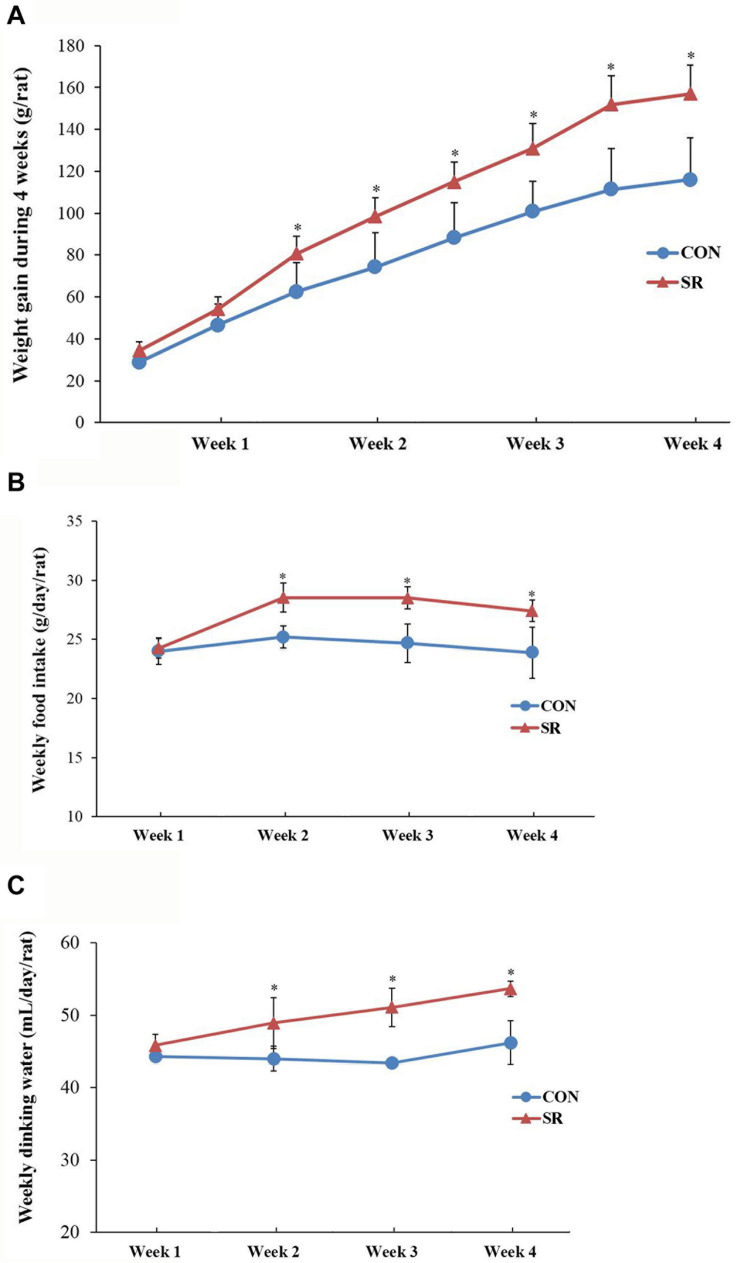
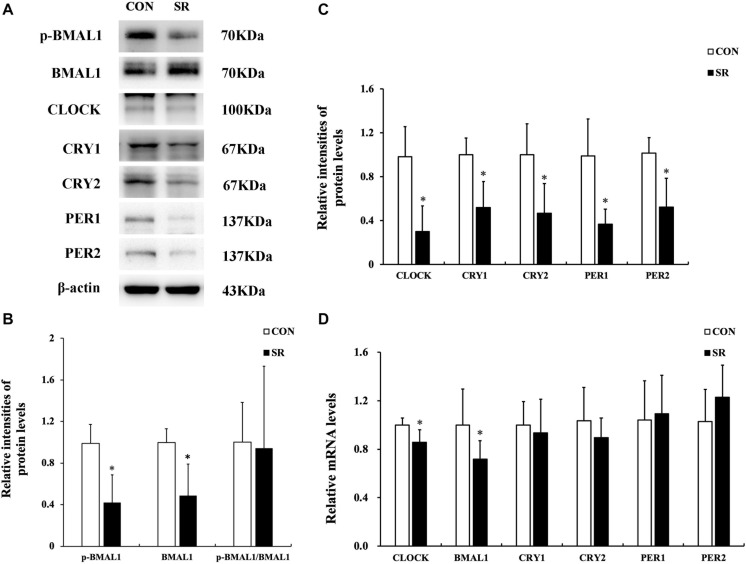
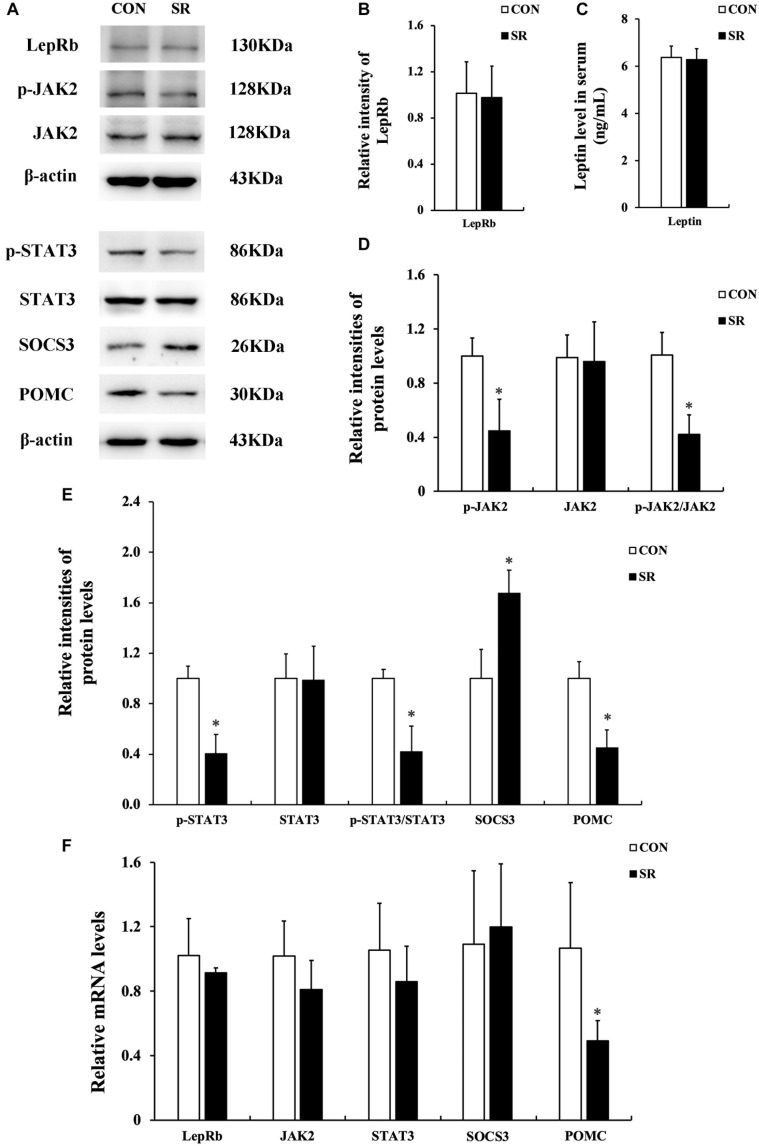
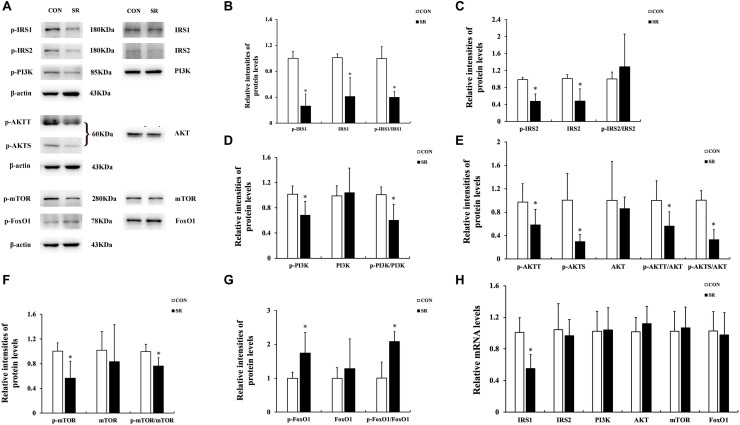
The sleep duration of adolescents has continued to decline over the past 20 years. Sleep insufficiency is one of the most important risk factors for obesity, but the mechanisms underlying the association are unclear. Therefore, the hypothalamic-regulated mechanisms of appetite and the circadian clock gene expression were examined in sleep-restricted rats. Rats aged 7 weeks were randomly divided into two groups: the control group and sleep restriction group (7 rats/group) rats were sleep-restricted for 4 weeks. Body weight gain and amount of food/water consumption were quantified. The expression of genes or proteins which regulated appetite and energy metabolism via leptin receptor signaling and the circadian clock in the hypothalamus were assessed. Chronic sleep restriction induced increased food intake and weight gain in adolescent and young adult rats from the second week of initiation of sleep restriction. Phosphorylation of Janus kinase 2 (JAK2)/signal transducer and activator of transcription 3 (STAT3) was decreased, although levels of circulating leptin or leptin receptor expression were unaltered. Furthermore, insulin receptor substrate (IRS)/phosphoinositide 3-kinase (PI3K)/AKT/mTOR and forkhead box O1 (FoxO1) signaling pathways were also compromised. Moreover, core circadian clock genes were also decreased in the sleep restriction group compared with the control. Chronic timed sleep restriction induced hyperphagic behaviors, attenuated leptin receptor-mediated signaling pathways, and depleted the expression of circadian clock gene in the hypothalamus of adolescent and young adult rats.
在过去20年里,青少年的睡眠时间持续减少。睡眠不足是肥胖最重要的风险因素之一,但二者关联背后的机制尚不清楚。因此,研究人员在睡眠受限的大鼠中检测了下丘脑调节食欲的机制以及生物钟基因的表达。将7周龄的大鼠随机分为两组:对照组和睡眠限制组(每组7只大鼠),对睡眠限制组大鼠进行4周的睡眠限制。对体重增加以及食物/水的摄入量进行量化。评估下丘脑通过瘦素受体信号传导以及生物钟调节食欲和能量代谢的基因或蛋白质的表达。从睡眠限制开始的第二周起,慢性睡眠限制导致青春期和年轻成年大鼠的食物摄入量增加和体重增加。尽管循环瘦素水平或瘦素受体表达未改变,但Janus激酶2(JAK2)/信号转导和转录激活因子3(STAT3)的磷酸化水平降低。此外,胰岛素受体底物(IRS)/磷脂酰肌醇3激酶(PI3K)/蛋白激酶B(AKT)/哺乳动物雷帕霉素靶蛋白(mTOR)和叉头框O1(FoxO1)信号通路也受到损害。此外,与对照组相比,睡眠限制组的核心生物钟基因也减少。慢性定时睡眠限制在青春期和年轻成年大鼠的下丘脑中诱导了摄食亢进行为,减弱了瘦素受体介导的信号通路,并使生物钟基因的表达减少。