Yu Xingxing, Wang Xin, Wang Xu, Zhou Yi, Li Yanchun, Wang Aiwei, Wang Tongtong, An Yihan, Sun Weidong, Du Jing, Tong Xiangmin, Wang Ying
Clinical Research Institute, Zhejiang Provincial People's Hospital, People's Hospital of Hangzhou Medical College, Hangzhou, China.
Department of Hematology, Fuyang Hospital of Anhui Medical University, Fuyang, China.
Front Pharmacol. 2020 Sep 4;11:554736. doi: 10.3389/fphar.2020.554736. eCollection 2020.
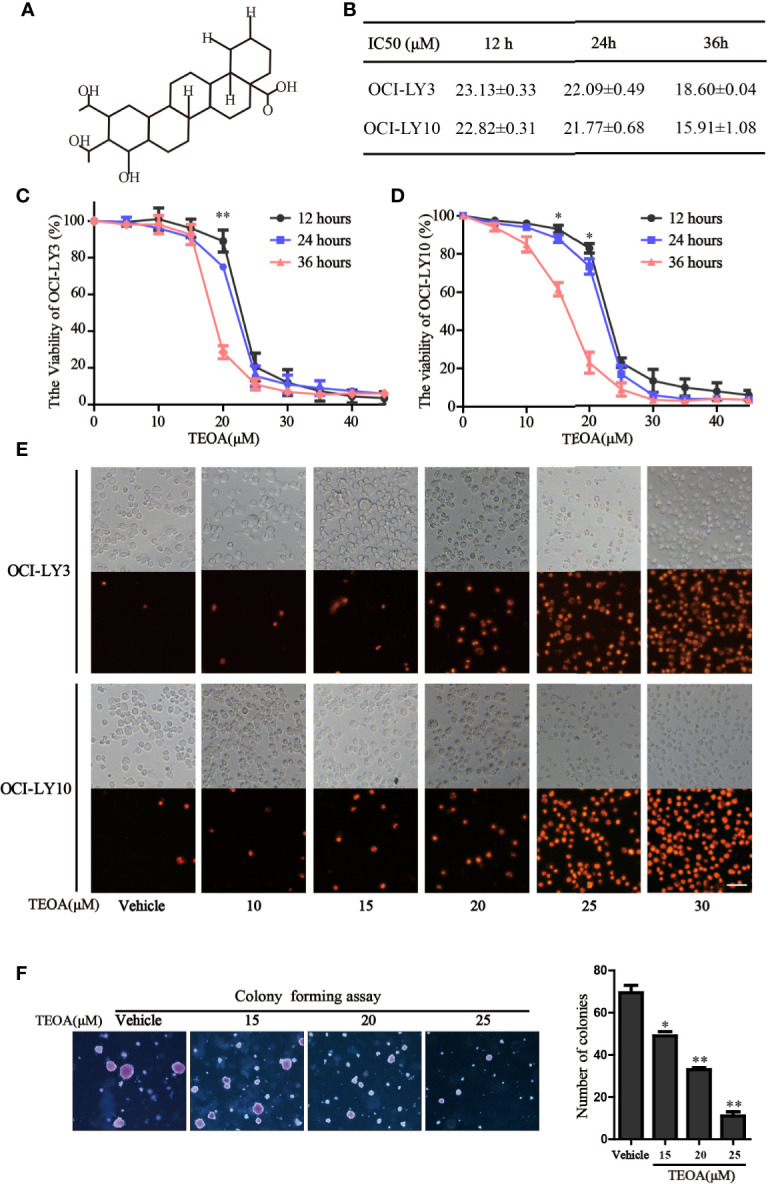
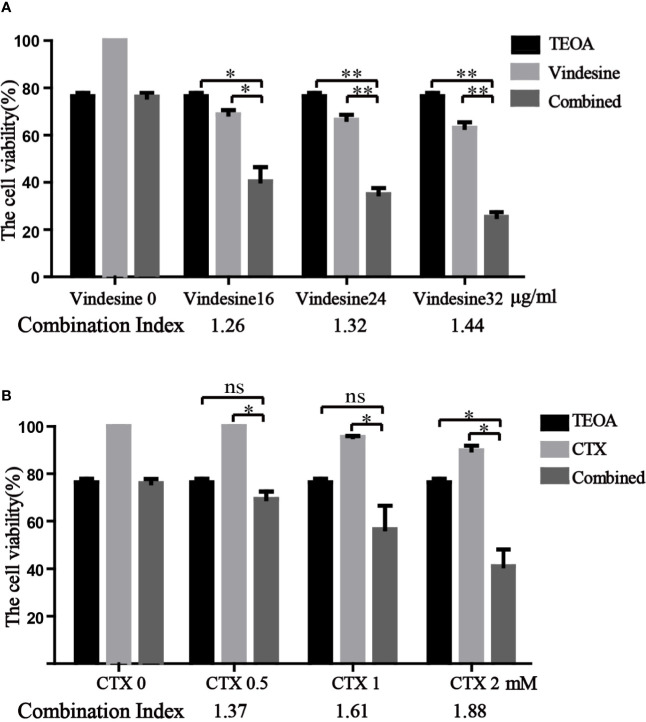
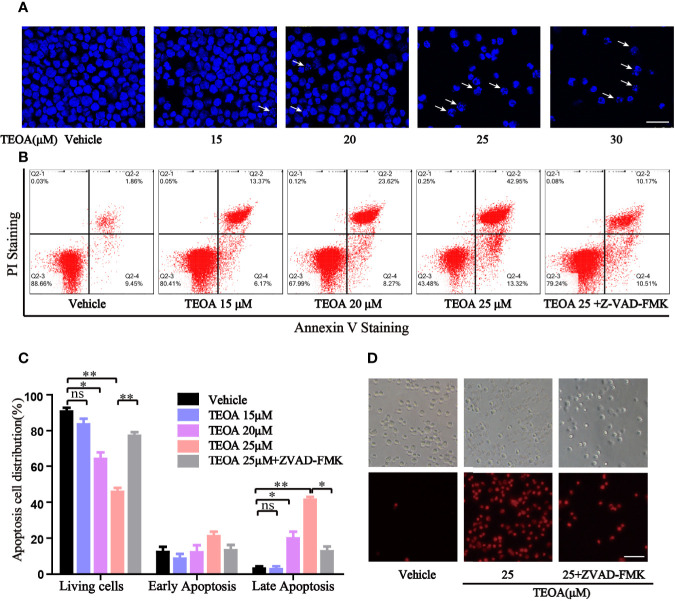
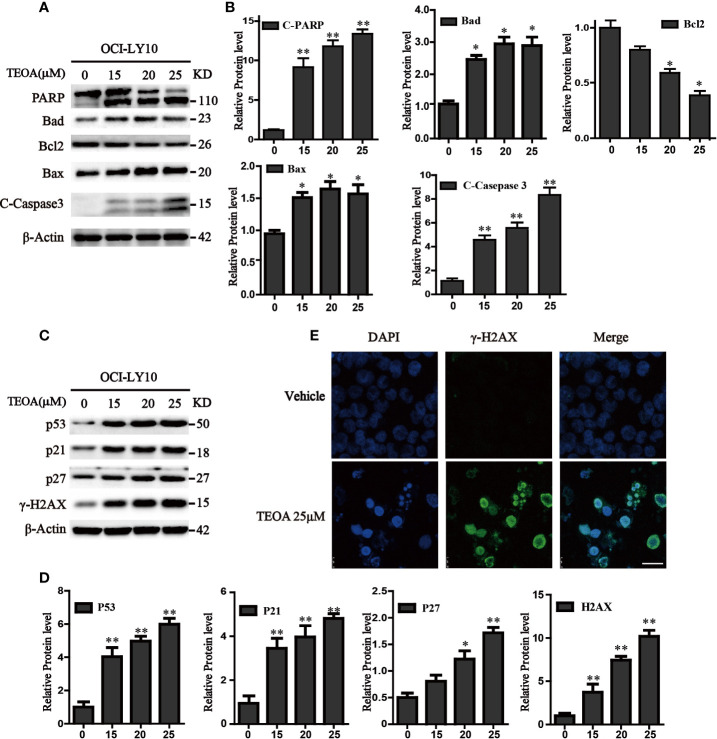
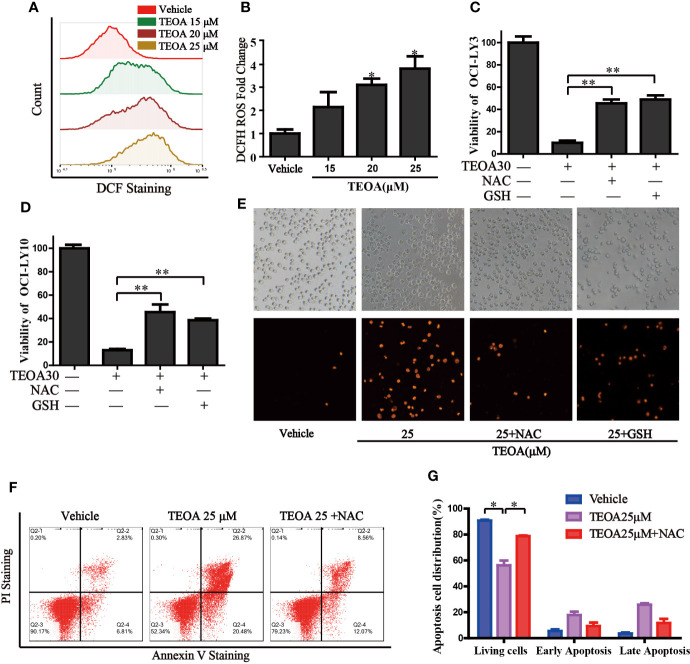
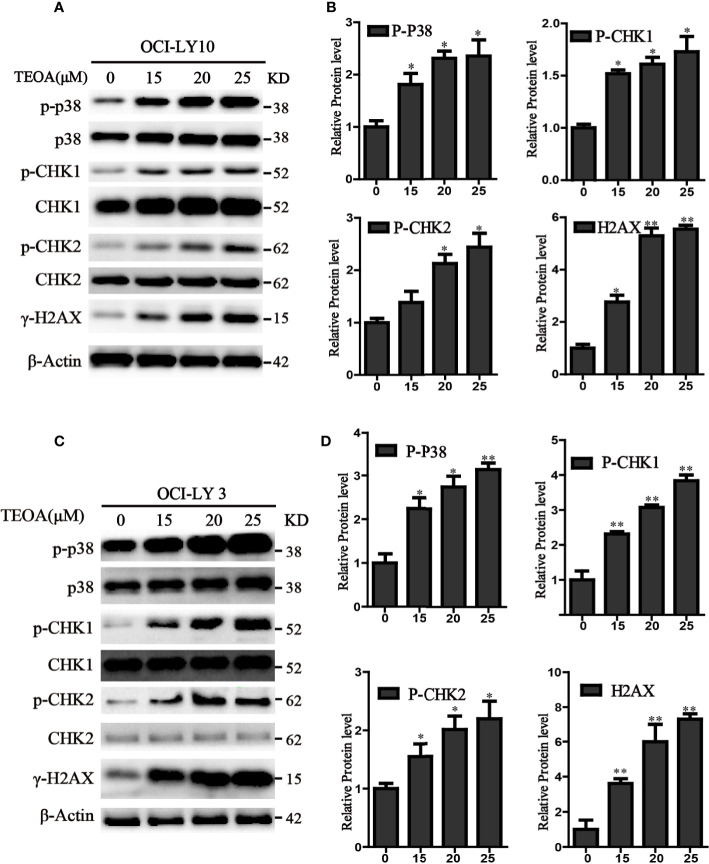
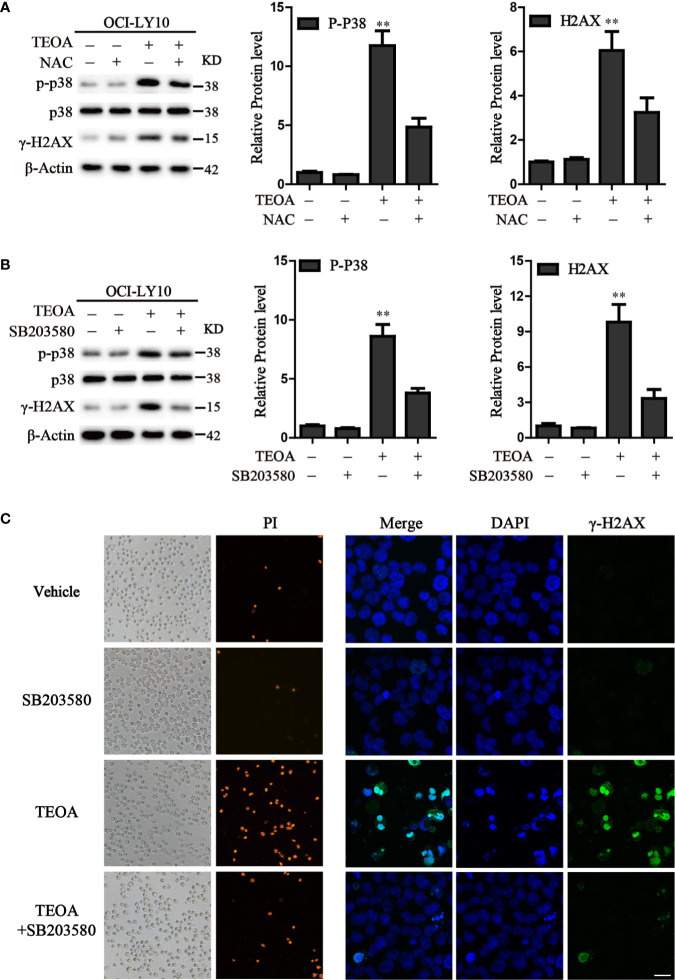
Diffuse large B-cell lymphoma (DLBCL) is the most common subtype of lymphoma, accounting for approximately 30% to 40% of non-Hodgkin's lymphomas (NHL). The administration of rituximab significantly improved the outcomes of DLBCL; however, the unavoidable development of resistance limits the long-term efficacy. Therefore, a new generation of less toxic drugs with higher chemotherapy response is required to prevent or reverse chemoresistance. TEOA is a pentacyclic triterpenoid compound isolated from the roots of . Studies have confirmed that TEOA has significant cytotoxicity on gastrointestinal cancer cells. However, there are no relevant reports on DLBCL cells. In this study, we investigated the potential molecular mechanism of the anticancer activity of TEOA in DLBCL cells. The results demonstrated that TEOA inhibited proliferation and induced apoptosis in time-and dose-dependent manners. TEOA induced reactive oxygen species (ROS) generation, which was reversed by N-acetyl cysteine (NAC). TEOA induced DNA damage, increased the level of γ-H2AX, and the phosphorylation of CHK1 and CHK2. In addition, TEOA induced the activation of the p38 MAPK pathway and pretreated with p38 inhibitor SB20358 or ROS scavenger could block TEOA-induced DNA damage. Taken together, these results suggest that ROS mediated activation of the p38 MAPK signal pathway plays an important role in initiating TEOA-induced DNA damage.
弥漫性大B细胞淋巴瘤(DLBCL)是淋巴瘤最常见的亚型,约占非霍奇金淋巴瘤(NHL)的30%至40%。利妥昔单抗的应用显著改善了DLBCL的治疗结果;然而,不可避免的耐药性发展限制了其长期疗效。因此,需要新一代毒性更低、化疗反应更高的药物来预防或逆转化疗耐药性。TEOA是一种从[植物名称]根部分离出的五环三萜类化合物。研究证实,TEOA对胃肠道癌细胞具有显著的细胞毒性。然而,关于DLBCL细胞尚无相关报道。在本研究中,我们探讨了TEOA对DLBCL细胞抗癌活性的潜在分子机制。结果表明,TEOA以时间和剂量依赖性方式抑制增殖并诱导凋亡。TEOA诱导活性氧(ROS)生成,N-乙酰半胱氨酸(NAC)可逆转这一过程。TEOA诱导DNA损伤,增加γ-H2AX水平以及CHK1和CHK2的磷酸化。此外,TEOA诱导p38丝裂原活化蛋白激酶(MAPK)途径激活,用p38抑制剂SB20358或ROS清除剂预处理可阻断TEOA诱导的DNA损伤。综上所述,这些结果表明ROS介导的p38 MAPK信号通路激活在引发TEOA诱导的DNA损伤中起重要作用。