Department of Metabolism, Digestion and Reproduction, Institute of Reproductive and Developmental Biology, Imperial College, London, United Kingdom.
Section of Paediatrics, Division of Infectious Diseases, Department of Medicine, Imperial College, London, United Kingdom.
Front Immunol. 2020 Sep 11;11:1920. doi: 10.3389/fimmu.2020.01920. eCollection 2020.
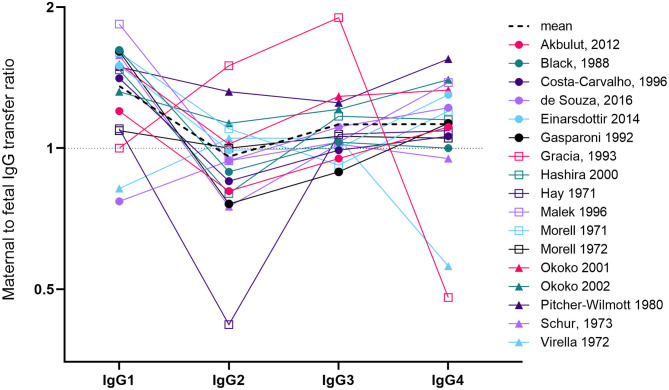
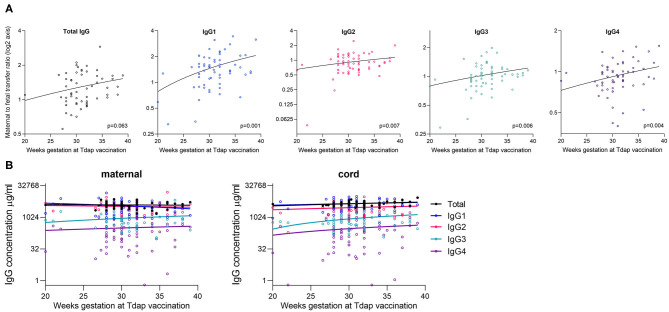
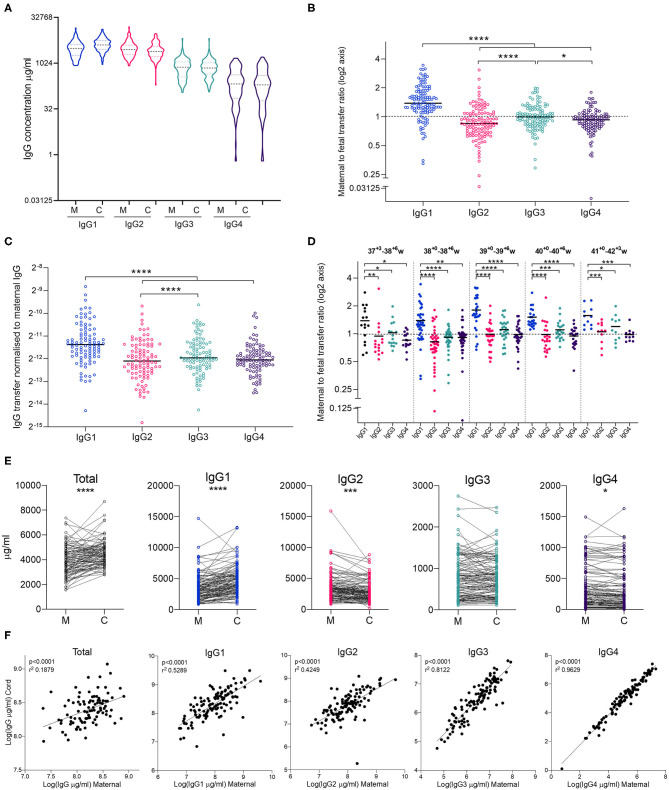
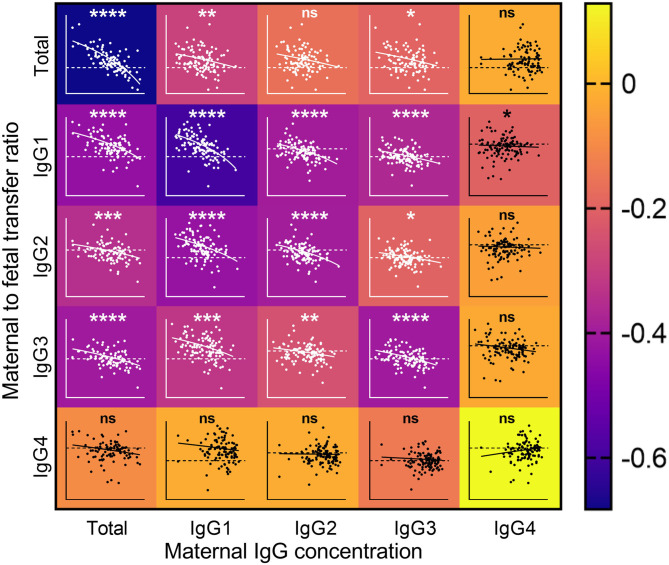
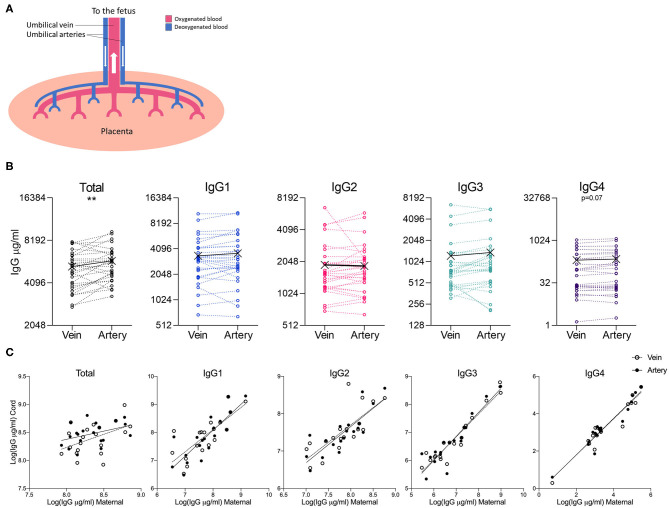
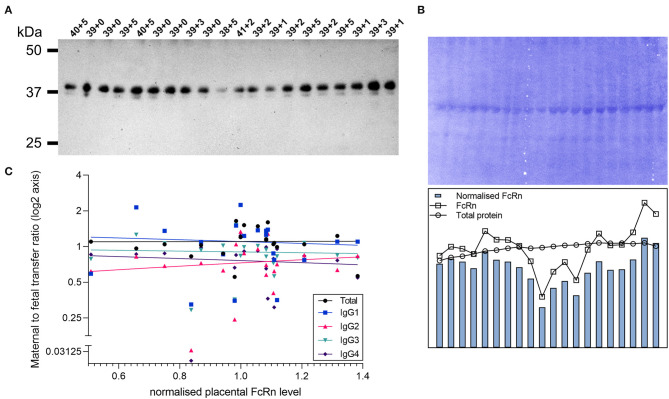
Transplacental antibody transfer from mother to fetus provides protection from infection in the first weeks of life, and the four different subclasses of IgG (IgG1, IgG2, IgG3, and IgG4) have diverse roles in protection against infection. In this study, we evaluated concentrations and transplacental transfer ratios of the IgG subclasses in a healthy UK-based cohort of mother-cord pairs, and investigated associations with maternal, obstetric, and fetal factors. In agreement with previous studies, we found a strong association between maternal and cord IgG for all subclasses. We report a transfer efficiency hierarchy of IgG1>IgG3>IgG4=IgG2 in our study population, and our review of the literature demonstrates that there is no consensus in the hierarchy of subclass transfer, despite the commonly made statement that the order is IgG1>IgG4>IgG3>IgG2. We report additional data regarding negative associations between elevated maternal IgG concentrations and maternal/cord transfer ratios, finding an effect on IgG1, IgG2, and IgG3 subclasses. Levels of IgG subclasses were the same between venous and arterial blood samples from the umbilical cord, but there was a significantly higher level of total IgG in arterial blood. We found no correlation between placental FcRn protein levels and IgG transfer in our cohort, suggesting that IgG is the main determinant of observed differences in transplacental transfer ratios at term. Neonatal IgG1 and IgG4 levels were increased with later gestation at delivery, independent of any increase in transplacental transfer, indicating that the benefit of later gestation is through accumulation of these subclasses in the fetus. Neonatal IgG2 levels and transfer ratios were reduced in rhesus-negative pregnancies, suggesting that administered anti-D antibodies may compete for transplacental transfer of this subclass. Maternal influenza vaccination resulted in elevated maternal and neonatal levels of IgG4, whereas maternal Tdap vaccination had no impact on neonatal levels of the subclasses, nor transfer. However, within Tdap vaccinated pregnancies, later gestation at Tdap vaccination was associated with higher transplacental transfer. Our study provides information regarding levels and transfer of IgG subclasses in healthy term pregnancies and demonstrates the importance of recording detailed clinical information in studies of antibody transfer, including parity, ethnicity, and timing of maternal vaccine delivery.
母体向胎儿传递的胎盘抗体可提供生命最初几周内免受感染的保护,而 IgG 的四个不同亚类(IgG1、IgG2、IgG3 和 IgG4)在抗感染方面具有不同的作用。在这项研究中,我们评估了来自英国健康母婴对的 IgG 亚类的浓度和胎盘转移率,并研究了其与母体、产科和胎儿因素的关联。与先前的研究一致,我们发现所有亚类的母体和脐带 IgG 之间存在很强的关联。我们报告在我们的研究人群中 IgG1>IgG3>IgG4=IgG2 的转移效率等级,并且我们对文献的综述表明,尽管普遍认为顺序是 IgG1>IgG4>IgG3>IgG2,但亚类转移的等级没有共识。我们报告了关于母体 IgG 浓度升高与母体/脐带转移率之间负相关的额外数据,发现对 IgG1、IgG2 和 IgG3 亚类有影响。脐带静脉和动脉血样中的 IgG 亚类水平相同,但动脉血中的总 IgG 水平明显更高。我们在队列中未发现胎盘 FcRn 蛋白水平与 IgG 转移之间存在相关性,这表明 IgG 是观察到足月时胎盘转移率差异的主要决定因素。新生儿 IgG1 和 IgG4 水平随分娩时妊娠晚期增加,与胎盘转移无关,表明妊娠晚期的益处是通过在胎儿中积累这些亚类。在 Rh 阴性妊娠中,新生儿 IgG2 水平和转移率降低,表明给予抗-D 抗体可能会竞争该亚类的胎盘转移。母体流感疫苗接种导致母体和新生儿 IgG4 水平升高,而母体 Tdap 疫苗接种对新生儿亚类水平或转移没有影响。然而,在 Tdap 接种的妊娠中,Tdap 接种时妊娠晚期与更高的胎盘转移有关。我们的研究提供了有关健康足月妊娠中 IgG 亚类水平和转移的信息,并证明了在抗体转移研究中记录详细临床信息的重要性,包括产次、种族和母体疫苗接种时间。