Fang Mengchan, Liu Fan, Huang Lingling, Wu Liqing, Guo Lan, Wan Yiqun
College of Chemistry, Nanchang University, Nanchang 330031, China.
Jiangxi Province Key Laboratory of Modern Analytical Science, Nanchang University, Nanchang 330031, China.
Int J Anal Chem. 2020 Sep 21;2020:8839215. doi: 10.1155/2020/8839215. eCollection 2020.
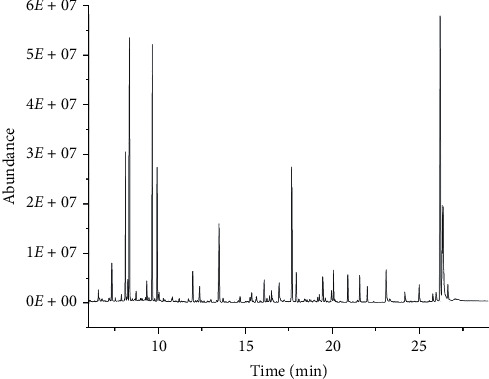
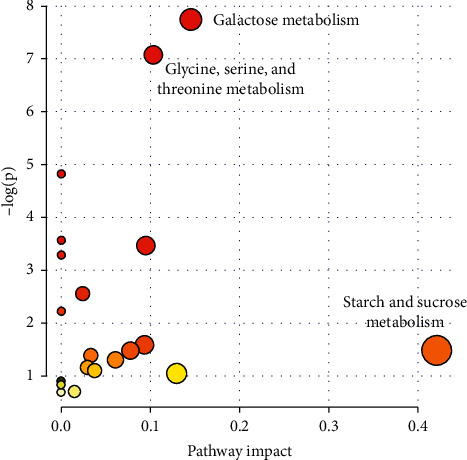
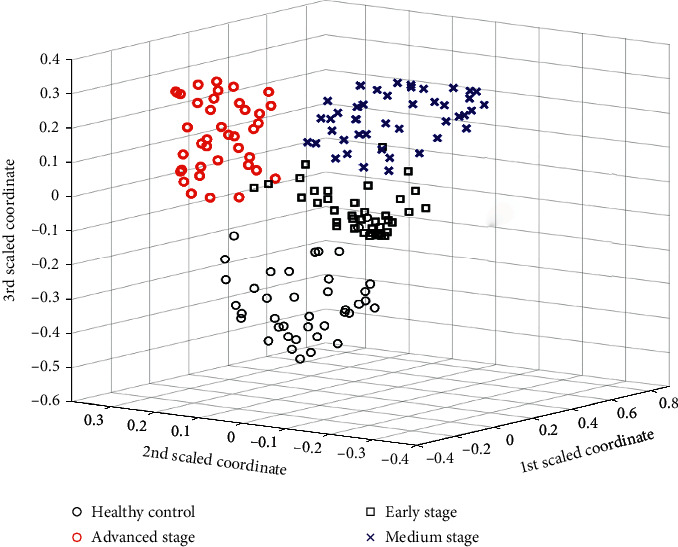
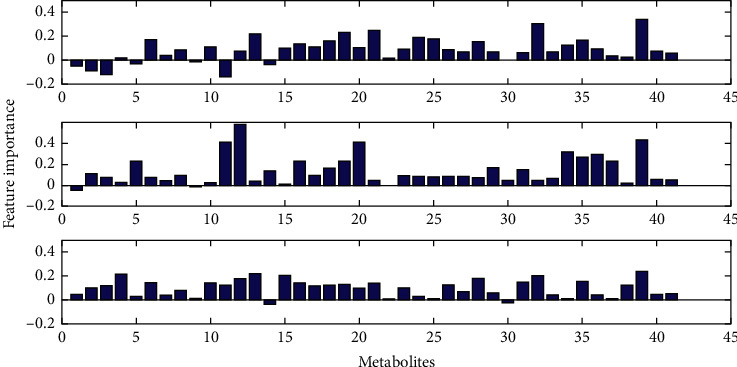
A urine metabolomics study based on gas chromatography-mass spectrometry (GC-MS) and multivariate statistical analysis was applied to distinguish rat bladder cancer. Urine samples with different stages were collected from animal models, i.e., the early stage, medium stage, and advanced stage of the bladder cancer model group and healthy group. After resolving urea with urease, the urine samples were extracted with methanol and, then, derived with N, O-Bis(trimethylsilyl) trifluoroacetamide and trimethylchlorosilane (BSTFA + TMCS, 99 : 1, v/v), before analyzed by GC-MS. Three classification models, i.e., healthy control vs. early- and middle-stage groups, healthy control vs. advanced-stage group, and early- and middle-stage groups vs. advanced-stage group, were established to analyze these experimental data by using Random Forests (RF) algorithm, respectively. The classification results showed that combining random forest algorithm with metabolites characters, the differences caused by the progress of disease could be effectively exhibited. Our results showed that glyceric acid, 2, 3-dihydroxybutanoic acid, N-(oxohexyl)-glycine, and D-turanose had higher contributions in classification of different groups. The pathway analysis results showed that these metabolites had relationships with starch and sucrose, glycine, serine, threonine, and galactose metabolism. Our study results suggested that urine metabolomics was an effective approach for disease diagnosis.
一项基于气相色谱 - 质谱联用(GC - MS)和多元统计分析的尿液代谢组学研究被用于区分大鼠膀胱癌。从动物模型中收集不同阶段的尿液样本,即膀胱癌模型组和健康组的早期、中期和晚期。用脲酶分解尿素后,尿液样本用甲醇提取,然后用N,O - 双(三甲基硅基)三氟乙酰胺和三甲基氯硅烷(BSTFA + TMCS,99∶1,v/v)衍生化,再进行GC - MS分析。分别建立了三个分类模型,即健康对照与早期和中期组、健康对照与晚期组、早期和中期组与晚期组,使用随机森林(RF)算法分析这些实验数据。分类结果表明,将随机森林算法与代谢物特征相结合,可以有效展现疾病进展所导致的差异。我们的结果表明,甘油酸、2,3 - 二羟基丁酸、N - (氧代己基) - 甘氨酸和D - 松三糖在不同组的分类中具有较高的贡献。通路分析结果表明,这些代谢物与淀粉和蔗糖、甘氨酸、丝氨酸、苏氨酸以及半乳糖代谢有关。我们的研究结果表明,尿液代谢组学是疾病诊断的一种有效方法。