Zhao Ashley G, Shah Kiran, Freitag Julien, Cromer Brett, Sumer Huseyin
Department of Chemistry and Biotechnology, Faculty of Science, Engineering and Technology, Swinburne University of Technology, John St, Hawthorn VIC 3122, Australia.
Magellan Stem Cells P/L, 116-118 Thames St, Box Hill VIC 3129, Australia.
Stem Cells Int. 2020 Sep 18;2020:8898221. doi: 10.1155/2020/8898221. eCollection 2020.
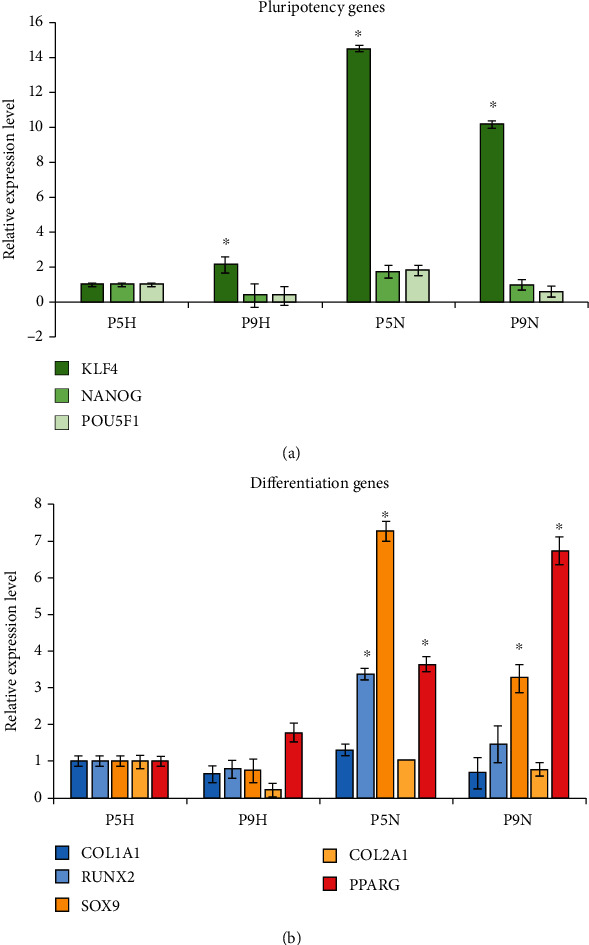
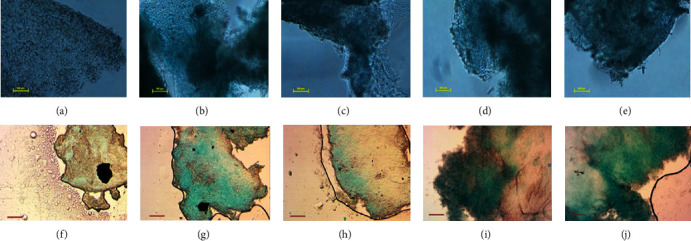
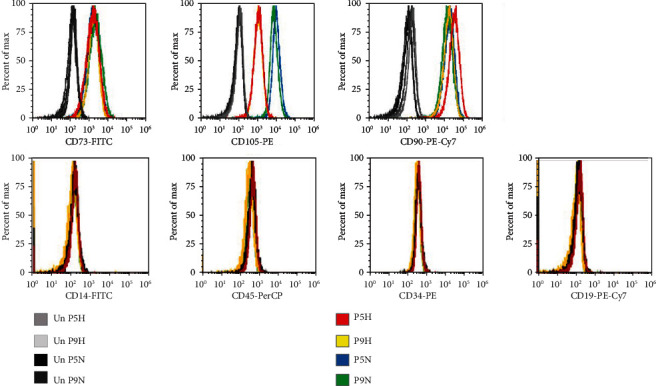
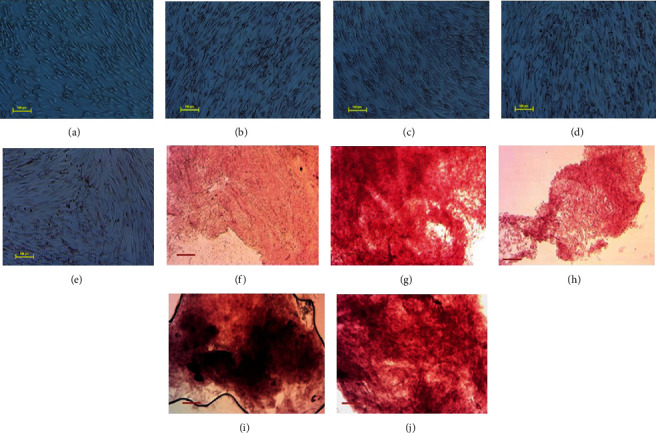
With an increasing focus on the large-scale expansion of mesenchymal stem cells (MSCs) required for clinical applications for the treatment of joint and bone diseases such as osteoarthritis, the optimisation of conditions for MSC expansion requires careful consideration to maintain native MSC characteristics. Physiological parameters such as oxygen concentration, media constituents, and passage numbers influence the properties of MSCs and may have major impact on their therapeutic potential. Cells grown under hypoxic conditions have been widely documented in clinical use. Culturing MSCs on large scale requires bioreactor culture; however, it is challenging to maintain low oxygen and other physiological parameters over several passages in large bioreactor vessels. The necessity to scale up the production of cells under normoxia may affect important attributes of MSCs. For these reasons, our study investigated the effects of normoxic and hypoxic culture condition on early- and late-passage adipose-derived MSCs. We examined effect of each condition on the expression of key stem cell marker genes POU5F1, NANOG, and KLF4, as well as differentiation genes RUNX2, COL1A1, SOX9, COL2A1, and PPARG. We found that expression levels of stem cell marker genes and osteogenic and chondrogenic genes were higher in normoxia compared to hypoxia. Furthermore, expression of these genes reduced with passage number, with the exception of , an adipose differentiation marker, possibly due to the adipose origin of the MSCs. We confirmed by flow cytometry the presence of cell surface markers CD105, CD73, and CD90 and lack of expression of CD45, CD34, CD14, and CD19 across all conditions. Furthermore, differentiation confirmed that both early- and late-passage adipose-derived MSCs grown in hypoxia or normoxia could differentiate into chondrogenic and osteogenic cell types. Our results demonstrate that the minimal standard criteria to define MSCs as suitable for laboratory-based and preclinical studies can be maintained in early- or late-passage MSCs cultured in hypoxia or normoxia. Therefore, any of these culture conditions could be used when scaling up MSCs in bioreactors for allogeneic clinical applications or tissue engineering for the treatment of joint and bone diseases such as osteoarthritis.
随着对间充质干细胞(MSCs)大规模扩增的关注日益增加,这些细胞在骨关节炎等关节和骨骼疾病临床治疗中的应用需求不断上升,因此优化MSCs扩增条件对于维持其天然特性至关重要。诸如氧气浓度、培养基成分和传代次数等生理参数会影响MSCs的特性,并可能对其治疗潜力产生重大影响。在低氧条件下培养的细胞已在临床应用中得到广泛记载。大规模培养MSCs需要使用生物反应器;然而,在大型生物反应器容器中连续传代时,维持低氧及其他生理参数具有挑战性。在常氧条件下扩大细胞产量的必要性可能会影响MSCs的重要属性。基于这些原因,我们的研究调查了常氧和低氧培养条件对早期和晚期传代脂肪来源MSCs的影响。我们检测了每种条件对关键干细胞标记基因POU5F1、NANOG和KLF4以及分化基因RUNX2、COL1A1、SOX9、COL2A1和PPARG表达的影响。我们发现,与低氧条件相比,常氧条件下干细胞标记基因以及成骨和成软骨基因的表达水平更高。此外,除了脂肪分化标记物 外,这些基因的表达随传代次数减少,这可能归因于MSCs的脂肪来源。我们通过流式细胞术确认,在所有条件下均存在细胞表面标记物CD105、CD73和CD90,且未表达CD45、CD34、CD14和CD19。此外,分化实验证实,在低氧或常氧条件下培养的早期和晚期传代脂肪来源MSCs均可分化为成软骨和成骨细胞类型。我们的结果表明,在低氧或常氧条件下培养的早期或晚期传代MSCs中,可以维持将MSCs定义为适合实验室研究和临床前研究的最低标准。因此,在生物反应器中扩大MSCs用于同种异体临床应用或组织工程以治疗骨关节炎等关节和骨骼疾病时,这些培养条件中的任何一种都可以使用。