Rahmawati Dewi, Sampurna Mahendra Tri Arif, Etika Risa, Utomo Martono Tri, Bos Arend F
Department of Pediatrics, Faculty of Medicine Universitas Airlangga, Dr. Soetomo Academic Teaching Hospital, Surabaya, Indonesia.
Department of Pediatrics, Beatrix Children Hospital, Universitair Medisch Centrum Groningen, Groningen, 9713 GZ, The Netherlands.
F1000Res. 2020 Apr 28;9:300. doi: 10.12688/f1000research.22264.2. eCollection 2020.
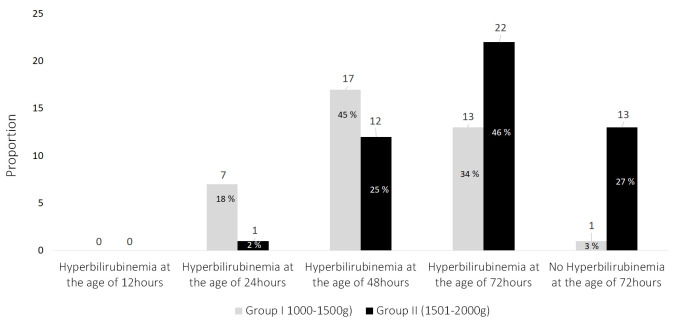
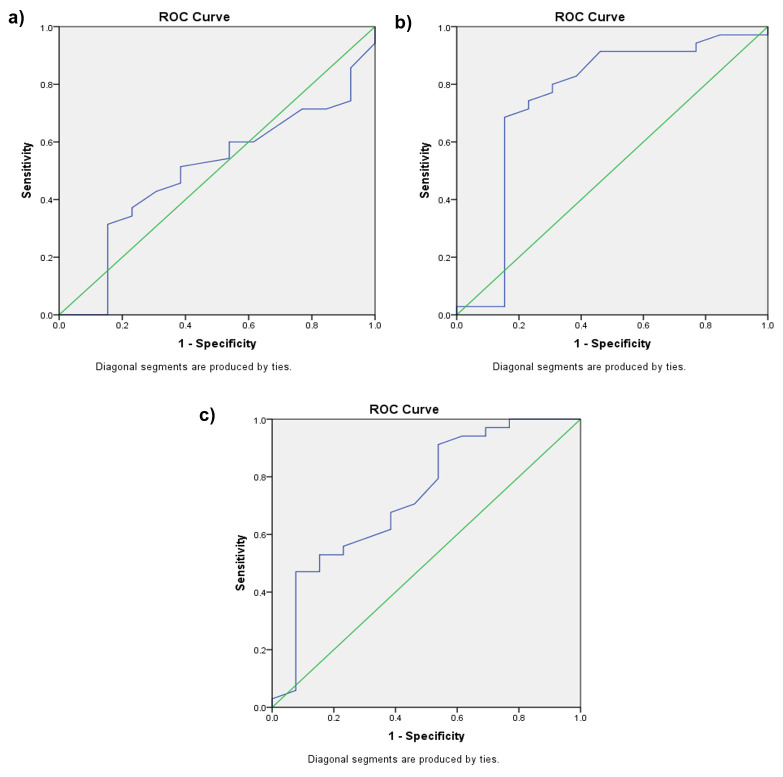
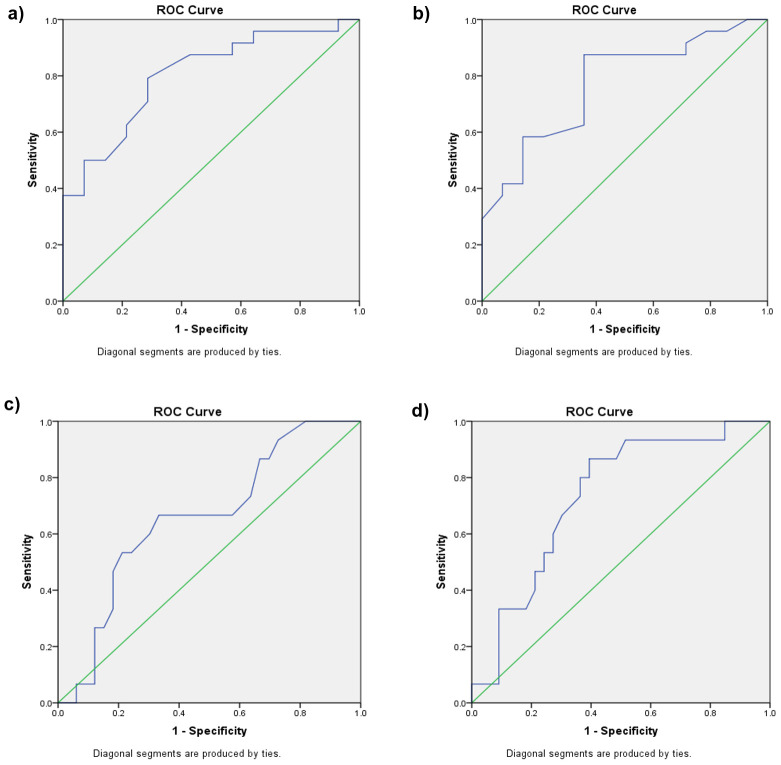
Hyperbilirubinemia is common in neonates, with higher prevalence among preterm neonates, which can lead to severe hyperbilirubinemia. Assessment of total serum bilirubin (TSB) and the use of a transcutaneous bilirubinometry (TcB) are existing methods that identify and predict hyperbilirubinemia. This study aimed to determine TcB cut-off values during the first day for preterm neonates to predict hyperbilirubinemia at 48 and 72 hours. This cohort study was conducted at Dr. Soetomo General Hospital from September 2018 to January 2019 a total of 90 neonates born ≤35 weeks. They were divided into two groups (Group I: 1000-1500 grams; Group II: 1501-2000 grams). The bilirubin levels were measured on the sternum using TcB at the ages of 12, 24, and 72 hours. TSB measurements were taken on the third day or if the TcB level reached phototherapy threshold ± 1.24 mg/dL and if TcB showed abnormal results (Group I: 5.76-8.24 mg/dL; Group II: 8.76-11.24 mg/dL). Hyperbilirubinemia was defined as TSB ≥7 mg/dL for Group I and >10 mg/dL for Group II. In total, 38 Group I neonates and 48 Group II neonates were observed. Almost half of the neonates in Group I (45%) suffered from hyperbilirubinemia at the age of 48 hours, along with 46% of Group II at 72 hours. The best 24-hour-old TcB cut-off values to predict hyperbilirubinemia at 48 hours were calculated to be 4.5 mg/dL for Group I and 5.8 mg/dL for Group II. The determined 24-hour-old TcB value to predict hyperbilirubinemia at 72 hours was 5.15 mg/dL for Group II. TcB values in the early days of life can be used as hyperbilirubinemia predictors on the following days for preterm neonates. Close monitoring should be managed for those with TcB values higher than the calculated cut-off values.
高胆红素血症在新生儿中很常见,在早产儿中患病率更高,这可能导致严重的高胆红素血症。评估血清总胆红素(TSB)和使用经皮胆红素测定仪(TcB)是现有的识别和预测高胆红素血症的方法。本研究旨在确定早产儿出生第一天的TcB临界值,以预测48小时和72小时时的高胆红素血症。这项队列研究于2018年9月至2019年1月在苏托莫博士综合医院进行,共纳入90例出生孕周≤35周的新生儿。他们被分为两组(第一组:1000 - 1500克;第二组:1501 - 2000克)。在12、24和72小时时使用TcB在胸骨处测量胆红素水平。在第三天进行TSB测量,或者当TcB水平达到光疗阈值±1.24mg/dL时,以及当TcB显示异常结果时(第一组:5.76 - 8.24mg/dL;第二组:8.76 - 11.24mg/dL)。高胆红素血症的定义为第一组TSB≥7mg/dL,第二组TSB>10mg/dL。总共观察了38例第一组新生儿和48例第二组新生儿。第一组中几乎一半(45%)的新生儿在48小时时患有高胆红素血症,第二组中有46%的新生儿在72小时时患有高胆红素血症。预测48小时时高胆红素血症的最佳24小时龄TcB临界值经计算第一组为4.5mg/dL,第二组为5.8mg/dL。确定的预测72小时时高胆红素血症的24小时龄TcB值第二组为5.15mg/dL。生命早期的TcB值可作为早产儿随后几天高胆红素血症的预测指标。对于TcB值高于计算出的临界值的新生儿应进行密切监测。