Department of Ophthalmology, The First Affiliated Hospital of Zhejiang Chinese Medical University, Hangzhou, China.
Department of Dermatology, Hangzhou Hospital of Traditional Chinese Medicine, Hangzhou, China.
J Diabetes Res. 2020 Sep 15;2020:6927429. doi: 10.1155/2020/6927429. eCollection 2020.
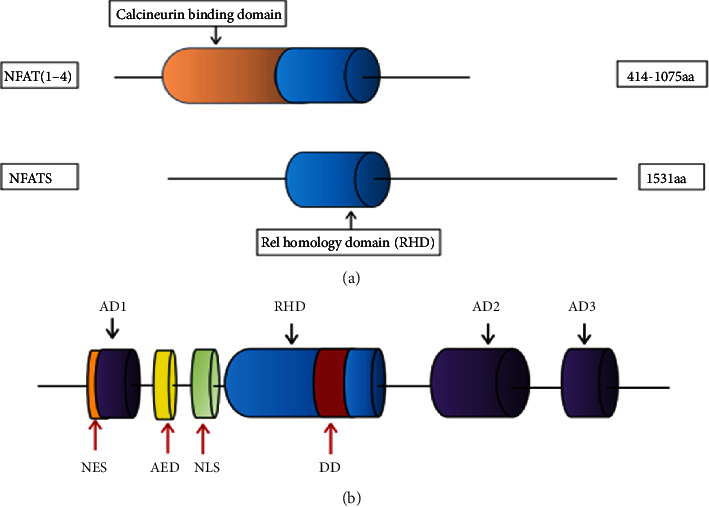
Nuclear factor of activated T cells 5 (NFAT5), a Rel/nuclear factor- (NF-) B family member, is the only known gene regulator of the mammalian adaptive response to osmotic stress. Exposure to elevated glucose increases the expression and nuclear translocation of NFAT5, as well as NFAT5-driven transcriptional activity in vivo and in vitro. Increased expression of NFAT5 is closely correlated with the progression of diabetes in patients. The distinct structure of NFAT5 governs its physiological and pathogenic roles, indicating its opposing functions. The ability of NFAT5 to maintain cell homeostasis and proliferation is impaired in patients with diabetes. NFAT5 promotes the formation of aldose reductase, pathogenesis of diabetic vascular complications, and insulin resistance. Additionally, NFAT5 activates inflammation at a very early stage of diabetes and induces persistent inflammation. Recent studies revealed that NFAT5 is an effective therapeutic target for diabetes. Here, we describe the current knowledge about NFAT5 and its relationship with diabetes, focusing on its diverse regulatory functions, and highlight the importance of this protein as a potential therapeutic target in patients with diabetes.
活化 T 细胞核因子 5(NFAT5),是 Rel/nuclear 因子-(NF-)B 家族的成员之一,是唯一已知的哺乳动物适应渗透胁迫的基因调节剂。暴露于高葡萄糖会增加 NFAT5 的表达和核易位,以及体内和体外 NFAT5 驱动的转录活性。NFAT5 的表达增加与患者糖尿病的进展密切相关。NFAT5 的独特结构决定了其生理和病理作用,表明其具有相反的功能。在糖尿病患者中,NFAT5 维持细胞内稳态和增殖的能力受损。NFAT5 促进醛糖还原酶的形成、糖尿病血管并发症的发病机制和胰岛素抵抗。此外,NFAT5 在糖尿病的早期阶段激活炎症,并诱导持续的炎症。最近的研究表明,NFAT5 是糖尿病的有效治疗靶点。在这里,我们描述了关于 NFAT5 的现有知识及其与糖尿病的关系,重点介绍了其多样化的调节功能,并强调了该蛋白作为糖尿病患者潜在治疗靶点的重要性。