Department of Cell Biology and Neurobiology, Xuzhou Key Laboratory of Neurobiology, Jiangsu Key Laboratory of New Drug Research and Clinical Pharmacy, Xuzhou Medical University, Xuzhou, 221004, China.
Public Experimental Research Center, Xuzhou Medical University, Xuzhou, 221004, China.
Neurosci Bull. 2021 Jan;37(1):15-30. doi: 10.1007/s12264-020-00583-7. Epub 2020 Oct 5.
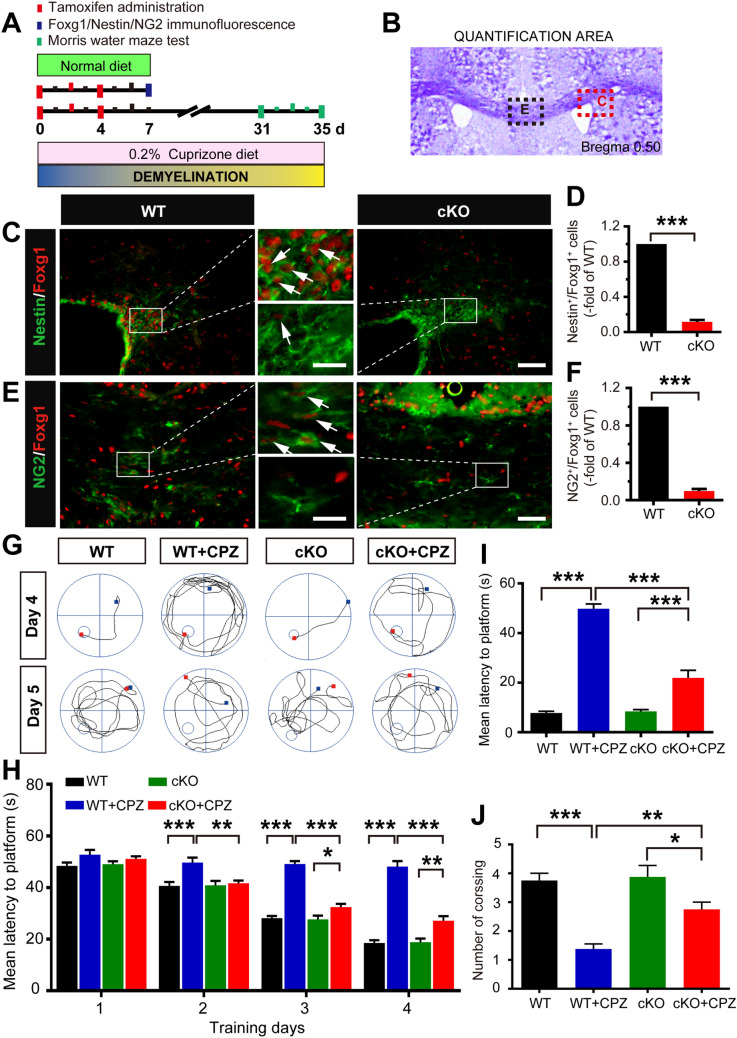
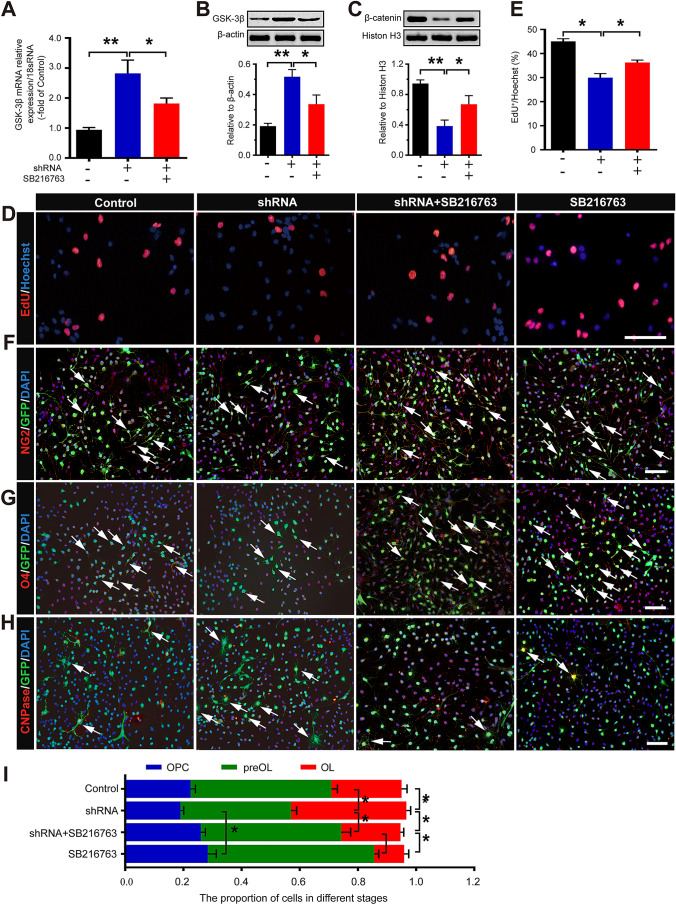
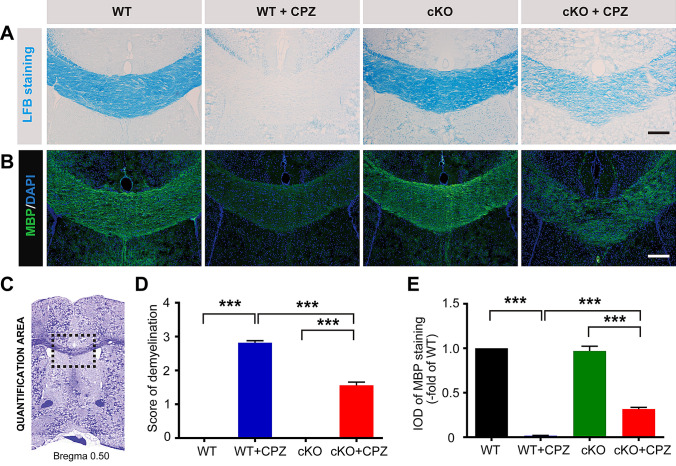
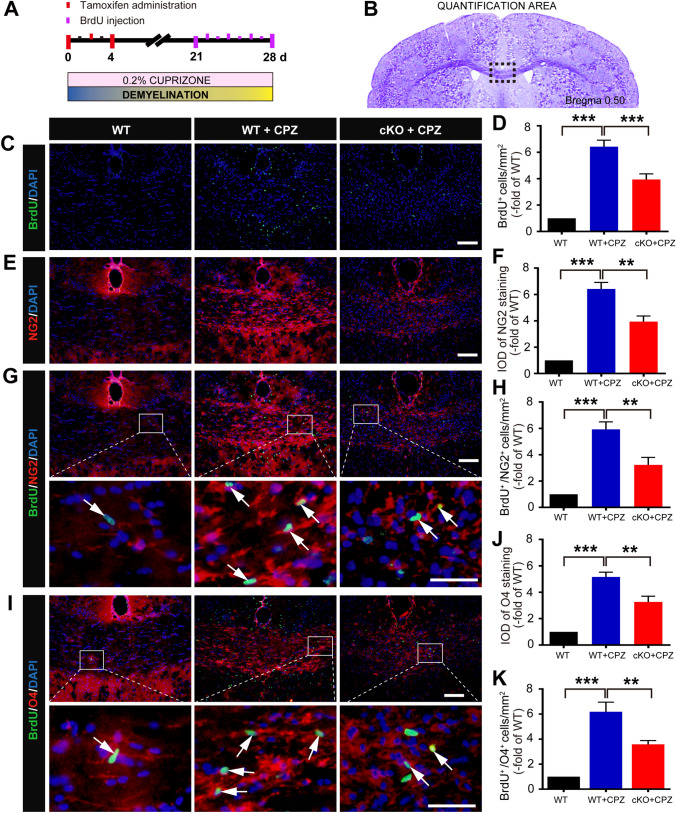
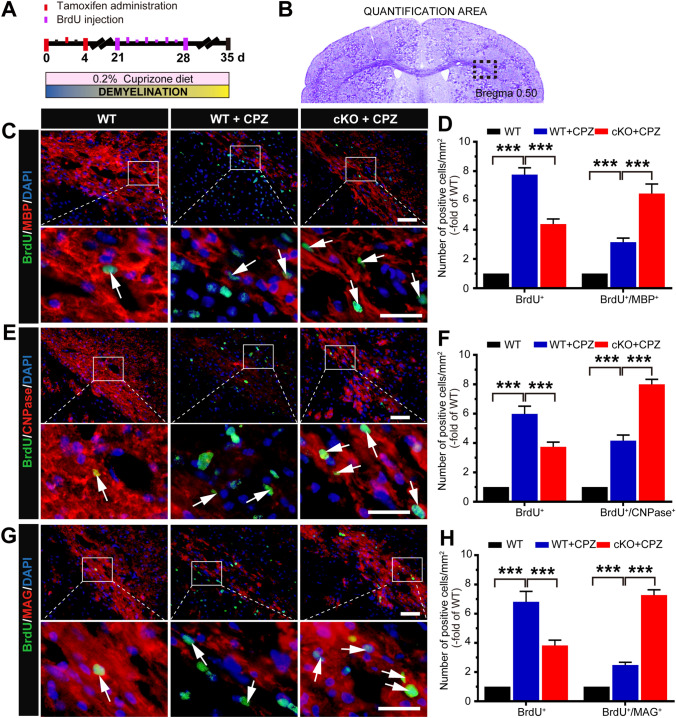
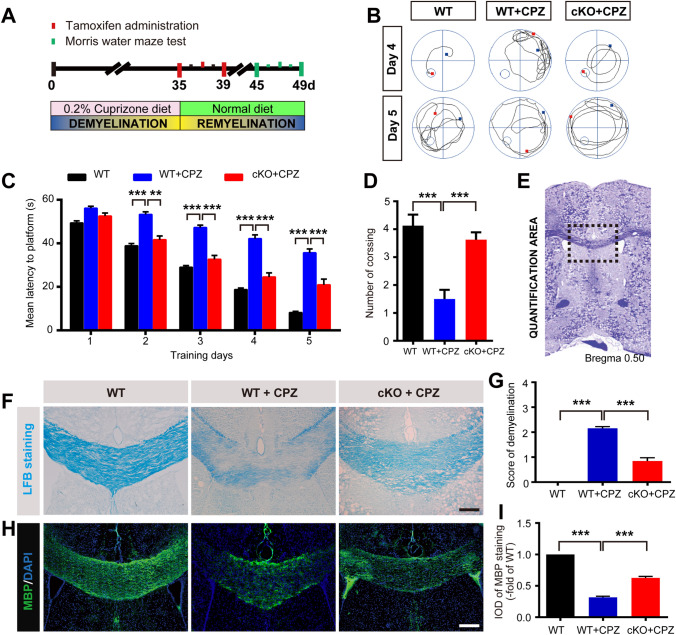
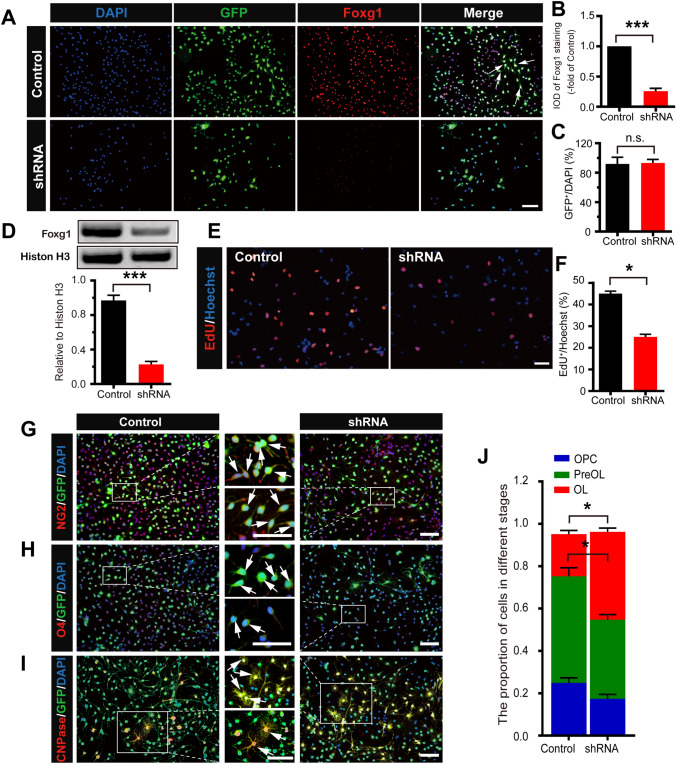
The massive loss of oligodendrocytes caused by various pathological factors is a basic feature of many demyelinating diseases of the central nervous system (CNS). Based on a variety of studies, it is now well established that impairment of oligodendrocyte precursor cells (OPCs) to differentiate and remyelinate axons is a vital event in the failed treatment of demyelinating diseases. Recent evidence suggests that Foxg1 is essential for the proliferation of certain precursors and inhibits premature neurogenesis during brain development. To date, very little attention has been paid to the role of Foxg1 in the proliferation and differentiation of OPCs in demyelinating diseases of the CNS. Here, for the first time, we examined the effects of Foxg1 on demyelination and remyelination in the brain using a cuprizone (CPZ)-induced mouse model. In this work, 7-week-old Foxg1 conditional knockout and wild-type (WT) mice were fed a diet containing 0.2% CPZ w/w for 5 weeks, after which CPZ was withdrawn to enable remyelination. Our results demonstrated that, compared with WT mice, Foxg1-knockout mice exhibited not only alleviated demyelination but also accelerated remyelination of the demyelinated corpus callosum. Furthermore, we found that Foxg1 knockout decreased the proliferation of OPCs and accelerated their differentiation into mature oligodendrocytes both in vivo and in vitro. Wnt signaling plays a critical role in development and in a variety of diseases. GSK-3β, a key regulatory kinase in the Wnt pathway, regulates the ability of β-catenin to enter nuclei, where it activates the expression of Wnt target genes. We then used SB216763, a selective inhibitor of GSK-3β activity, to further demonstrate the regulatory mechanism by which Foxg1 affects OPCs in vitro. The results showed that SB216763 clearly inhibited the expression of GSK-3β, which abolished the effect of the proliferation and differentiation of OPCs caused by the knockdown of Foxg1. These results suggest that Foxg1 is involved in the proliferation and differentiation of OPCs through the Wnt signaling pathway. The present experimental results are some of the first to suggest that Foxg1 is a new therapeutic target for the treatment of demyelinating diseases of the CNS.
各种病理因素导致少突胶质细胞大量丢失是中枢神经系统(CNS)多种脱髓鞘疾病的基本特征。基于各种研究,现在已经明确,少突胶质前体细胞(OPC)分化和髓鞘再生轴突的能力受损是脱髓鞘疾病治疗失败的一个重要事件。最近的证据表明,Foxg1 对于某些前体细胞的增殖是必需的,并在大脑发育过程中抑制过早的神经发生。迄今为止,人们对 Foxg1 在 CNS 脱髓鞘疾病中 OPC 的增殖和分化中的作用关注甚少。在这里,我们首次使用杯状病毒(CPZ)诱导的小鼠模型研究了 Foxg1 对大脑脱髓鞘和髓鞘再生的影响。在这项工作中,7 周龄的 Foxg1 条件性敲除和野生型(WT)小鼠喂食含有 0.2% CPZ 的饮食 5 周,之后撤去 CPZ 以促进髓鞘再生。我们的结果表明,与 WT 小鼠相比,Foxg1 敲除小鼠不仅表现出脱髓鞘减轻,而且还加速了脱髓鞘胼胝体的髓鞘再生。此外,我们发现 Foxg1 敲除减少了 OPC 的增殖,并在体内和体外加速了它们向成熟少突胶质细胞的分化。Wnt 信号通路在发育和多种疾病中发挥着关键作用。GSK-3β是 Wnt 通路中的关键调节激酶,调节β-catenin 进入细胞核的能力,在细胞核中,β-catenin 激活 Wnt 靶基因的表达。然后,我们使用 SB216763,一种 GSK-3β活性的选择性抑制剂,进一步证明了 Foxg1 影响 OPC 的体外调节机制。结果表明,SB216763 明显抑制了 GSK-3β的表达,从而消除了 Foxg1 敲低引起的 OPC 增殖和分化的作用。这些结果表明,Foxg1 通过 Wnt 信号通路参与 OPC 的增殖和分化。目前的实验结果是首次表明 Foxg1 是治疗中枢神经系统脱髓鞘疾病的新治疗靶点。