University of Kansas Medical Center, Kansas City, KS, USA.
Saint Luke's Mid America Heart Institute, University of Missouri-Kansas City, Kansas City, MO, USA.
J Alzheimers Dis. 2020;78(2):619-626. doi: 10.3233/JAD-200711.
Alzheimer's disease (AD) is increasingly prevalent and over 99% of drugs developed for AD have failed in clinical trials. A growing body of literature suggests that potent inhibitors of tumor necrosis factor-α (TNF-α) have potential to improve cognitive performance.
In this review, we summarize the evidence regarding the potential for TNF-α inhibition to prevent AD and improve cognitive function in people at risk for dementia.
We conducted a literature review in PubMed, screening all articles published before July 7, 2019 related to TNF blocking agents and curcumin (another TNF-α inhibitor) in the context of AD pathology. The keywords in the search included: AD, dementia, memory, cognition, TNF-α, TNF inhibitors, etanercept, infliximab, adalimumab, golimumab, and curcumin.
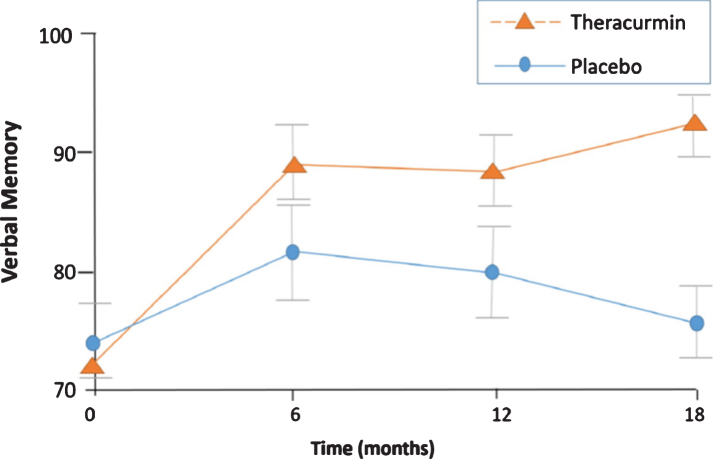
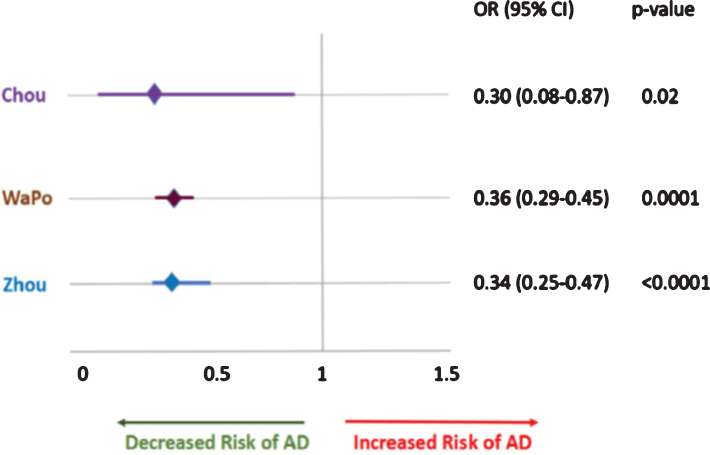
Three large epidemiology studies reported etanercept treated patients had 60 to 70% lower odds ratio (OR) of developing AD. Two small-randomized control trials (RCTs) demonstrated an improvement in cognitive performance for AD patients treated with etanercept. Studies using animal models of dementia also reported similar findings with TNF blocking agents (etanercept, infliximab, adalimumab, Theracurmin), which appeared to improve cognition. A small human RCT using Theracurmin, a well-absorbed form of curcumin that lowers TNF-α, showed enhanced cognitive performance and decreased brain levels of amyloid-β plaque and tau tangles.
TNF-α targeted therapy is a biologically plausible approach to the preservation of cognition, and warrants larger prospective RCTs to further investigate potential benefits in populations at risk of developing AD.
阿尔茨海默病(AD)的发病率日益增高,超过 99%的 AD 治疗药物在临床试验中失败。越来越多的文献表明,肿瘤坏死因子-α(TNF-α)的强效抑制剂具有改善认知表现的潜力。
在本综述中,我们总结了 TNF-α 抑制作用预防 AD 和改善痴呆风险人群认知功能的潜力证据。
我们在 PubMed 上进行了文献检索,筛选了 2019 年 7 月 7 日前发表的所有与 AD 病理相关的 TNF 阻滞剂和姜黄素(另一种 TNF-α 抑制剂)相关文章。搜索关键词包括:AD、痴呆、记忆、认知、TNF-α、TNF 抑制剂、依那西普、英夫利昔单抗、阿达木单抗、戈利木单抗和姜黄素。
三项大型流行病学研究报告称,接受依那西普治疗的患者发生 AD 的可能性降低了 60%至 70%。两项小型随机对照试验(RCT)表明,接受依那西普治疗的 AD 患者的认知表现有所改善。使用痴呆动物模型的研究也报告了类似的发现,即 TNF 阻滞剂(依那西普、英夫利昔单抗、阿达木单抗、Theracurmin)似乎改善了认知。一项使用 Theracurmin(一种吸收良好的姜黄素形式,可降低 TNF-α)的小型人体 RCT 显示认知表现增强,大脑中淀粉样蛋白-β斑块和 tau 缠结减少。
TNF-α 靶向治疗是一种具有生物学合理性的保留认知的方法,需要更大规模的前瞻性 RCT 进一步研究其在 AD 风险人群中的潜在益处。