• 文献检索
  • 文档翻译
  • 深度研究
  • 学术资讯
  • Suppr Zotero 插件Zotero 插件
  • 邀请有礼
  • 套餐&价格
  • 历史记录
应用&插件
Suppr Zotero 插件Zotero 插件浏览器插件Mac 客户端Windows 客户端微信小程序
定价
高级版会员购买积分包购买API积分包
服务
文献检索文档翻译深度研究API 文档MCP 服务
关于我们
关于 Suppr公司介绍联系我们用户协议隐私条款
关注我们

Suppr 超能文献

核心技术专利:CN118964589B侵权必究
粤ICP备2023148730 号-1Suppr @ 2026

文献检索

告别复杂PubMed语法,用中文像聊天一样搜索,搜遍4000万医学文献。AI智能推荐,让科研检索更轻松。

立即免费搜索

文件翻译

保留排版,准确专业,支持PDF/Word/PPT等文件格式,支持 12+语言互译。

免费翻译文档

深度研究

AI帮你快速写综述,25分钟生成高质量综述,智能提取关键信息,辅助科研写作。

立即免费体验

皮质醇相关调节基因与创伤后应激障碍心理治疗之间的途径

The Pathways between Cortisol-Related Regulation Genes and PTSD Psychotherapy.

作者信息

Castro-Vale Ivone, Carvalho Davide

机构信息

Medical Psychology Unit, Department of Clinical Neurosciences and Mental Health, Faculty of Medicine, University of Porto, Al. Prof. Hernâni Monteiro, 4200-319 Porto, Portugal.

i3S-Institute for Research and Innovation in Health, University of Porto, Rua Alfredo Allen, 208, 4200-135 Porto, Portugal.

出版信息

Healthcare (Basel). 2020 Oct 1;8(4):376. doi: 10.3390/healthcare8040376.

DOI:10.3390/healthcare8040376
PMID:33019527
原文链接:https://pmc.ncbi.nlm.nih.gov/articles/PMC7712185/
Abstract

Post-traumatic stress disorder (PTSD) only develops after exposure to a traumatic event in some individuals. PTSD can be chronic and debilitating, and is associated with co-morbidities such as depression, substance use, and cardiometabolic disorders. One of the most important pathophysiological mechanisms underlying the development of PTSD and its subsequent maintenance is a dysfunctional hypothalamic-pituitary-adrenal (HPA) axis. The corticotrophin-releasing hormone, cortisol, glucocorticoid receptor (GR), and their respective genes are some of the mediators of PTSD's pathophysiology. Several treatments are available, including medication and psychotherapies, although their success rate is limited. Some pharmacological therapies based on the HPA axis are currently being tested in clinical trials and changes in HPA axis biomarkers have been found to occur in response not only to pharmacological treatments, but also to psychotherapy-including the epigenetic modification of the GR gene. Psychotherapies are considered to be the first line treatments for PTSD in some guidelines, even though they are effective for some, but not for all patients with PTSD. This review aims to address how knowledge of the HPA axis-related genetic makeup can inform and predict the outcomes of psychotherapeutic treatments.

摘要

创伤后应激障碍(PTSD)仅在某些个体经历创伤事件后才会出现。PTSD可能是慢性且使人衰弱的,并与诸如抑郁症、物质使用和心脏代谢紊乱等共病相关。PTSD发生及其后续维持的最重要病理生理机制之一是下丘脑-垂体-肾上腺(HPA)轴功能失调。促肾上腺皮质激素释放激素、皮质醇、糖皮质激素受体(GR)及其各自的基因是PTSD病理生理学的一些介质。虽然成功率有限,但有几种治疗方法可供选择,包括药物治疗和心理治疗。目前一些基于HPA轴的药物疗法正在临床试验中进行测试,并且已发现HPA轴生物标志物的变化不仅会对药物治疗产生反应,而且会对心理治疗产生反应——包括GR基因的表观遗传修饰。在一些指南中,心理治疗被认为是PTSD的一线治疗方法,尽管它们对一些PTSD患者有效,但并非对所有患者都有效。本综述旨在探讨与HPA轴相关的基因构成知识如何为心理治疗的结果提供信息并进行预测。
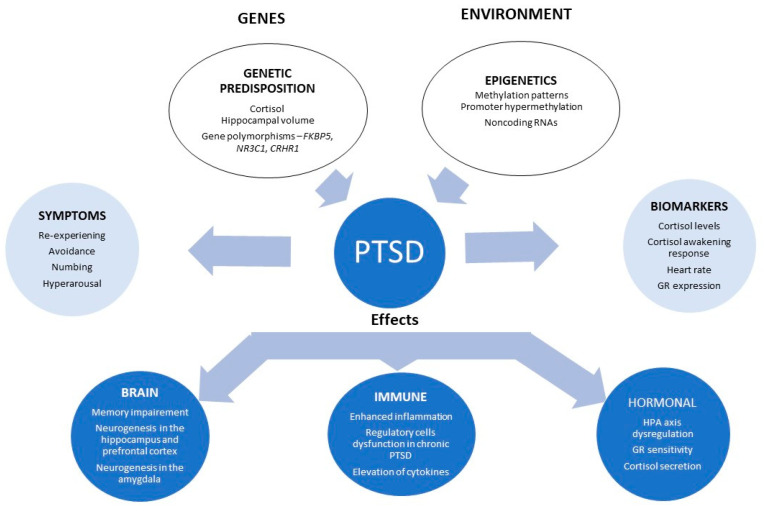
https://cdn.ncbi.nlm.nih.gov/pmc/blobs/9512/7712185/fbf80c56c0d0/healthcare-08-00376-g003.jpg
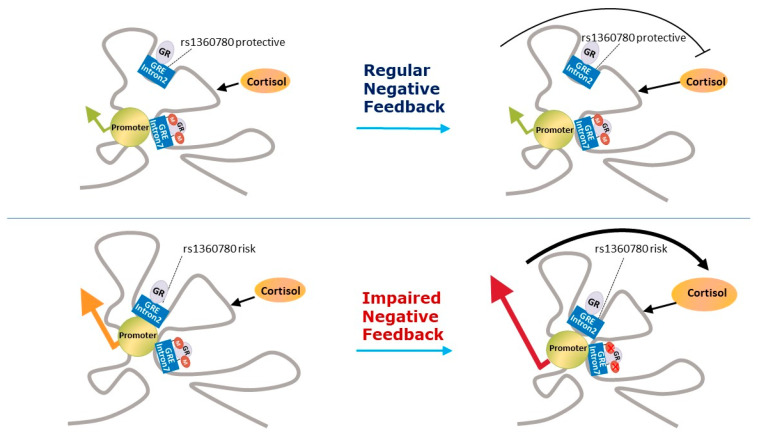
https://cdn.ncbi.nlm.nih.gov/pmc/blobs/9512/7712185/edabebba8519/healthcare-08-00376-g001.jpg
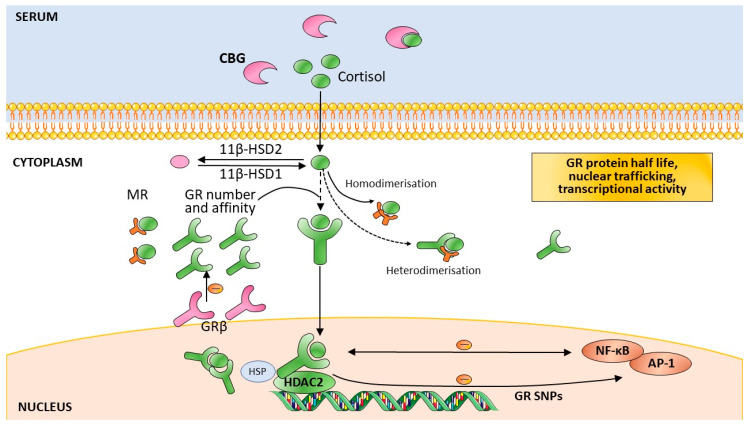
https://cdn.ncbi.nlm.nih.gov/pmc/blobs/9512/7712185/e6d9bf2940cc/healthcare-08-00376-g002.jpg
https://cdn.ncbi.nlm.nih.gov/pmc/blobs/9512/7712185/fbf80c56c0d0/healthcare-08-00376-g003.jpg
https://cdn.ncbi.nlm.nih.gov/pmc/blobs/9512/7712185/edabebba8519/healthcare-08-00376-g001.jpg
https://cdn.ncbi.nlm.nih.gov/pmc/blobs/9512/7712185/e6d9bf2940cc/healthcare-08-00376-g002.jpg
https://cdn.ncbi.nlm.nih.gov/pmc/blobs/9512/7712185/fbf80c56c0d0/healthcare-08-00376-g003.jpg

相似文献

1
The Pathways between Cortisol-Related Regulation Genes and PTSD Psychotherapy.皮质醇相关调节基因与创伤后应激障碍心理治疗之间的途径
Healthcare (Basel). 2020 Oct 1;8(4):376. doi: 10.3390/healthcare8040376.
2
Genetics of glucocorticoid regulation and posttraumatic stress disorder--What do we know?糖皮质激素调节与创伤后应激障碍的遗传学——我们了解什么?
Neurosci Biobehav Rev. 2016 Apr;63:143-57. doi: 10.1016/j.neubiorev.2016.02.005. Epub 2016 Feb 9.
3
The hypothalamic-pituitary-adrenal axis in PTSD: Pathophysiology and treatment interventions.创伤后应激障碍的下丘脑-垂体-肾上腺轴:发病机制与治疗干预。
Prog Neuropsychopharmacol Biol Psychiatry. 2019 Mar 8;89:361-379. doi: 10.1016/j.pnpbp.2018.10.010. Epub 2018 Oct 17.
4
[Posttraumatic stress disorder (PTSD) as a consequence of the interaction between an individual genetic susceptibility, a traumatogenic event and a social context].[创伤后应激障碍(PTSD)作为个体遗传易感性、创伤性事件和社会环境之间相互作用的结果]
Encephale. 2012 Oct;38(5):373-80. doi: 10.1016/j.encep.2011.12.003. Epub 2012 Jan 24.
5
Lower methylation of glucocorticoid receptor gene promoter 1F in peripheral blood of veterans with posttraumatic stress disorder.创伤后应激障碍退伍军人外周血中糖皮质激素受体基因启动子 1F 的低甲基化。
Biol Psychiatry. 2015 Feb 15;77(4):356-64. doi: 10.1016/j.biopsych.2014.02.006. Epub 2014 Feb 17.
6
Role of enhanced glucocorticoid receptor sensitivity in inflammation in PTSD: insights from computational model for circadian-neuroendocrine-immune interactions.增强糖皮质激素受体敏感性在 PTSD 炎症中的作用:来自昼夜神经内分泌免疫相互作用计算模型的见解。
Am J Physiol Endocrinol Metab. 2020 Jul 1;319(1):E48-E66. doi: 10.1152/ajpendo.00398.2019. Epub 2020 Apr 21.
7
Assessment of HPA-axis function in posttraumatic stress disorder: pharmacological and non-pharmacological challenge tests, a review.创伤后应激障碍中下丘脑-垂体-肾上腺轴功能的评估:药理学和非药理学激发试验综述
J Psychiatr Res. 2006 Sep;40(6):550-67. doi: 10.1016/j.jpsychires.2005.08.002. Epub 2005 Oct 7.
8
Genes and hormones of the hypothalamic-pituitary-adrenal axis in post-traumatic stress disorder. What is their role in symptom expression and treatment response?创伤后应激障碍的下丘脑-垂体-肾上腺轴的基因和激素。它们在症状表达和治疗反应中的作用是什么?
J Neural Transm (Vienna). 2021 Sep;128(9):1279-1286. doi: 10.1007/s00702-021-02330-2. Epub 2021 Apr 7.
9
Meta-Analysis of Associations Between Hypothalamic-Pituitary-Adrenal Axis Genes and Risk of Posttraumatic Stress Disorder.下丘脑-垂体-肾上腺轴基因与创伤后应激障碍风险的关联的荟萃分析。
J Trauma Stress. 2020 Oct;33(5):688-698. doi: 10.1002/jts.22484. Epub 2020 Mar 26.
10
Correlation between hypothalamic-pituitary-adrenal axis gene polymorphisms and posttraumatic stress disorder symptoms.下丘脑-垂体-肾上腺轴基因多态性与创伤后应激障碍症状的相关性。
Horm Behav. 2020 Jan;117:104604. doi: 10.1016/j.yhbeh.2019.104604. Epub 2019 Nov 6.

引用本文的文献

1
Microglia-mediated neuroimmune suppression in PTSD is associated with anhedonia.创伤后应激障碍中小胶质细胞介导的神经免疫抑制与快感缺失有关。
Proc Natl Acad Sci U S A. 2024 Aug 27;121(35):e2406005121. doi: 10.1073/pnas.2406005121. Epub 2024 Aug 22.
2
Distinct saliva DNA methylation profiles in relation to treatment outcome in youth with posttraumatic stress disorder.创伤后应激障碍青少年治疗结果相关的独特唾液 DNA 甲基化图谱。
Transl Psychiatry. 2024 Jul 26;14(1):309. doi: 10.1038/s41398-024-02892-1.
3
The cortisol awakening response in a 3 month clinical trial of service dogs for veterans with posttraumatic stress disorder.

本文引用的文献

1
Trauma-Informed Care in Primary Health Settings-Which Is Even More Needed in Times of COVID-19.基层医疗卫生机构中的创伤知情护理——在新冠疫情时期更显必要
Healthcare (Basel). 2020 Sep 14;8(3):340. doi: 10.3390/healthcare8030340.
2
Assessing the relationship between psychosocial stressors and psychiatric resilience among Chilean disaster survivors.评估智利灾难幸存者的心理社会压力源与精神弹性之间的关系。
Br J Psychiatry. 2020 Nov;217(5):630-637. doi: 10.1192/bjp.2020.88.
3
Meta-Analysis of Associations Between Hypothalamic-Pituitary-Adrenal Axis Genes and Risk of Posttraumatic Stress Disorder.
创伤后应激障碍退伍军人服务犬 3 个月临床试验中的皮质醇觉醒反应。
Sci Rep. 2024 Jan 18;14(1):1664. doi: 10.1038/s41598-023-50626-y.
4
Harnessing PROTAC technology to combat stress hormone receptor activation.利用 PROTAC 技术对抗应激激素受体激活。
Nat Commun. 2023 Dec 9;14(1):8177. doi: 10.1038/s41467-023-44031-2.
5
Interaction of Val66Met BDNF and 5-HTTLPR polymorphisms with prevalence of post-earthquake 27-F PTSD in Chilean population.智利人群震后创伤后应激障碍 27-F 的流行与 BDNF Val66Met 多态性和 5-HTTLPR 多态性的相互作用。
PeerJ. 2023 Sep 4;11:e15870. doi: 10.7717/peerj.15870. eCollection 2023.
6
Role of FKBP5 and its genetic mutations in stress-induced psychiatric disorders: an opportunity for drug discovery.FKBP5及其基因突变在应激诱导的精神疾病中的作用:药物发现的机遇
Front Psychiatry. 2023 Jun 16;14:1182345. doi: 10.3389/fpsyt.2023.1182345. eCollection 2023.
7
360-Degree Perspectives on Obesity.肥胖的全方位视角。
Medicina (Kaunas). 2023 Jun 9;59(6):1119. doi: 10.3390/medicina59061119.
8
Treatment of Posttraumatic Stress Disorder: A State-of-the-art Review.创伤后应激障碍的治疗:最新综述。
Curr Neuropharmacol. 2024;22(4):557-635. doi: 10.2174/1570159X21666230428091433.
9
Violence against Women and Stress-Related Disorders: Seeking for Associated Epigenetic Signatures, a Pilot Study.针对女性的暴力行为与应激相关障碍:寻找相关的表观遗传特征,一项初步研究。
Healthcare (Basel). 2023 Jan 6;11(2):173. doi: 10.3390/healthcare11020173.
10
Prevalence of Common Alleles of Some Stress Resilience Genes among Adolescents Born in Different Periods Relative to the Socioeconomic Crisis of the 1990s in Russia.俄罗斯20世纪90年代社会经济危机不同时期出生的青少年中某些应激适应力基因常见等位基因的流行情况。
Curr Issues Mol Biol. 2022 Dec 21;45(1):51-65. doi: 10.3390/cimb45010004.
下丘脑-垂体-肾上腺轴基因与创伤后应激障碍风险的关联的荟萃分析。
J Trauma Stress. 2020 Oct;33(5):688-698. doi: 10.1002/jts.22484. Epub 2020 Mar 26.
4
The Relationship between DNA Methylation and Antidepressant Medications: A Systematic Review.DNA 甲基化与抗抑郁药物之间的关系:系统评价。
Int J Mol Sci. 2020 Jan 28;21(3):826. doi: 10.3390/ijms21030826.
5
First-line Psychotherapies for Military-Related PTSD.针对与军事相关的创伤后应激障碍的一线心理治疗方法。
JAMA. 2020 Feb 18;323(7):656-657. doi: 10.1001/jama.2019.20825.
6
A Systematic Review of DNA Methylation and Gene Expression Studies in Posttraumatic Stress Disorder, Posttraumatic Growth, and Resilience.创伤后应激障碍、创伤后成长和适应力的 DNA 甲基化和基因表达研究的系统评价
J Trauma Stress. 2020 Apr;33(2):171-180. doi: 10.1002/jts.22472. Epub 2020 Jan 17.
7
A review of epigenetic contributions 
to post-traumatic stress disorder
.创伤后应激障碍的表观遗传学贡献综述。
Dialogues Clin Neurosci. 2019 Dec;21(4):417-428. doi: 10.31887/DCNS.2019.21.4/kressler.
8
Genetic association of FKBP5 with PTSD in US service members deployed to Iraq and Afghanistan.FKBP5与部署到伊拉克和阿富汗的美国军人创伤后应激障碍的基因关联。
J Psychiatr Res. 2020 Mar;122:48-53. doi: 10.1016/j.jpsychires.2019.12.014. Epub 2020 Jan 3.
9
The 24-hour urinary cortisol in post-traumatic stress disorder: A meta-analysis.创伤后应激障碍患者的 24 小时尿皮质醇:一项荟萃分析。
PLoS One. 2020 Jan 9;15(1):e0227560. doi: 10.1371/journal.pone.0227560. eCollection 2020.
10
Epigenetic Modifications in Stress Response Genes Associated With Childhood Trauma.与童年创伤相关的应激反应基因中的表观遗传修饰
Front Psychiatry. 2019 Nov 8;10:808. doi: 10.3389/fpsyt.2019.00808. eCollection 2019.